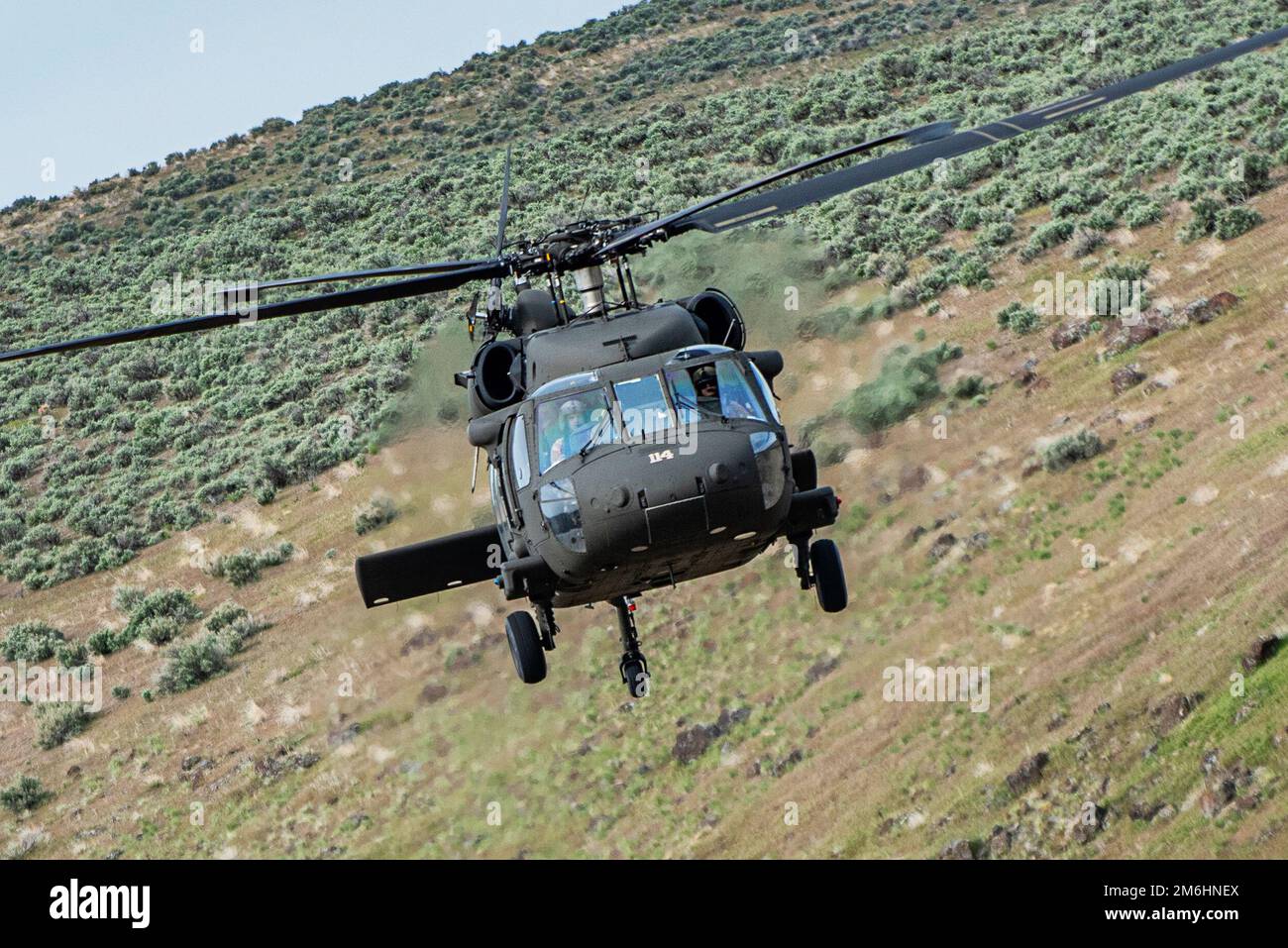
A critical program for the future of US military aviation, the Improved Turbine Engine Program (ITEP), is now set to achieve full qualification within the next couple of years, potentially as early as 2028. This news marks a dramatic resurgence for ITEP, which has weathered significant delays and a near-cancellation, thanks to timely Congressional intervention.
A Rocky Road: From Near-Cancellation to Congressional Lifeline ITEP’s journey has been turbulent. The initial concept envisioned the delivery of two ITEP prototypes for the now-canceled Future Attack Reconnaissance Aircraft (FARA) program in 2022. Although the engine manufacturer, General Electric Aerospace, delivered the engines in 2023, a shift in Army plans—deciding to incorporate ITEP solely into UH-60 Black Hawk and AH-64 Apache helicopters—led to further timeline delays. The situation culminated last year when the Army announced its intention to sunset the program, aligning with its Army Transformation Initiative (ATI).
However, Congress intervened decisively, pushing back against the cancellation and allocating the service $175 million in fiscal 2026 funding, with an additional $63 million in reconciliation money. „If we received the reconciliation funding, if Congress supported that, then we would absolutely continue the testing that we started last year,” stated Brig. Gen. David Phillips, deputy of Program Acquisition Executive for Maneuver Air. This financial backing was crucial for resuming and sustaining the efforts.
Power and Efficiency: Why ITEP is Indispensable The ITEP engine, developed under a contract awarded to General Electric in 2019, was designed to provide a 50 percent increase in horsepower and a 25 percent improvement in fuel efficiency. These specifications are vital for modernizing the Army’s helicopter fleet. Over the years, both Black Hawks and Apaches have accumulated additional components, increasing the aircraft’s weight. To enable these helicopters to achieve extended ranges and maintain performance, a lighter, more powerful engine is necessary—precisely what ITEP promises.
Ongoing Testing: Full Qualification on the Horizon The path to full qualification is rigorous, requiring approximately 6,500 hours of testing – 1,500 hours of ground testing and „close to” 5,000 hours for „full engine qualification.” The Army confirmed that its first flight test with a Black Hawk occurred last May, and since then, the team has added about 30 hours of flight testing, including at various altitudes. „So we’ve continued those efforts, and fortunately, Congress supported the program with another add in the 26 budget. So that’s going to continue on with those efforts through [20]26 into probably early 2027, and then we’re really looking at opportunities to be able to pull the qualification for the entirety of the engine left,” Phillips added.
General Electric Aerospace: An Unwavering Partnership General Electric Aerospace has reaffirmed its commitment to the program, with a spokesperson stating that the firm „continues to deliver T109 engines for ITEP” and that they are „in lockstep” with the Army, working closely with senior leadership to „accelerate engine testing in support of the program.” While the exact timeline for fielding the new engines remains uncertain, the resurgence of the ITEP program, backed by Congress and the defense industry, marks a significant milestone for modernizing US Army aviation and ensuring air superiority in future conflicts.