The U.S. Marine Corps has officially advanced the development of its critical Advanced Reconnaissance Vehicle (ARV) program, greenlighting another rapid prototyping phase for prime contractors Textron and General Dynamics Land Systems (GDLS). This move signals a significant step forward in replacing the aging Light Armored Vehicle (LAV) fleet with a versatile, high-tech solution designed for the complexities of future combat.
Beyond Legacy: Crafting a Future-Ready Fleet The Marine Corps is not just seeking a single vehicle, but rather an entire „family of vehicles” under the ARV program. This modular approach aims to address diverse operational needs with specialized variants, including:
- C4/UAS Variant: Focused on command, control, communications, computers, and unmanned aerial systems, crucial for battlefield awareness and information superiority.
- Lethality Variant: Equipped with a powerful 30mm autocannon and anti-tank guided missiles, providing significant direct fire capabilities.
- Logistics Variant: Designed to ensure sustained operational support and supply chain resilience for forward-deployed units.
Information Warfare: The Heart of the ARV Mission Colonel Chris Stephenson, Program Manager for Light Armored Vehicles (PM LAV), emphasized the ARV’s strategic imperative. „In the future fight, the Marine Air-Ground Task Force [MAGTF C2] must out cycle the fight for information to shape the battlespace and deliver precision fires,” Stephenson stated in a Marine Corps news release. He underscored the drastically complex, highly contested environments envisioned for future conflicts, necessitating a purpose-built capability like the ARV that can „sense, communicate, and fight by incorporating manned and unmanned systems and sustaining effective sensor webs tied to kill chains.”
Prototyping Progress: From Concept to Concrete Testing This latest phase builds upon initial efforts, where Textron and GDLS were first tasked in July 2021 to construct early ARV prototypes. Recent announcements from both companies highlight substantial progress. Textron recently confirmed the successful completion of the build and evaluation period for its Cottonmouth 30mm prototype. Similarly, GDLS revealed in February that it had concluded additional testing of its 30mm prototype, with further prototype assessments slated to continue throughout 2026.
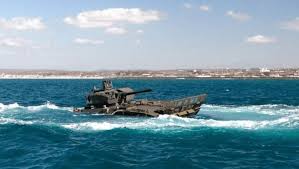
These rigorous evaluations have spanned critical areas, including land mobility, lethality assessments, and demanding ocean swim testing. Trials were conducted at key facilities such as Marine Corps Base Camp Pendleton in California and the Army’s Ground Vehicle Systems Center in Michigan, pushing the prototypes to their limits in diverse operational scenarios.
The Road Ahead: Deliveries and Production Looking forward, the Marine Corps anticipates vehicle deliveries to begin in fiscal year 2028, following a formal contract award. A crucial production decision for the ARV program is projected for fiscal year 2031, marking the transition from development to full-scale manufacturing and deployment. This timeline underscores the service’s commitment to equipping its reconnaissance battalions with advanced, integrated capabilities essential for navigating the complex and dynamic battlefields of tomorrow.