As Israel grapples with a burgeoning two-front conflict against Iran and Hezbollah, the Israel Defense Forces (IDF) are rapidly integrating critical lessons from the devastating Hamas attack on October 7, 2023. A paramount conclusion underscores the urgent need for enhanced readiness, beginning with the impenetrable securing of national borders.
Post-October 7: A New Imperative for Preparedness
The current geopolitical landscape, marked by intense and evolving threats, has compelled the IDF to fundamentally rethink its defensive doctrines. Recent events have laid bare vulnerabilities, dictating a proactive and robust approach to increasingly complex challenges. The imperative to safeguard every inch of the border has ascended to an absolute national priority.
Birth of Division 96: A Strategic Response in the Jordan Valley
Embodying this new defensive posture, the IDF has established the 96th Division, now operational across the Jordan Valley. This vital geographic corridor, spanning 200 miles, forms the intricate border between Israel and Jordan. The division’s deployment in June 2025, strategically coinciding with the 12-day Israel-Iran conflict, underscored its immediate relevance and necessity. An Israeli military official, speaking during a late February trip to the region, affirmed: „The IDF decided to put a division here for the sake of the people. … We keep the civilians safe.”
Multi-Layered Defense: Coordination and Rapid Response
The mission of the 96th Division is multifaceted and deeply strategic. Primarily, it introduces an additional organizational layer, designed to optimize coordination among brigades and battalions dispersed throughout the valley. This divisional structure facilitates seamless communication both with higher command echelons and frontline units, ensuring swift information exchange. By stationing a division directly on the border, the IDF establishes a high-level command hub, capable of relaying operational insights and emerging issues from tactical units directly to the IDF Central Command. Presently, the valley houses a brigade, including the co-ed patrol battalion, the „Lions of the Jordan Valley,” established in 2014. The new 96th Division will now oversee these existing units, orchestrating their unified response to burgeoning threats.
Furthermore, the division incorporates battalions of reservists stationed across Israel, primed to act as local rapid reaction forces in the event of an „October 7-type” incident. These dedicated personnel maintain their rifles and equipment at home, enabling immediate mobilization to their regional battalions to counter any attacks. In June 2025, the 96th Division conducted its inaugural exercise, where troops meticulously „practiced emergency scenarios and rapid response to sudden incidents, while enhancing the division’s combat readiness.”
Leadership Vision: Neutralizing Threats Before the Threshold
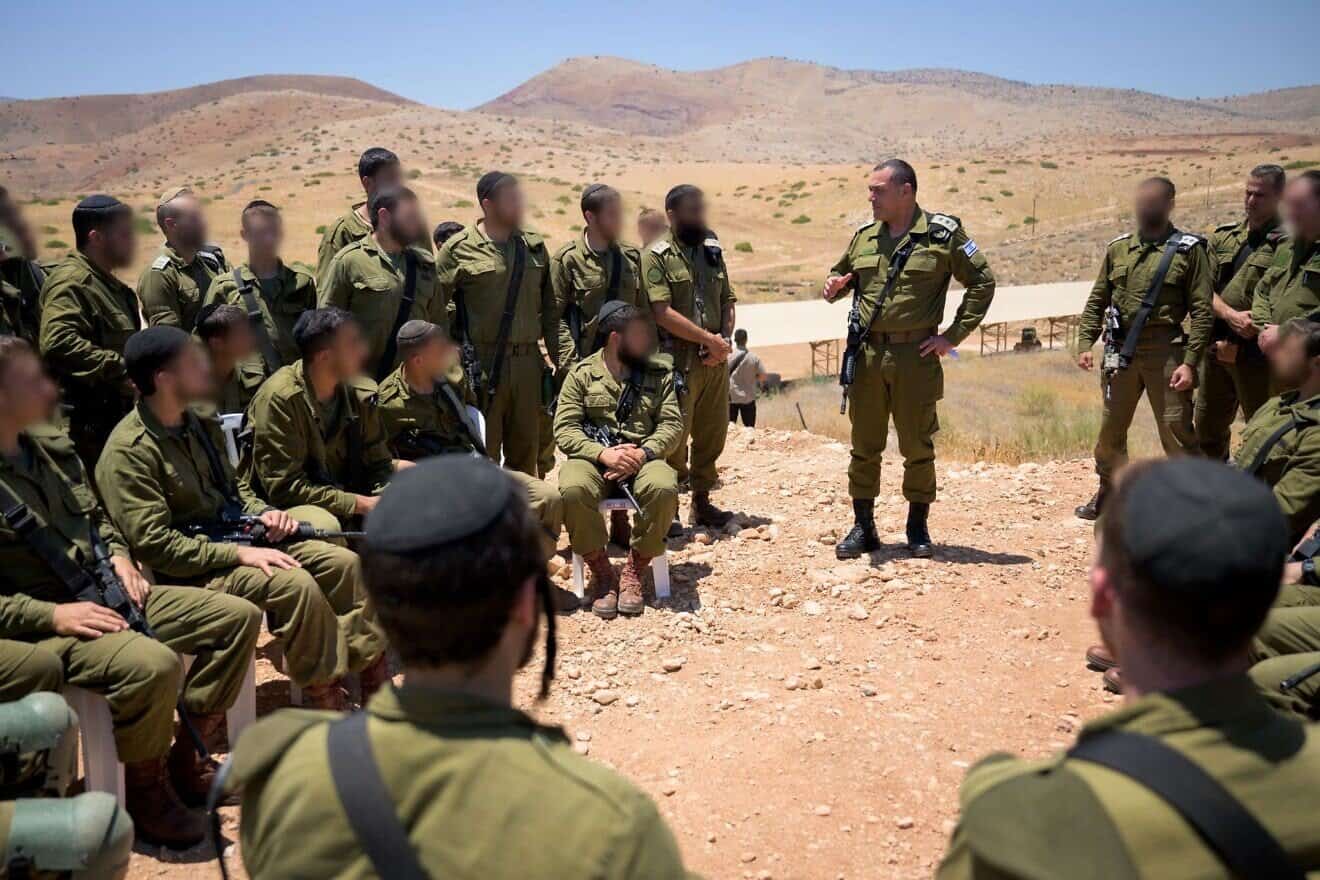
In November 2025, IDF Chief of Staff Lt. Gen. Eyal Zamir visited the IDF Central Command for an exercise, meeting with members of the 96th Division. He articulated that the division’s preparation is for scenarios the IDF „must never reach,” aligning perfectly with the post-October 7 strategy of robust border security. Zamir elaborated on this proactive stance: „we must act and neutralize threats before they reach our doorstep,” emphasizing that „we will reinforce our troops wherever necessary in order to continue countering terrorism and prevent the next threat from arising.” This resolute message was reiterated in December, as he detailed the IDF’s ambitious military expansion through its force buildup initiative. This initiative involves the creation and reactivation of new units, such as the 96th Division, coupled with significant investments in ground forces. „These are significant steps in shaping the IDF’s defensive capabilities for the coming years,” he concluded.
Fortified Heritage: Reclaiming Historic Outposts
A pivotal early objective for the 96th Division has been the re-fortification of Israel’s defenses along the Jordan River, which meanders through vast farmlands north of the Dead Sea. In the 1970s, the IDF constructed a series of static defense forts in this area, mirroring similar structures in the Golan Heights and along the Suez Canal. These forts, largely uniform in design with sandbagged redoubts and subterranean bunkers, had been abandoned for many years in the Jordan Valley. Now, the IDF is diligently working to restore dozens of these sites to active duty. „We refurbished these 1970s-era outposts. … Some of them were filled with garbage or mud when we arrived and what we did is we began to clean them out and turn them into bases,” revealed an IDF official. This comprehensive refurbishment is part of a broader investment strategy aimed at securing the border, utilizing advanced fencing and other modern deterrents.
The Living Border: Modern Security Challenges
The Jordan Valley encompasses areas controlled by Israel prior to 1967 near the Sea of Galilee and the Beit She’an region, extending south to the Arava Valley. However, the central Jordan Valley is recognized as part of the West Bank and is viewed as part of the Occupied Palestinian Territories. The region is dotted with several Jewish settlements, numerous Palestinian villages, and the ancient Palestinian city of Jericho. The 96th Division’s purview spans most of this extensive area, straddling Israel’s Route 90, which traverses the entire length of the valley from Eilat northwards. Driving through the West Bank hills down into the Jordan Valley, one might not immediately perceive a massive military presence. The sight of hitchhikers, for example, suggests a perceived safety on roads and for civilians. Generally, this remains a sparsely populated rural area, yet the sheer length of the border presents unique challenges, including persistent drone-based smuggling activities.
Despite the peace treaty between Jordan and Israel signed in 1994, there has been a noticeable escalation in security incidents along the border in recent years. For instance, September 2024 and September 2025 saw two terrorist attacks at the Allenby Bridge border crossing. Numerous incidents involving drones for weapons smuggling have also been recorded. In December 2025, the IDF intercepted a drone carrying 40 weapons from Jordan, and in February 2026, another drone with 12 pistols was intercepted. Most recently, amidst the ongoing conflict with Iran, sirens blared across the northern Jordan Valley on March 6, warning of a drone threat. Iran and its proxy militias have also targeted the Kingdom of Jordan, a critical location for US forces.
A Logical Extension of Defensive Capabilities
The integration of the 96th Division into the Jordan Valley represents a logical and necessary expansion of Israel’s defensive architecture. The IDF already maintains division-level commands across all its other borders: the Gaza Division secures the Gaza border, the 80th Division defends the Egyptian border and Eilat, and in the north, the 210th Division operates on the Golan Heights, further bolstered by a new Mountain Brigade formed in early 2024. Along the Lebanese border, the 91st Division stands guard. „I think we learn from the past and what we saw then on Oct. 7 and how to protect,” the official concluded, underscoring the proactive evolution of Israel’s defense strategy.