Against a backdrop of heightened geopolitical tension and fierce competition in the electric vehicle market, the boundary between the automotive and defense industries is beginning to blur across Europe. Renowned manufacturers like Renault and Volkswagen are exploring new ways to monetize their production floors, pivoting car assembly lines to support military technology.
The Paris Dilemma: Drones with Automotive DNA
Renault Group recently made a bold move by partnering with the startup Turgis Gaillard, aiming to produce up to 600 drones per month for the French Ministry of the Armed Forces. The „Chorus” project, designed as France’s answer to Shahed-type threats, leverages Renault’s mass-production expertise. However, the French giant is treaded carefully, officially rejecting the label of a „major player” in the weapons industry.
While a dedicated production line for drone structures will be installed at the Le Mans plant, management insists this is a one-off opportunity. The strategy appears to be a „one-foot-in, one-foot-out” approach: utilizing serial production know-how to meet state needs without fundamentally altering a brand identity centered on civilian mobility.
The Shadow of the „Iron Dome” and Failed Partnerships
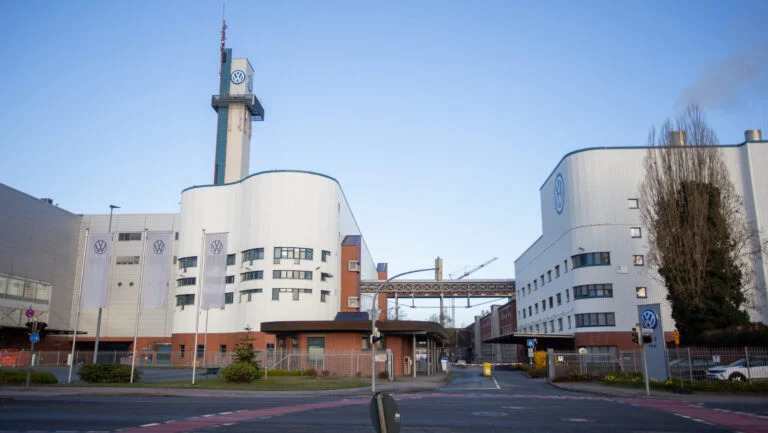
In Germany, the situation is even more nuanced. Volkswagen has explored the possibility of using its struggling Osnabrück facility to produce components for Israel’s Iron Dome missile defense system. Although the company has officially ruled out the production of „weapons,” the door remains open for manufacturing auxiliary components, especially as the site desperately seeks new projects to remain viable beyond 2027.
Yet, not all industrial „marriages” of this kind are successful. Missile giant MBDA attempted a similar partnership with an undisclosed automaker to manufacture attack drones, but plans recently fell through, forcing the defense sector to revert to traditional production methods.
The China Factor and Production Surpluses
Analysts point to two primary drivers behind this nascent trend. On one hand, European defense budgets have reached record levels, creating massive demand for hardware. On the other hand, the offensive by Chinese carmakers in Europe has eroded the market share of local giants, leaving them with idle production space and an urgent need to diversify revenue streams.
However, enthusiasm is tempered by reality. In Germany, automotive revenues exceed €500 billion, while the top five defense players combined barely reach €30 billion. The military sector may „soften” an economic downturn, but it cannot replace the backbone of the car industry.
A Two-Speed Europe: Conversion vs. Consolidation
While France and Germany experiment with civilian-to-military conversion, other nations, such as Italy, are choosing a different path. Rather than converting car plants, Rome is doubling down on strengthening its existing national champions, such as Leonardo and Fincantieri.
The ultimate stake remains adaptability: automakers will venture into the defense sector only as long as profitability is realistic and the complex technological reconversion processes do not stifle assembly line efficiency.