In a decisive move to secure dominance on the modern battlefield, the U.S. Army is expanding its portfolio of loitering munitions by awarding a key prototyping contract to Aerovironment (AV). This development marks a pivotal stage in the LASSO (Low-Altitude Stalking and Strike Ordnance) program, designed to fundamentally upgrade the lethality of light infantry units.
The „Lightweight Tank Destroyer”: The Switchblade 400 Edge
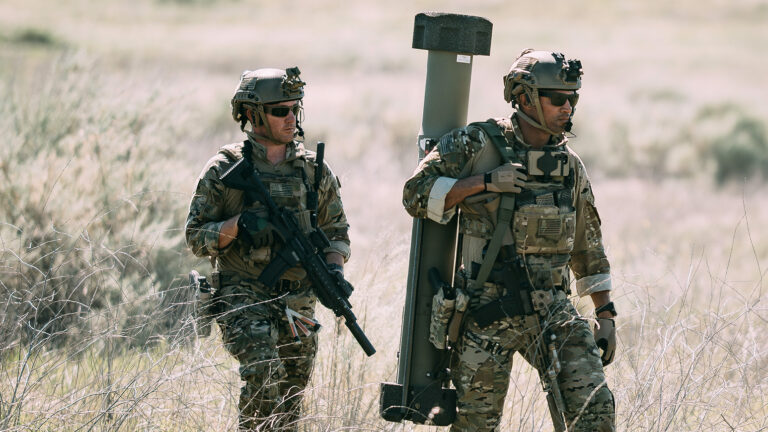
At the heart of this latest award is the Switchblade 400, a portable, medium-range anti-armor system dubbed the „Lightweight Tank Destroyer.” Engineered to fit common launch tubes, the device enables a single soldier to detect, identify, and engage armored targets through a unified, networked architecture. This sensor-to-shooter concept drastically shortens decision timelines, providing surgical precision and operational flexibility at the tactical edge.
Multi-Million Dollar Investment in Mobile Lethality
Budgetary documents for fiscal year 2027 highlight the Army’s vast ambitions for the LASSO initiative. The service plans to spend approximately $109.5 million to acquire 95 systems, following a $67.8 million allocation for 103 systems in FY2026. The objective is to equip Mobile Brigade Combat Teams with man-portable weapons capable of neutralizing tanks and light armored vehicles across diverse terrains while ensuring minimal collateral damage.
The Competitive Triangle: Innovations from Israel and the U.S.
Aerovironment enters a highly competitive arena alongside two other major contenders that secured prototyping contracts earlier this year:
- Hero 90 (Uvision & Mistral): An Israeli-designed, backpack-portable system featuring AI-assisted tracking and advanced electro-optical/infrared sensors, capable of carrying multiple warhead configurations.
- Damocles (Textron Systems): An innovative VTOL (Vertical Take-Off and Landing) drone solution that eliminates the need for launch equipment, utilizing a cutting-edge Explosively Formed Penetrator (EFP) for maximum lethality against peer adversaries.
Open Architecture for an Evolving Battlefield
All three solutions utilize a modular, open-systems architecture, allowing for the seamless integration of various payloads—both kinetic and non-kinetic. This flexible approach ensures that the technology can adapt as rapidly as the threats it faces. The Army’s trust in these loitering munitions, earned through years of real-world operational use, underscores a critical requirement for speed and adaptability in an era where tactical precision is the ultimate decider of victory.