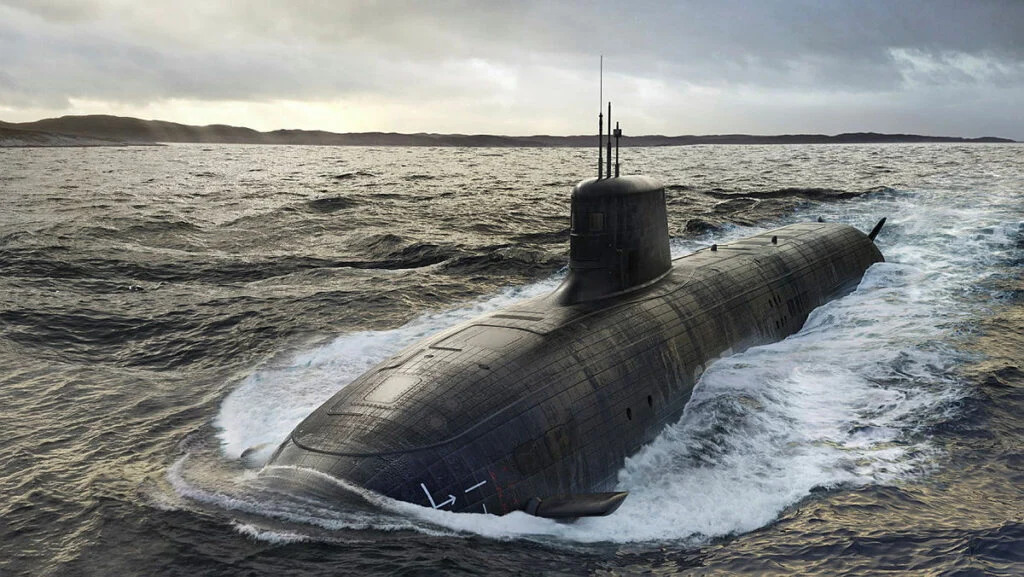
The Australian government has laid its cards on the table, unveiling a defense budget of 62.6 billion Australian dollars ($45.2 billion USD) for the 2026-2027 fiscal year. Representing a 6 percent increase from last year, this allocation already stands at 2.02 percent of GDP, but the ambitions go much further: a strategic surge toward a 3 percent threshold by 2033, signaling a radical transformation of the nation’s military capabilities in response to regional shifts.
The AUKUS Engine: Personnel Surge and Funding Boost for the Undersea Flank
The centerpiece of this new strategy is the Australian Submarine Agency (ASA), the entity tasked with managing the costliest and most complex military program in the nation’s history: the acquisition and development of nuclear-powered submarines. In a display of administrative might, the ASA’s budget will jump by 33 percent to 512.5 million AUD, while staffing levels are set to explode from 833 to over 1,200 personnel.
Despite the program facing rigorous scrutiny and external criticism regarding „management failings,” Canberra remains undeterred. By 2036, investments in underwater infrastructure and platforms are projected to swallow between 71 and 96 billion AUD. Australia has already proven it is willing to pay the price for maritime supremacy, having funneled over 5 billion AUD to its American and British partners to bolster the joint industrial base.
The Precision Arsenal: Billions for Long-Range Strike and Hypersonic Power
Beyond the depths of the ocean, Australia is investing heavily in the ability to strike from a distance. The Integrated Investment Plan (IIP) forecasts up to 35 billion AUD over the next decade for strike systems across air, land, and sea domains. A critical component is air-launched hypersonic weapons, a segment poised to receive up to 1 billion dollars in dedicated funding.
Furthermore, to mitigate dependence on global supply chains, the government is accelerating the local production of precision munitions. This industrial sovereignty initiative, designed to create a steady stream of „Made in Australia” weaponry, is expected to be backed by a fund of up to 36 billion AUD over the next ten years.
Closing the Surveillance Loop: New Platforms Enter Active Service
As massive future projects take shape, the air force is rapidly finalizing its current fleet upgrades. By the end of this year, Australia will take delivery of its 14th and final Boeing P-8A Poseidon, solidifying its anti-submarine warfare capabilities. Simultaneously, the final three MC-55A Peregrine surveillance aircraft are expected to touch down on Australian soil in the coming months, completing a technological puzzle designed to ensure total situational awareness across the Indo-Pacific.