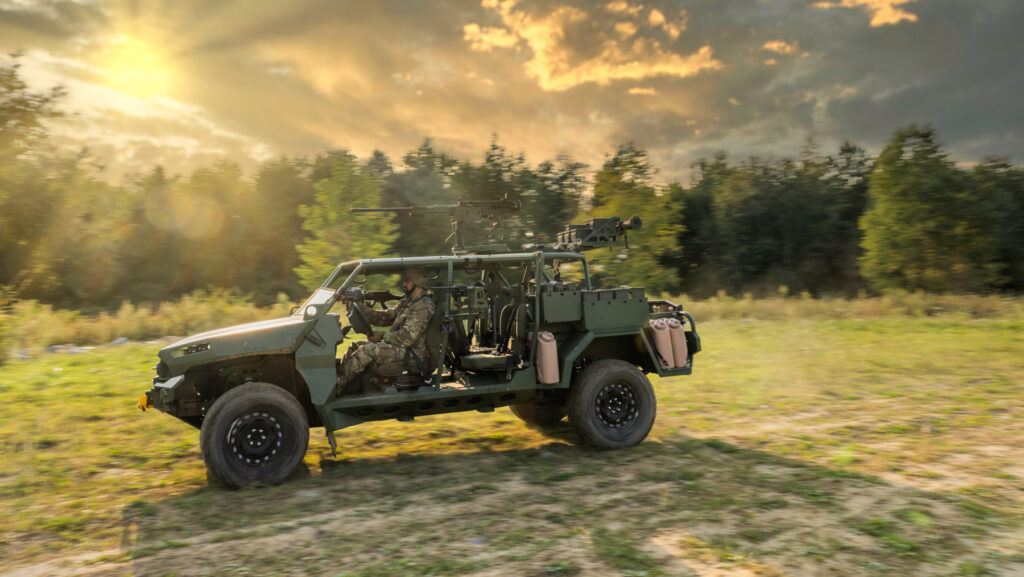
Moving beyond simple troop transport, the upcoming Infantry Squad Vehicle-Heavy variant is set to function as a mobile power grid, bridging a critical energy gap for future command posts.
The U.S. Army is shifting into high gear to field its heavy variant of the Infantry Squad Vehicle (ISV), with official requests for proposals expected to hit the streets this fall. Senior acquisition officials told lawmakers this week that the ISV-Heavy has become a „top priority,” with the service moving to bypass traditional bureaucratic hurdles to put this high-voltage capability into the hands of soldiers as quickly as possible.
From Squad Carrier to Mobile Power Plant
While the baseline ISV was designed for agility and rapid movement across the battlefield, the Heavy variant is being reimagined as a strategic energy asset. The Army has identified a „critical capability gap” regarding onboard and exportable power, which currently limits the effectiveness of advanced command posts in remote environments.
To solve this, the ISV-Heavy will essentially serve as a mobile generator. The technical specs are demanding: the Army is scouting for vehicles capable of providing 60 kW of continuous high-voltage DC power, alongside 15 kW and 4.8 kW streams for various tactical electronics. This shift transforms the vehicle from a mere transport asset into the lifeblood of the digital battlefield.
The Commercial Shortcut: Speeding Up the Fielding Process
In a bid to accelerate the program, the Army is leveraging „non-developmental” solutions. Instead of designing a vehicle from scratch, the service is looking for commercially available platforms that require minimal modifications. This strategy allows the Army to capitalize on the rapid innovation cycles of the automotive industry while ensuring the platforms are robust enough for combat.
The use of Program Acquisition Executives (PAEs) and portfolio-based management has already allowed the service to move faster than previous acquisition efforts. While the final contract award is projected for September 2027, the first deliveries are expected just months later, in January 2028—a timeline that reflects the urgency of the mission.
High Stakes and Heavy Competition
The incumbent, GM Defense—which currently produces the light ISV based on the Chevrolet Colorado—has already signaled its intent to offer a militarized version of the Chevrolet Silverado HD 3500 for the heavy competition. However, Army officials expect a robust field of contenders to vie for the contract.
The service plans to procure approximately 606 of these heavy vehicles over time, with the first batch of 34 units slated for fiscal year 2027. By integrating high-output power generation into a mobile platform, the Army is ensuring that its infantry units remain not only mobile but fully powered and connected, regardless of how far they are from a traditional base.