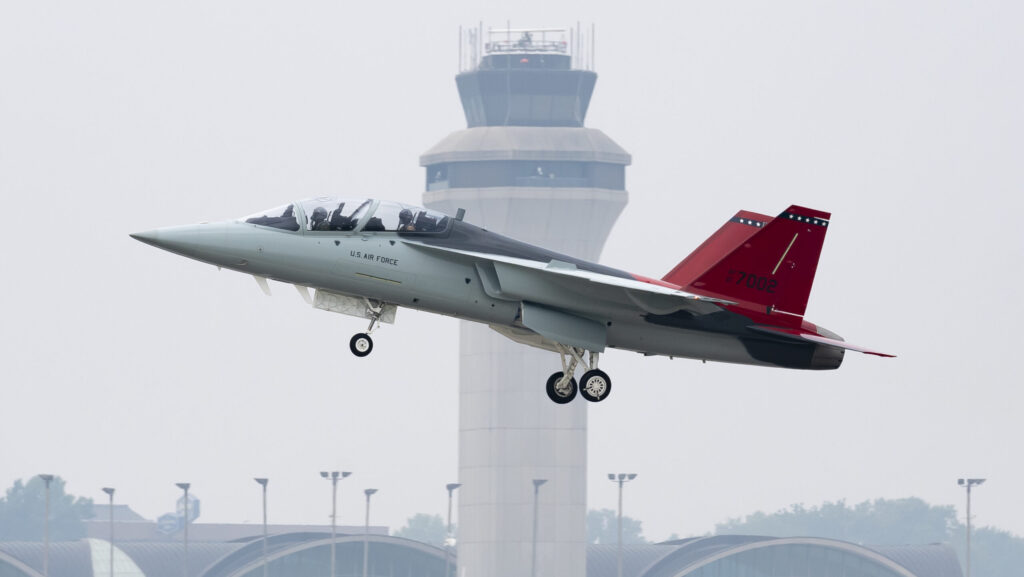
While the air force anticipates the aircraft entering service by 2028, internal documents reveal critical compliance deficiencies and risks taken to accelerate fleet modernization.
The T-7 Red Hawk program, intended to usher in a modern era of pilot training, is facing major hurdles that could jeopardize the safety of junior aviators. According to recent internal reports, the first several dozen aircraft will be delivered with an airworthiness risk classified as „serious.” This situation stems from a state of non-compliance on the part of the contractor, Boeing, which failed to provide the technical information necessary to fully guarantee the safety of critical components.
The absence of essential data endangers the safety of junior pilots
The central issue lies in the lack of data regarding „critical characteristics” for parts fundamental to flight safety. Without this information, officials cannot determine with certainty when a part might fail or what the correct inspection protocols should be. It is estimated that the first 82 T-7 aircraft, scheduled for production through 2031, will be affected by this information gap.
This vulnerability is considered particularly concerning because the aircraft will be operated by pilots early in their careers, who lack the instincts and experience required to manage complex emergency situations that can arise at high speeds.
Between a problematic new jet and the aging T-38 fleet
Defense officials find themselves in a strategic dilemma: accepting the programmatic risks of the T-7 or extending the use of the T-38 Talon aircraft, which are over 60 years old and present their own operational risks. The current „active management” strategy opts to accept certain limitations of the new aircraft to avoid further delays in the training pipeline.
Currently, the T-7 Red Hawk has surprising limitations: for example, the aircraft cannot fly in the rain because exterior access panels do not seal properly, allowing water to seep into sensitive subsystems. Additionally, the ground-based training system recorded pass rates of under 30% in key tests, yet was still shipped to bases to force program progress.
Contractual tensions and billions in additional costs for taxpayers
Many of the current problems are rooted in the fixed-price contract signed in 2018, which has led to massive losses for the manufacturer and ongoing disputes over data delivery obligations. There are indications that a change in the engine acquisition strategy is being considered, which could cost taxpayers up to $1.5 billion extra in exchange for access to essential technical data.
While officials insist the T-7 will be safe and effective upon delivery, the pressure to „go fast” raises questions about potential unforeseen consequences. While modernization is vital, the lack of rigor in enforcing contractual terms risks turning this next-generation program into a troubled acquisition, marked by rising costs and safety compromises.