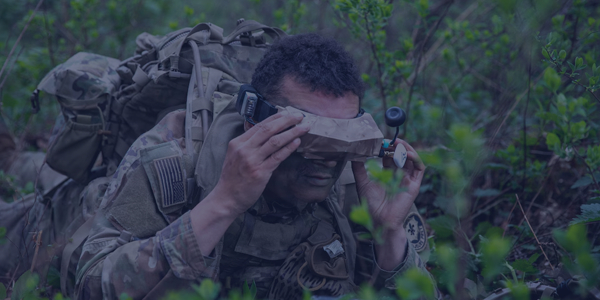
As algorithms become the foundation of battlefield decision-making, protecting mission data stored on tactical devices is now a critical operational requirement for armed forces.
Artificial intelligence (AI) is rapidly integrating into defense operations, accelerating planning, intelligence analysis, and mission coordination. This evolution transforms how real-time decisions are made but brings a major challenge: managing and protecting a massive volume of sensitive data flowing through increasingly complex and distributed systems.
An unprecedented technological leap within the Department of War
Recent data indicates a radical transformation of military infrastructure: AI usage has increased by 1,775% over the past year, reaching approximately 1.42 million users. This shift aims to equip warfighters with the ability to make faster, more precise decisions. However, as AI moves closer to real-time combat environments, classified data increasingly resides on exposed systems, creating new security risks for defense organizations.
The data-at-rest dilemma and the vulnerability of tactical devices
For defense teams, the central issue is whether „data-at-rest” security can be deployed wherever mission information exists. In distributed environments, protection is not just an option—it is a security necessity. If data cannot be secured, recovered, audited, and sanitized at scale, coverage will be uneven, creating critical vulnerabilities across the mission’s digital footprint.
Practical challenges include:
- Explosive data volume: AI constantly generates imagery, video feeds, and intelligence reports that must be secured immediately.
- Information mobility: Sensitive data is stored on laptops, tactical systems, and edge devices used directly in operations.
- Physical exposure: Devices must remain secure even when disconnected, powered off, or at risk of being captured.
Layered security architecture and the gold standard of encryption
To protect classified information, experts recommend implementing two independent layers of protection. The first layer, hardware-based, uses self-encrypting drives and pre-boot authentication, preventing data access before the operating system even loads. This is vital for systems transported or left outside controlled facilities.
The second layer, software-based, provides an additional encryption barrier that can be rapidly deployed on existing systems. Together, these two layers ensure a „defense-in-depth” model, protecting data even in the event of physical loss of the device or unauthorized access attempts.
Lifecycle control and the necessity of secure data sanitization
Data protection does not end once a mission is completed. As technology advances, secure sanitization of information becomes essential to prevent its recovery by adversaries after devices are retired or transferred. AI modernization and data protection must advance simultaneously; as algorithm-based operations expand, the ability to secure information must scale at the same pace to guarantee the success of future missions.