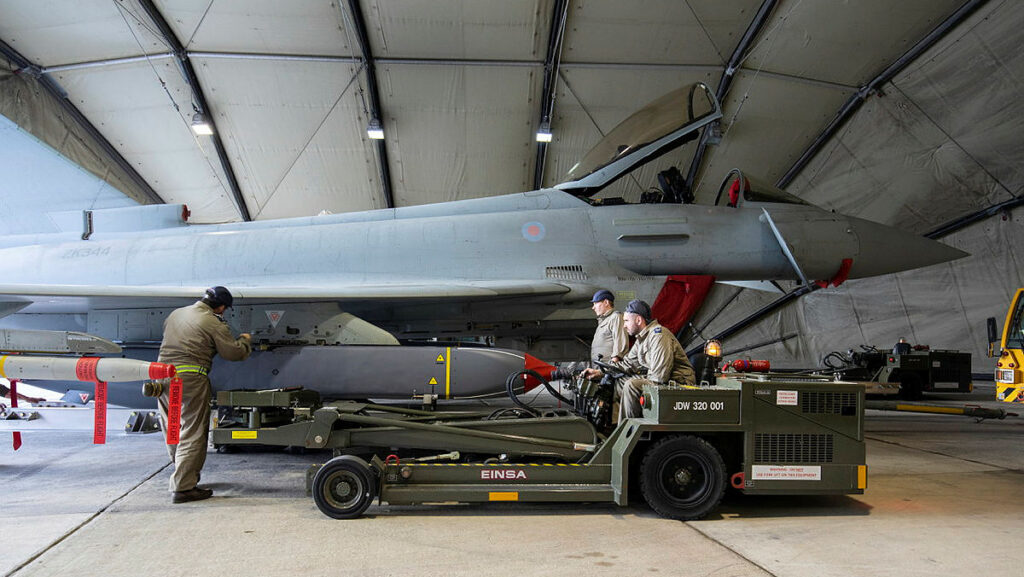
In an unprecedented strategic move aimed at reshaping the continent’s balance of power, 12 partner nations led by the UK have committed a massive $50 billion investment over the next decade. The goal is clear: developing new deep precision strike capabilities to strengthen NATO deterrence and provide Europe with a more potent military voice.
Strategic Autonomy: Europe Steps Out from Washington’s Exclusive Shadow
The new initiative, officially launched on the sidelines of the NATO Summit in Ankara, serves as a direct response to recent U.S. force adjustments in Europe. The coalition—which includes Romania, alongside France, Germany, Turkey, and Nordic nations—recognizes the urgent need to secure its own means of deterrence. The message is one of strength: European allies are stepping up to ensure a more robust alliance that is less reliant on overseas political shifts.
This colossal funding will support the development of the most advanced weapons NATO will have at its disposal in the future. These systems are designed to strike targets with pinpoint accuracy at ranges starting from 300 kilometers and, in some cases, exceeding the 2,000-kilometer mark.
Stealth and Hypersonic Tech: The Missiles of Tomorrow
The investment plans target high-stakes projects that push the boundaries of modern warfare. Among these is the Stratus program, a successor to the renowned Storm Shadow missiles, which will feature stealth-based derivatives and high-speed designs aimed at destroying enemy air defenses and naval assets.
Furthermore, British-German collaboration promises to deliver hypersonic weapons by the 2030s, capable of hitting targets over 2,000 kilometers away. While the primary focus remains on ground-launched capabilities, the effort will also explore naval and air designs. Simultaneously, participation in the Precision Strike Missile (PrSM) program will equip land forces with next-generation supersonic ballistic assets.
The Ukrainian Blueprint: Efficiency Over Bureaucracy
The decision to invest heavily in these capabilities was accelerated by the harsh realities of the war in Ukraine. The conflict has proven that long-range strike systems can be „game-changers” on the battlefield, providing a decisive tactical edge. However, military analysts warn that „serious money” must quickly translate into production lines rather than just headlines.
The primary challenge remains interoperability. A historical lack of compatibility between allied systems has hindered production capacity and rapid response. Through this new coalition, Europe aims to adopt a more agile approach, stripping away technical barriers to create a unified, modern, and lethal arsenal for any potential adversary.