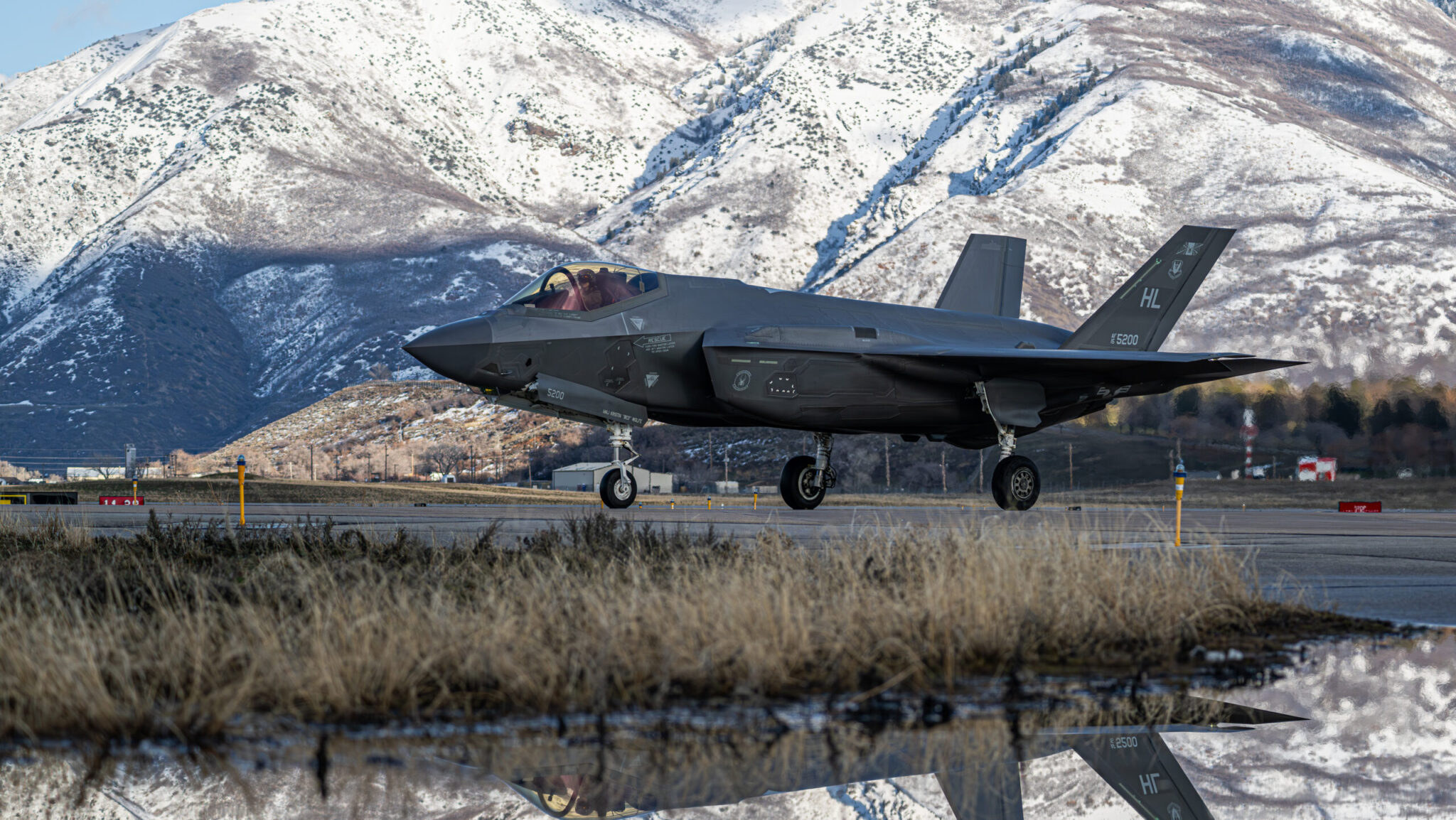
Pursuing a „Fifth-Generation Plus” Strategy
In the wake of losing the U.S. Air Force’s sixth-generation fighter program to Boeing, Lockheed Martin’s CEO Jim Taiclet has mandated a new direction for the company’s aeronautics division. The aim is to develop a „fifth-generation plus” version of the F-35 stealth fighter, targeting to deliver 80 percent of the capabilities of the forthcoming F-47 at half its cost.
In an earnings call today, Taiclet stated that the world’s largest defense contractor will not contest the Air Force’s decision but will instead concentrate on upgrading the F-35. The objective is to present the Pentagon with a cost-effective alternative to more advanced sixth-generation fighters.
Transforming the F-35 Architecture
“We’re basically going to take the [F-35] chassis and turn it into a Ferrari,” Taiclet remarked. He likened the planned upgrades to a „NASCAR upgrade,” leveraging co-funded technologies from both the Next Generation Air Dominance (NGAD) and F-35 programs.
Specifics on the proposed enhancements remain classified, but Taiclet mentioned potential technologies, including advanced passive infrared radar, designed to enhance the aircraft’s stealth and tracking capabilities. He emphasized that modern air combat prioritizes reaching an enemy target undetected, stating, “We want to shoot the other guys before he even knows we’re there.”
Strategic Exportability and Future Prospects
Lockheed seeks to build export-friendly components into the upgraded F-35, benefitting from existing features in the Block 4 modernization program. However, the availability of these upgrades to international customers will ultimately depend on U.S. government approvals.
The loss of the NGAD contract means Lockheed is no longer competing in the sixth-generation fighter market, having also missed out on the Navy’s F/A-XX program due to an unsatisfactory bid.
Lockheed’s strategy mirrors Boeing’s earlier response following its defeat in the Joint Strike Fighter competition in 2001, where it successfully promoted advanced “fourth-generation plus” variants of the F/A-18 and F-15.
Outlook and Other Opportunities
Despite the setback with NGAD, Lockheed executives remained optimistic during the call, highlighting a projected operational fleet of over 3,500 F-35s in the coming years and citing other emerging opportunities like the Golden Dome missile defense system, a priority for the Trump administration.
Maria Ricciardone, Lockheed’s treasurer and vice president for investor relations, noted that while the NGAD outcome might have longer-term implications, it is offset by other valuable contracts and projects on the horizon. Taiclet confirmed that the company has received classified feedback from the Air Force regarding its NGAD proposal and will use this information to inform their strategic adjustments moving forward.