Despite Secretary of Defense Pete Hegseth’s claims of a „historic and overwhelming victory” over Iran before the Senate, the reality on the ground paints a far more nuanced and troubling picture. While Pentagon officials count sunken ships and destroyed industrial bases, U.S. senators are asking an uncomfortable question: if Iran’s military is defeated, why are U.S. bases and commercial shipping still under fire? This gap between the destruction of the enemy and the inability to halt disruptions represents the conceptual failure of modern air warfare theories.
The failure of low-altitude control and the „seam” ignored by traditional aviation
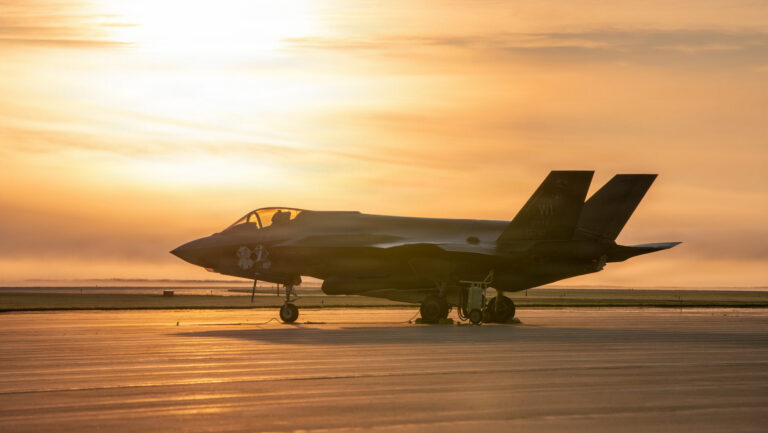
United States air forces won the battle for the „blue skies,” achieving total superiority at high altitudes, yet this success did not translate into control over the Strait of Hormuz. The issue lies in the concept of the „air littoral”—the low-altitude zone where Iran’s cheap drones and dispersed missiles managed to block a vital waterway despite the presence of fifth-generation aircraft. The U.S. military prepared for a conflict aimed at destroying integrated systems but found itself helpless against thousands of autonomous systems that do not rely on a centralized infrastructure to strike.
Doctrinal debates between the classic vision and the new reality of cheap, autonomous systems
Retired General David Deptula rejects the idea that the „air littoral” requires a strategic rethink, arguing it is merely a made-up division of the air domain. However, the reality of Operation Epic Fury proves otherwise: traditional air control is temporary and local, prioritizing speed over persistence. The enemy exploited exactly this gap, moving the fight downward toward the surface, where U.S. surveillance and interception systems were not designed to maintain a constant and dense presence.
Hard lessons for the future of the armed forces and the need to adapt to asymmetric warfare
The case of the Strait of Hormuz shows that air superiority must serve the entire joint force, not just the aircraft overhead. As long as the threat from Iranian drones prevented the U.S. Navy from escorting commercial vessels, it constitutes an airpower failure. Victory can no longer be measured solely by industrial destruction scorecards, but by the ability to ensure freedom of movement. For a force that has dominated the heights for generations, the hardest lesson may be that the decisive battle has now moved much closer to the ground.