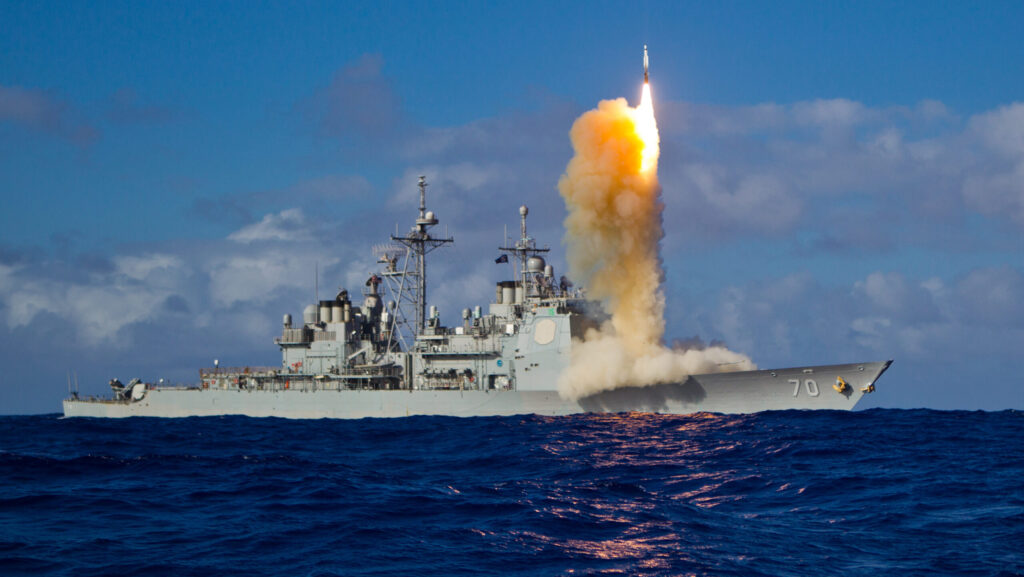
Pentagon reinforces its naval missile defense shield
The US Department of Defense has signed framework agreements with Boeing and RTX to ramp up production of key hardware components for Standard Missile‑3 (SM‑3) interceptors, a cornerstone of America’s sea-based missile defense. These ship‑launched surface‑to‑air missiles, integrated into the Aegis Ballistic Missile Defense System, are viewed as the backbone of US naval missile defense, both at home and in overseas theaters.
According to the official announcement, the new arrangements are designed to strengthen production of a series of critical naval interceptors that underpin the broader missile defense architecture relied upon by the United States and its allies.
Seven‑year agreements to scale industrial capacity
Although the Pentagon release was sparse on specifics, Boeing detailed that it has entered into seven‑year framework agreements under which the company will increase output of avionics and ejector assemblies for the SM‑3 Block IB and Block IIA variants. The goal is to enable higher production rates for the interceptors as demand for naval missile defense continues to grow.
Boeing will supply these critical components to prime contractor Raytheon, a subsidiary of RTX. RTX confirmed the framework arrangements in a post on X, stressing that they advance a series of agreements the company concluded earlier this year. In February, RTX signed another framework deal with the Pentagon aimed at boosting production of both SM‑3 variants, as well as Tomahawk, AMRAAM and SM‑6 missiles.
Not contracts yet — but a clear signal to industry
The arrangements announced are not formal contracts, but they are intended to give industry greater assurance while the government seeks congressional approval for multi‑year procurement and finalizes commercial terms.
“This gives us a clear demand signal to build and deliver SM‑3 interceptors at the levels needed to counter threats,” said Bob Ciesla, vice president of Boeing Precision Engagement Systems. He underscored that the SM‑3 is a vital element of the layered air and missile defense architecture that protects the US and its allies worldwide.
Fast‑track programs for critical weapons amid stockpile concerns
The new SM‑3 framework deals are part of a broader Pentagon push that has seen a flurry of similar announcements in recent months for other high‑priority systems, including PAC‑3 and THAAD interceptors and the Precision Strike Missile (PrSM). These weapons have been designated as critical in light of today’s security environment.
The moves come amid rising concern over dwindling munitions stockpiles as the Iran conflict and related regional tensions drag on. While some critics argue that the Pentagon has been slow to adapt its supply chains to current realities, defense leaders maintain they are moving aggressively to reform and accelerate production.
Pushing the defense industrial base onto a wartime footing
The strategic message to the industrial base is blunt: shift rapidly from a peacetime posture to something closer to a wartime production tempo, with stabilized supply chains and expanded manufacturing capacity.
“These agreements ensure our Warfighters get the munitions they need to win,” said Michael Duffey, under secretary of Defense for Acquisition and Sustainment, referring to the SM‑3 initiative. “We are stabilizing our supply chains, expanding munitions production and putting our entire defense industrial base on a wartime footing.”
Through long‑term framework arrangements like these, the Pentagon aims to spur substantial investment in new production lines, advanced manufacturing technologies and a highly skilled workforce. The stakes are clear: ensuring that the United States and its allies have sufficient interceptors and advanced weapon systems to deter and defeat emerging threats in an increasingly unstable international environment.