CENTCOM launches its first multinational, multi-domain attack drone force
For the first time, US Central Command (CENTCOM) has stood up a multinational, multi-domain attack drone task force, dubbed “Falcon Strike,” marking a significant evolution in how Washington and its partners wage war in the Middle East.
According to a CENTCOM statement released Thursday, Task Force Falcon Strike “will employ one-way attack drones consisting of unmanned systems from above, on, and below the sea operated by military support staff from the United States and regional partners.”
Drones take center stage in the shadow war with Iran
The announcement follows months of regional conflict and traded fire between Iran and its allied militias on one side, and the United States, Israel and Arab Gulf states on the other. Throughout this period, drones — including unmanned aerial vehicles and unmanned surface vessels — have played a central role in combat, especially one-way attack drones.
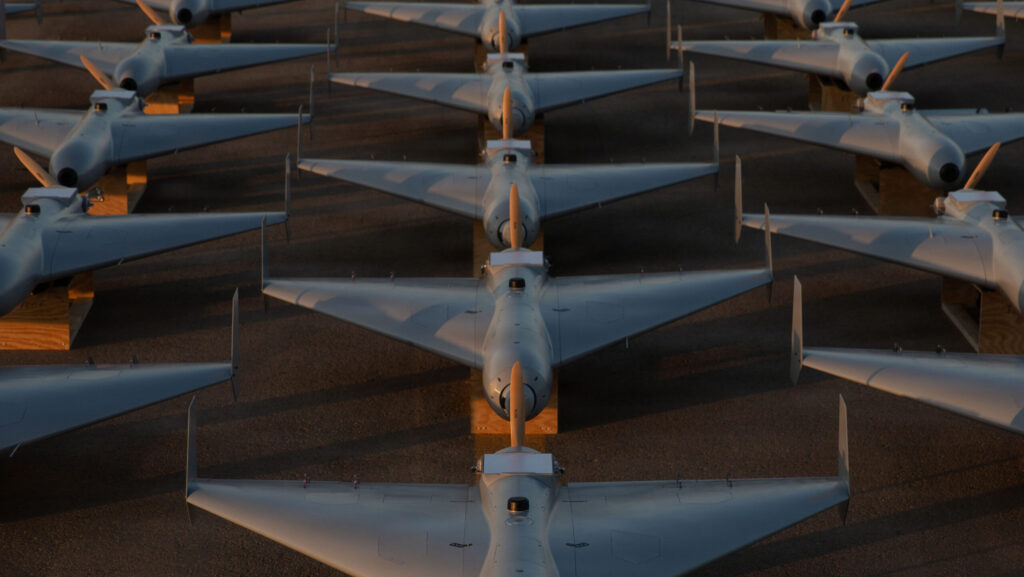
These systems include Iran’s Shahed family of UAVs, now synonymous with low-cost kamikaze strikes, and the American counterpart known as the Low-Cost Uncrewed Combat Attack System, or LUCAS, designed to deliver lethal effects at scale and reduced expense.
“Integrating and deploying our new capabilities together will help us rapidly realize the new possibilities that are on the horizon,” said CENTCOM commander Adm. Brad Cooper.
From “Scorpion Strike” to “Falcon Strike”: building a drone-based deterrent
In December 2025, CENTCOM launched Scorpion Strike, its first one-way attack drone squadron in the Middle East, effectively serving as a precursor to the broader Task Force Falcon Strike concept. In the months that followed, CENTCOM began formally inviting regional partners to join this emerging architecture for drone warfare.
“As regional partners formally join, Task Force Falcon Strike will scale attack drone capabilities across the Middle East into a unified multi-domain, multinational deterrent,” CENTCOM said Thursday.
Falcon Strike will be led by personnel from US Special Operations Command Central and unnamed “regional partners,” an arrangement that underscores a tight fusion between American special operations expertise and the region’s own military capabilities, all centered on autonomous systems and precision strikes.
An expanding arsenal of unmanned systems tested in combat
Since the outbreak of the US-Iran war, CENTCOM has deployed a number of unmanned platforms in combat for the first time, pushing the boundaries of how autonomous systems are used on the battlefield. Notable examples include:
- LUCAS – the Low-Cost Uncrewed Combat Attack System, a reverse-engineered variant of Iran’s Shahed-136 drone, adapted to US operational requirements;
- GARC – a 16-foot unmanned surface vessel (USV) built for littoral operations, including attack and surveillance;
- Corsair USVs – unmanned surface craft reportedly used to strike Iran’s port of Bandar Abbas, demonstrating the ability to hit strategic maritime targets without exposing sailors to direct risk.
Taken together, these platforms highlight a rapid shift from traditional manned air and naval raids to waves of expendable, remotely operated systems, coordinated across air, maritime and sub-surface domains.
Falcon Strike: deterrence through technology and coalition power
With Falcon Strike, the message from Washington and its partners is clear: drone capabilities are no longer experimental add-ons but are becoming a central pillar of regional deterrence. At the same time, the task force’s multinational structure signals that the United States is intent on building a shared, coalition-based architecture to counter Iran and its network of proxies.
Falcon Strike is more than just another drone unit; it is a further step in the weaponization of autonomous technologies and the adaptation of alliances to a new kind of warfare — one in which scale, speed and the relatively low cost of unmanned platforms can rapidly reshape the balance of power across the Middle East.