Riyadh poised to join exclusive fifth-generation fighter club
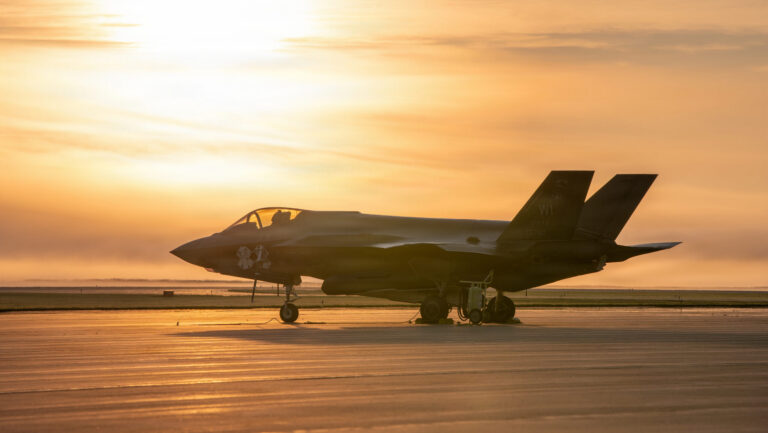
The United States has approved in principle the potential sale of up to 48 F-35A fighter jets to Saudi Arabia in a package valued at as much as $24.3 billion. The decision fulfills a commitment made by President Donald Trump while reopening a debate over the security risks involved in transferring highly sensitive military technology to the Saudi kingdom.
The proposed package includes conventional takeoff and landing F-35A aircraft, 49 F135 engines, support equipment, logistical services and training. The agreement is not yet final, and both the number of aircraft and the total value of the deal could change during negotiations.
Congress gets 30 days to review the transaction
The official notification launches a 30-day review period in the US Congress. Lawmakers have the authority to block the sale if they conclude that it could threaten national security or disrupt the military balance in the Middle East.
Although many arms agreements pass through Congress with limited opposition, the proposed F-35 sale to Riyadh is receiving significantly greater scrutiny. Several lawmakers have voiced concerns following reports that the transfer could provide China with access to highly sensitive technologies incorporated into the aircraft.
It remains unclear whether opposition on Capitol Hill will be strong enough to stop the deal.
A fifth-generation aircraft for a strategic partner
The F-35 is manufactured by Lockheed Martin, while its F135 engine is produced by Pratt & Whitney, a subsidiary of RTX. Lockheed Martin said the government-to-government agreement reflects a shared commitment to security, stability and long-term cooperation.
The company also said the aircraft’s capabilities support Saudi Arabia’s strategic priorities, including its economic and modernization program known as Vision 2030. Lockheed Martin added that it would continue working with US authorities as the congressional review process moves forward.
If completed, the transaction would make Saudi Arabia one of roughly 20 international operators of the F-35 and place it among the limited number of countries operating the only Western fifth-generation stealth fighter currently in production.
A new edge in the Gulf arms competition
The approval would represent a major diplomatic and military gain for Riyadh, while also strengthening its position in the regional arms race. The United Arab Emirates, which has likewise expressed interest in acquiring the F-35, could view the deal as a significant shift in the Gulf’s military balance.
Donald Trump pledged last year to support the sale of stealth fighters to Saudi Arabia as part of a proposed strategic defense agreement. He has also floated similar offers for other potential customers, including India and Turkey.
Turkey was previously removed from the F-35 program after purchasing Russia’s S-400 air-defense system, which Washington considers incompatible with NATO military infrastructure.
Rising tensions with Iran raise the stakes
The decision comes at a critical moment for Saudi Arabia and the wider Gulf region. The confrontation with Iran has drawn Riyadh, which hosts US military bases, into open conflict with Tehran.
The war has also disrupted oil exports that are vital to the Saudi economy. Attacks by Iran-backed groups on a strategic Saudi oil pipeline contributed to the shutdown of the facility.
The F-35 has been used extensively by the United States and Israel during the conflict. One US Air Force F-35A was reportedly struck by ground fire after conducting combat missions over Iran, although the pilot managed to land safely.
Israel’s qualitative military edge remains a central issue
One of the most sensitive aspects of the proposed sale is the US commitment to preserving Israel’s qualitative military edge over other countries in the region. It is not clear how the administration assessed the agreement’s potential impact on that obligation.
The notification sent to Congress nevertheless states that the sale would not alter the regional military balance. Washington argues that the aircraft would strengthen the security of a major non-NATO partner that contributes to political stability and economic progress in the Gulf.