





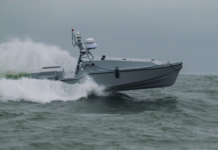
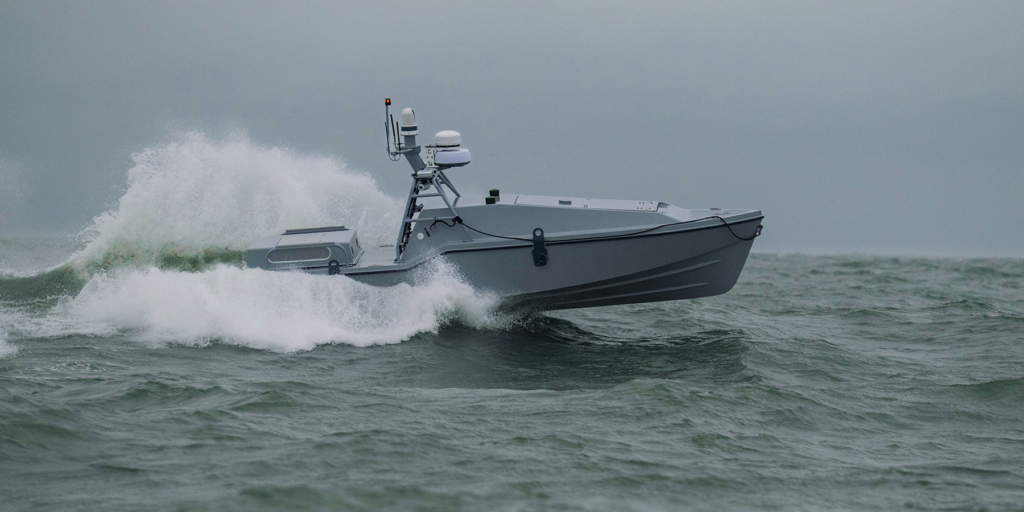
The U.S. Defense Innovation Unit (DIU) has launched the second phase of a competition to identify mature unmanned surface vessels that could be fielded rapidly. The effort offers up to $40 million in prize money for systems able to counter airborne threats in contested maritime environments.
Autonomous vessels for air defense
The competition, known as Suitable Warfighting Adaptive Payloads (SWAP)-USV, comes as the U.S. Navy faces relatively inexpensive threats — including explosive unmanned boats and small drones — with costly military platforms.
DIU says the force lacks enough persistent, distributed capability to detect, track and defeat such threats at a sustainable cost. Sprint 2, the competition’s second phase, focuses on systems designed to identify and engage airborne threats at sea.
A 200-nautical-mile range and resilient sensors
Submissions must combine proven unmanned vessels, sensors able to operate amid maritime clutter, mature hard-kill systems and interoperable command-and-control architectures.
The vessels must have a minimum operational range of 200 nautical miles and sustain speeds of at least 10 knots. Their effectors must be capable of engaging Group 1–3 drones and rotary-wing aircraft. The ability to take on larger Group 4 and 5 unmanned aircraft is considered highly desirable.
Water trials planned for 2027
Proposals for Sprint 2 are due by November 30, with water-based testing expected to begin in early 2027.
The competition is structured as a 12-month effort with three sprints. Sprint 1 began in July, and its water trials are expected this fall. The final sprint is scheduled to start in spring 2027, with testing expected to conclude that summer.
Sprints 1 and 2 each offer up to $40 million in prize money; Sprint 3 offers up to $20 million. The government has also set aside $200 million for prototype or follow-on production contracts after the competition.