




In 2026, U.S. forces and their Indo-Pacific partners used common operational and planning tools in a multilateral setting, enabling them to view the battlefield through a shared operational picture for the first time. A senior U.S. Indo-Pacific Command official said the development is helping allies coordinate their actions more closely.
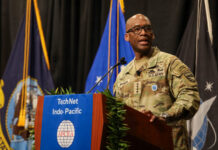
“This was really the first year that all of our capabilities are in a multilateral environment where our partners are using those warfighting applications and tools with the U.S. and we have a single COP to conduct warfighting,” said Brig. Gen. Michael Smith, the command’s director for command, control, communications, computers and cyber, at the TechNet Indo-Pacific Conference.
A shared network for planning and operations
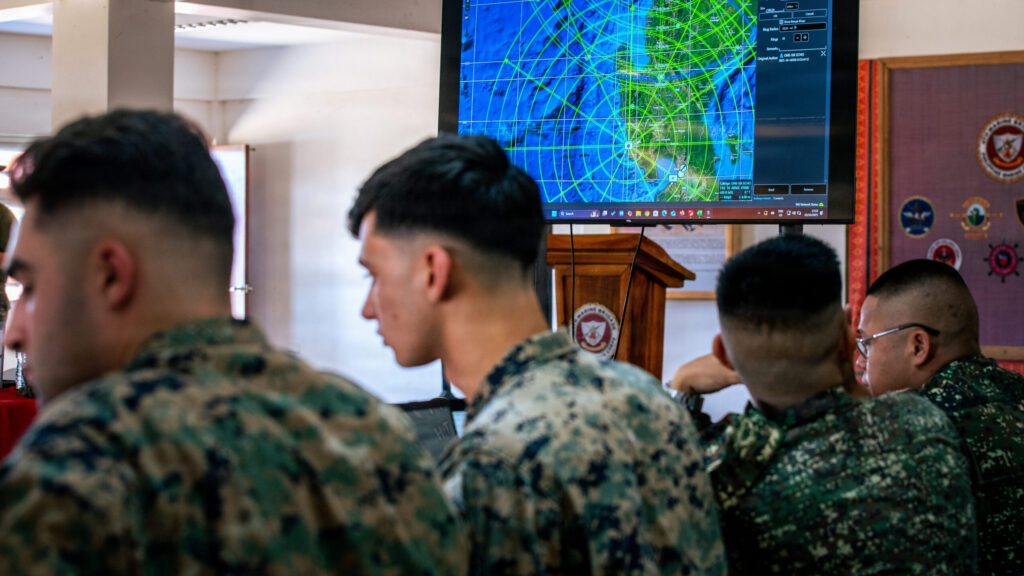
Known as the PACOM Mission Network, the system enables U.S. forces and partner nations to share data and mission-planning tools securely, including across classification levels. Its purpose is to support joint planning and operations, including the coordination of target engagements.
U.S. officials have for years called for mission partner networks that allow multiple nations to plan and operate in a shared environment. Progress has been complicated by differences in data sources, standards and classification—a challenge also facing the broader Combined Joint All-Domain Command and Control initiative, or CJADC2.
Officials say some of those barriers are now being addressed in the Indo-Pacific. The multilateral network is data-centric and designed around “zero trust” security principles. It operates alongside older bilateral systems, some of which remain in use.
“Our partners are now doing warfighting functions in our mission partner environment,” Smith said, adding that participating nations have welcomed the capability.
Exercises tested the sensor-to-shooter link
The network was used during several major exercises over the past year, said Lt. Gen. George Rowell, PACOM’s deputy commander. He did not specify how many exercises involved the system, but said the command conducted 17 exercises across nine host nations, involving 35 countries.
For the first time, PACOM and several key allies and partners communicated, collaborated, planned and executed missions using common tools, shared data flows and language translation, Rowell said.
He argued that the significance of the exercises went beyond testing weapons. They also demonstrated the ability to pass information from sensors to forces capable of engaging targets—a crucial requirement across a region where distance can slow information-sharing and operational responses.
Japan uses Maven to support coordinated strikes
Smith pointed to Japan’s use of the Maven Smart System, an artificial intelligence-enabled platform for planning and targeting that is integrated into the mission network.
Japanese partners used Maven to contribute to joint strikes and shorten the chain between identifying a target and engaging it, Smith said. The example demonstrates how shared data and tools can deepen military cooperation beyond the exchange of information alone.
Command and control as a pillar of deterrence
Rowell linked the ability to operate together with the credibility of deterrence in the region. A potential adversary, he said, must believe that allied forces can continue to operate even if primary systems are jammed or disabled.
“Assured command and control is inseparable from the concept of deterrence here in the Pacific,” he said.
The officials’ message is that shared networks are more than technical infrastructure: they must enable allies to maintain coordination and make decisions together in a contested environment.