




Companies want sharper priorities, steadier commitments and a clear path from demonstrations to contracts
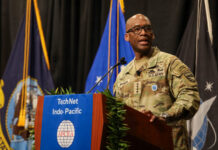
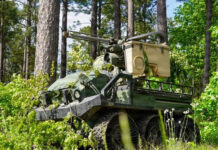
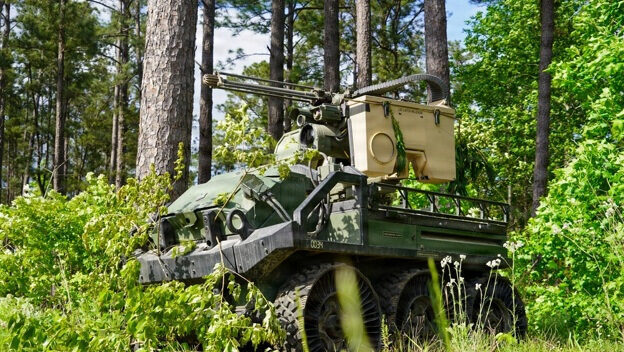
The Army’s effort to scale up unmanned ground vehicles is being hindered by an unclear and inconsistent demand signal to industry, according to Warren Sponsler, chief operating officer of the National Advanced Mobility Consortium (NAMC), a nonprofit that connects the Pentagon and industry on ground-robotics projects.
Companies are trying to determine which capabilities the Army wants and where they should invest, Sponsler said in a recent interview. The service talks about the need for these systems, but industry wants to know what comes next — and how to move from prototypes to production at scale.
Some firms order parts and put pressure on their supply chains before the Army has settled on a contracting approach or the specific capability it wants. Industry is willing to commit, Sponsler said, but the government’s commitment is often not specific enough. A lack of follow-through can discourage companies and weaken the relationship between industry and government.
Too many demonstrations, not enough clarity
Army exercises and technology demonstrations do not always send a clear message. The service has invited companies to showcase autonomous platforms at numerous events, but the sheer number of opportunities — combined with unclear mission objectives — forces companies, especially smaller firms, to make difficult choices about where to spend their time and money.
Sponsler said a more focused approach to testing and demonstrations could help clarify what the Army wants. Companies want to know which capabilities the service actually intends to field, and how participation in an exercise might lead to a contract and a viable revenue stream.
Competitions can offer a clearer route to contracts
Sponsler pointed to the Army’s xTech competitions, run through its FUZE acquisition and investment hub, as an example of a more focused approach. Some competitions have included demonstrations for autonomous logistics and sustainment, as well as autonomous breaching. In those cases, companies can see a clearer connection between demonstrating a capability and potentially winning a contract.
He encouraged companies — particularly those without a traditional defense-contractor background — to enter such competitions. He also urged them to track the Army’s official ground-autonomy programs, which provide clues about where the service intends to spend its money.
But those programs have also undergone changes and reorganizations. Within roughly 18 months, the Army altered its UxS program of record: the former Robotic Combat Vehicle program became the Unmanned Ground Commercial Robotic Vehicle program, before being divided between Project Sustainment and the Engineer Autonomous Breaching Capability program.
New autonomy commands could improve coordination
The Army has also moved its autonomy acquisition office, established a separate Portfolio Acquisition Executive for autonomy and renamed its Futures and Concepts Command the Army Futures and Autonomous Systems Command (FASCOM). The new command is expected to work alongside the Pentagon’s Autonomous Warfare Command (AUTOWARCOM).
AUTOWARCOM has not yet been formally established, as it requires congressional approval. Still, Sponsler said the new organizations could help better coordinate the Army’s and Pentagon’s autonomy efforts.
The reorganization, he said, could shift the focus from individual products to integrating capabilities at the formation level, while aligning leadership and resources more closely with service priorities. A Defense Department-level organization with a shared view across ground, air and maritime domains could also reduce duplicated efforts and improve coordination of resources.