
















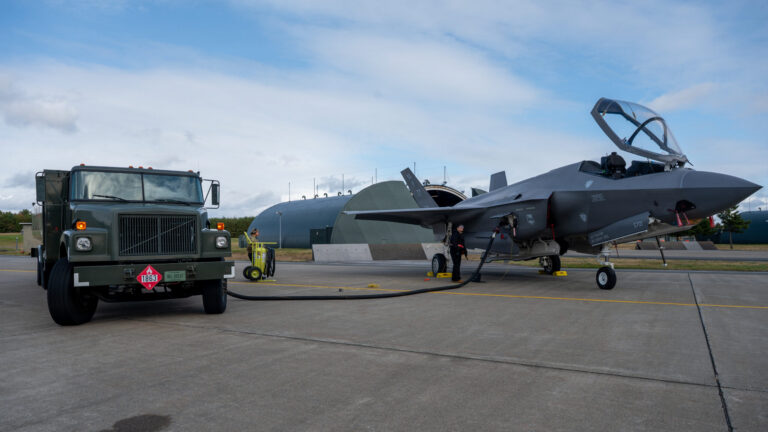
The Pentagon has awarded startup CycloKinetics an $86.3 million contract to advance alternative fuel sources that could power US military aircraft, space launch vehicles and weapons systems.
Founded in 2009, the Utah-based company has worked with the Defense Department for more than a decade to develop propellants that could replace conventional fuels without requiring major changes to existing engines or fuel systems. CycloKinetics’ solutions, derived from cyclo-paraffinic hydrocarbons, are said to have higher energy content, allowing them to deliver more energy in the same volume.
“Aircraft fly on megajoules. They don’t fly on liters or kilos,” company CEO Mukund Karanjikar said.
From testing to full-scale production
The new contract will fund a process prototype intended to demonstrate how production could be scaled ahead of a move to commercial operations. At full capacity, a single facility could produce tens of millions of gallons of fuel annually, Karanjikar said.
The company has raised private capital, and future financing could come entirely from private investors or from a public-private partnership.
Three fuels for aircraft, rockets and weapons
CycloKinetics is developing three products: CycloJP, a jet-fuel substitute; CycloRP, a rocket fuel; and CK-10, a propellant for missiles.
According to Karanjikar, the company’s jet and missile fuels could extend the range of the platforms using them. He has previously claimed that the aviation fuel could increase aircraft range by about 30 percent. CycloRP, meanwhile, could make it possible to carry a greater mass into orbit.
The company has successfully tested its solutions on military platforms, Karanjikar said, but declined to identify them. The tests, he added, showed that the propellants could serve as drop-in replacements in existing systems while delivering performance advantages over conventional fuels.
“The outstanding question is how soon we can make it, and how soon we can make a lot of it, to get this into the hands of the warfighter,” he said.
Strategic promise, but savings remain uncertain
Retired Air Force Gen. Tod Wolters, a former commander of NATO forces in Europe and a member of the company’s board, said CycloKinetics’ products could deliver a clear strategic advantage, particularly by extending range.
Potential savings remain difficult to determine, Wolters said. However, the fuels burn cleaner and could reduce engine wear and tear. He added that the technology could help save lives in conflict zones and support global prosperity if production proves less expensive than current alternatives.
Ambitions extend beyond the military
CycloKinetics is also targeting the commercial aviation market. Karanjikar expects demand for jet fuel to keep rising, while conventional petroleum supplies may struggle to keep pace.
“Petroleum crude will not keep up with the demand signals, particularly for aviation,” he said, arguing that new fuel sources are needed.
In his view, air travel has become deeply embedded in everyday life, making it essential to strengthen the resilience of the sector for both military and civilian use.