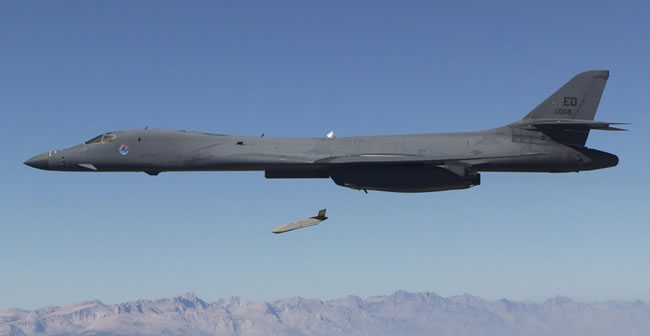
The House Appropriations Committee has unveiled its $1 trillion defense spending bill for fiscal year 2027, a landmark document that signals a major strategic shift. The proposal greenlights approximately a dozen multiyear munitions deals and restores funding for the critical E-7 Wedgetail program, reflecting an urgent push to modernize the military and secure the industrial base for future high-end conflicts.
The arsenal of democracy: Billions for munitions and multiyear contracts
A primary focus of the FY27 measure is the mass production of weaponry. The bill earmarks $10.6 billion for critical legacy munitions—including PAC-3, THAAD, and Tomahawk missiles—while allocating $836 million for low-cost munitions for the first time. By approving multiyear procurement authority, lawmakers aim to provide the Pentagon with the stability needed to finalize framework deals with defense contractors, ensuring a steady flow of essential hardware.
The autonomous frontier: Massive investments in drones and emerging tech
Innovation programs remain a top priority, with more than $2.9 billion dedicated to shoring up the industrial base and harnessing cutting-edge technology. The bill provides $1 billion for the Defense Autonomous Warfare Group (DAWG) and $1.4 billion for the Joint Interagency Task Force 401, both of which are laser-focused on drone and counter-drone systems. Leadership within the committee emphasized that recent global conflicts have highlighted the pressing need to produce the advanced weapons our troops require for modern warfare.
Superiority across domains: Restoring the E-7 Wedgetail and expanding the fleet
In the aerospace sector, the most significant update is the restoration of nearly $1.6 billion for the E-7 Wedgetail development, a program previously facing cancellation. The Air Force portion also includes $2.2 billion for the B-21 Raider and $5 billion for the development of the sixth-generation F-47 fighter.
For the Navy and Marine Corps, the bill allocates $56.7 billion for 21 ships, with a strong emphasis on the submarine industrial base, including the Columbia and Virginia classes. Additionally, private nuclear shipyards are slated to receive $1.3 billion for productivity enhancements intended to increase builder capacity and efficiency.
The trillion-dollar debate: National security vs social investments
Despite the strategic focus of the bill, the unprecedented spending level has sparked political friction. Critics argue that pouring over a trillion dollars into the Department of Defense comes at the expense of vital domestic sectors like education and diplomacy. Opponents claim that national security cannot be bought at the cost of mortgaging the nation’s future workforce and students, setting the stage for a heated debate as the bill moves through the legislative process.