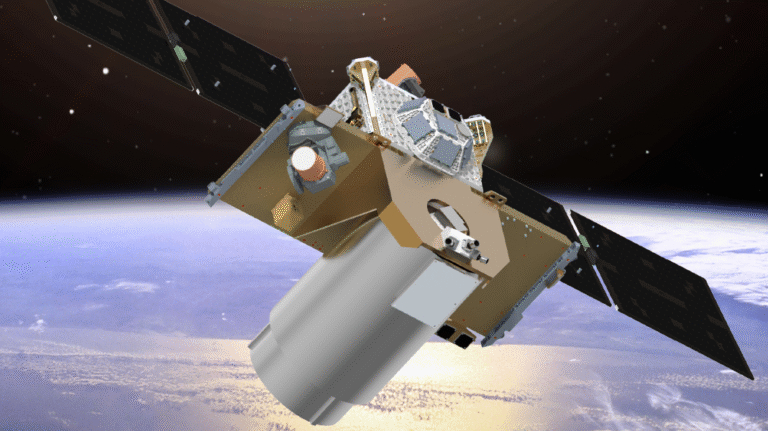
The National Reconnaissance Office (NRO) has increased funding for its existing contract with BlackSky Technologies to expedite the development of new wide-area imagery satellites. This move is designed to bolster AI-driven target detection and advanced analytics, providing a critical technological edge in global surveillance operations.
The AROS satellite and the technological leap toward 2028 The new capital injection will accelerate the development of the AROS broad-area collection satellites. The goal is to provide a flight-ready, multi-spectral mapping spacecraft and a foundational data collection system by 2028. While specific contract values remain largely classified, the latest modification is an eight-figure amount, bringing the total partnership value to over $150 million.
Automated threat detection: AI at the helm of tactical decisions The new AROS satellites are optimized to gather and process data that fuels AI-enabled analytics. These systems are capable of detecting and characterizing aircraft, vessels, and vehicles in real-time, providing decision-makers with strategic and tactical insights across vast geographic areas. This technology transforms raw data streams into actionable intelligence for national security.
Constellation synergy: The „tip and cue” capability for unprecedented monitoring The AROS wide-area surveillance birds will be integrated with BlackSky’s current Gen-3 constellation to create a sophisticated monitoring network. This „tip and cue” system allows broad-area satellites to identify potential targets and automatically direct high-resolution satellites to monitor specific locations. This synergy supports dynamic country-scale digital mapping, maritime situational awareness, and 3D digital twin applications.
NRO’s strategic vision: Integrating commercial innovation into spy missions NRO’s efforts highlight a paradigm shift in intelligence, surveillance, and reconnaissance (ISR). By leveraging strategic partnerships with commercial enterprises, the agency aims to utilize the best available AI capabilities to monitor global activities. This approach not only optimizes workflows for human analysts but also ensures a sustained intelligence advantage through the modernization of space-based infrastructure.