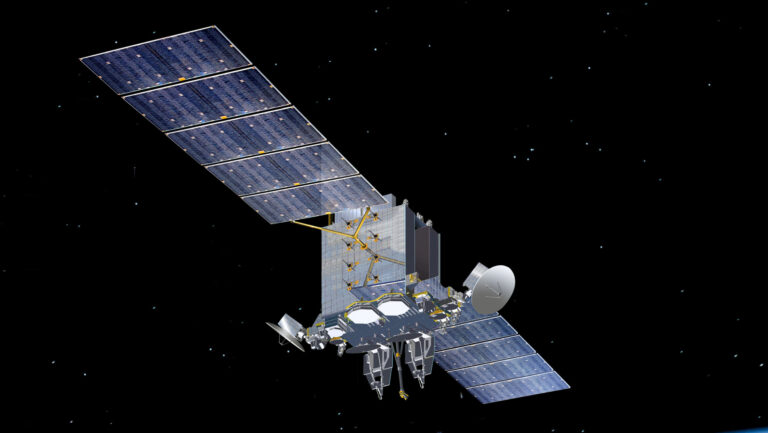
The Space Force has taken a significant step toward securing military communications by awarding contracts for the first two operational satellites under the Protected Tactical SATCOM – Global (PTS-G) program. Viasat and Intelsat will lead the development of this new fleet, designed to provide warfighters with a satellite communications infrastructure resistant to interference and jamming, a critical asset in modern operational theaters.
Strategic partnership with Viasat and Intelsat for the Swarm-1 mission The two awards, collectively worth $437.7 million, cover the manufacturing, integration, testing, and launch of the two satellites, collectively dubbed “Swarm-1.” To be stationed in geosynchronous Earth orbit, these platforms will provide regional connectivity in X and military Ka-bands. The project marks the beginning of a new era in protected tactical communication systems, with the goal of launching the first satellite in 2028.
Securing communications in contested environments through advanced technology PTS-G is a key component of the Space Force’s resilient satellite architecture, designed to counter emerging threats in areas where adversaries employ advanced electronic warfare. By leveraging the new Protected Tactical Waveform (PTW), the system ensures critical connectivity even in denied environments where conventional networks are compromised. This technology will eventually be embedded across U.S. and allied military platforms, as well as commercial satellites, offering unprecedented operational flexibility.
The shift toward a resilient and disaggregated space architecture This initiative is part of a broader effort to transition from current monolithic systems to a disaggregated satellite architecture capable of assuming the tactical missions of legacy AEHF satellites. This new structure not only increases resilience against physical or cyber attacks but also allows for faster integration of advanced encryption and data transmission technologies. With research and development budgets secured for the coming years, the PTS-G program is set to become the foundation for air and space information superiority.