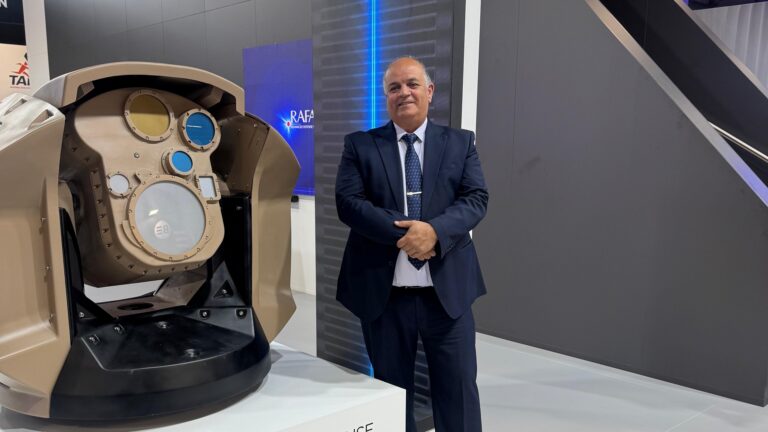
The CEO of the Israeli giant Rafael states he is “very optimistic” that the state-controlled firm could be ready to go private by the end of this year. In a move described as vital for the organization’s future, Yoav Tourgeman emphasizes that although the company has seen 30 percent growth year over year, maintaining this momentum requires a much more flexible set of rules than those currently allowed by the Israeli government.
“If I decide to buy a company, as a private firm it’s my decision and I can do it a week later,” he explained. Currently, any major investment must pass through the government’s bureaucratic filter, a slow process that comes with rigid requirements and stifles expansion in a highly competitive international market.
Government bureaucracy versus free market agility
While its direct competitor, Israeli Aerospace Industries (IAI), is also moving toward an initial public offering (IPO), Rafael seems to have an advantage regarding workforce reaction speed. Tourgeman pointed out that, unlike IAI’s union, which is more politically active, Rafael’s employees are more focused on professional issues, which could accelerate the transition process.
However, the final decision remains with the Knesset. Given the elections scheduled for October 27, the decision-making process is expected to restart immediately after the vote. The big question remains the depth of privatization: will the government maintain majority control, and on which stock market will the company be listed – Tel Aviv or NASDAQ? For Tourgeman, the priority is clear: removing the regulatory burden to gain operational flexibility.
Unconventional partnerships: From missiles to the auto industry
A central point of recent discussions has been potential collaboration with auto manufacturers, including rumors regarding a partnership with Volkswagen to produce Iron Dome components in Germany. While he did not comment specifically on the German group, Rafael’s CEO confirmed strategic interest in the automotive industry.
“Car manufacturers have skills that can contribute massively to affordable mass production,” Tourgeman stated. In the context of the recession in the auto industry, Rafael sees a “win-win” opportunity, looking to collaborate with factories in Germany, India, the US, or the UK to expand production capacity and its energetics presence in Europe.
No compromises in the face of political pressure from Paris
Rafael is also maintaining a firm stance in the face of diplomatic tensions. After the French government attempted to restrict the presence of Israeli firms at defense exhibitions in Paris, erecting black walls around their booths, Tourgeman was categorical: Rafael will not bend.
The executive confirmed that the firm intends to participate in next year’s Paris Airshow, regardless of the obstacles. “We will not bend to the French government laws. We will protect our interests even if we have to go to the Supreme Court. There are international laws that must be obeyed,” he concluded, reaffirming that Israel’s security remains the number one priority, now coupled with an acute need for commercial independence.