The Pentagon is accelerating the procurement process for its new multi-domain launcher, aiming to sign contracts as early as next month. The military strategy emphasizes extreme mobility and the use of high-energy lasers to counter modern threats, marking a paradigm shift in ground force equipment.
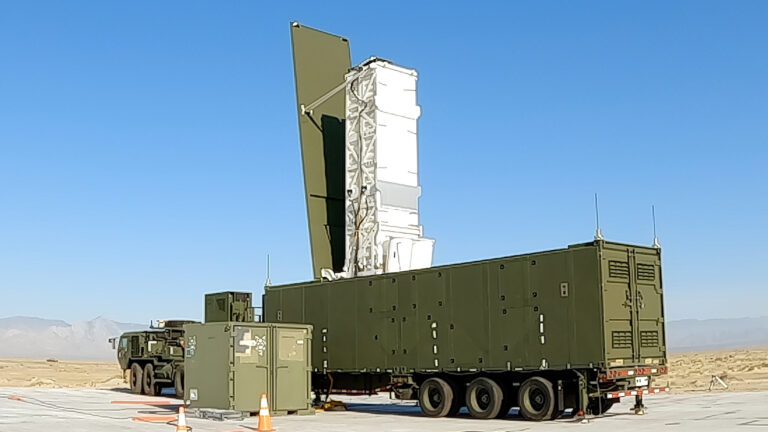
The United States Army is preparing to take a decisive step in modernizing its strike and defense capabilities. Lt. Gen. Frank Lozano, the service’s portfolio acquisition executive for Fires, indicated that the first contracts for the Common Autonomous Multi-Domain Launcher (CAML) program could be awarded during the August timeframe. This move comes on the heels of recent technical demonstrations evaluating autonomous mobile platforms and weapon system integration capabilities.
Avoiding vendor lock and prioritizing intellectual property flexibility
A core component of the Pentagon’s new approach is avoiding reliance on a single vendor. The Army intends to partner with multiple companies to prevent „vendor lock” and ensure access to system interfaces, facilitating future upgrades without legal barriers related to intellectual property rights.
This decision reflects the desire to maintain a competitive environment where multiple defense industry players can contribute innovative solutions. By utilizing Other Transaction Agreements (OTA), the Army seeks to accelerate technology implementation without the bureaucratic „baggage” and technical limitations that often arise in exclusive partnerships.
Evolution from Typhon to autonomous battlefield mobility
The CAML program is set to replace the Typhon system, the Army’s current mid-range launcher. Field experience demonstrated that the Typhon platform was slightly too large to provide the agility required in modern conflicts. The new project aims for medium and heavy variants of autonomous launchers that can be rapidly deployed and operated with a reduced logistical footprint.
This transition is not just a change of equipment, but a rethinking of how long-range munitions are transported and fired. The goal is to provide maneuver forces with a system that can survive in a contested environment while delivering superior firepower through robotic platforms.
High-energy lasers as a shield against drone swarms
In parallel with launcher development, the US Army is negotiating a strategic contract with AeroVironment for the E-HEL (Enduring-High Energy Laser) program. This represents the first program of record for a new family of lasers designed to take down airborne threats, primarily small- to medium-sized drones.
The laser technology, which has shown significant promise during testing at missile ranges, is intended to be mounted on various combat vehicles, providing constant protection for maneuvering forces. This defensive solution is considered vital for securing troops against the proliferation of unmanned aerial systems, transforming coherent light into an impenetrable barrier on the battlefield of the future.