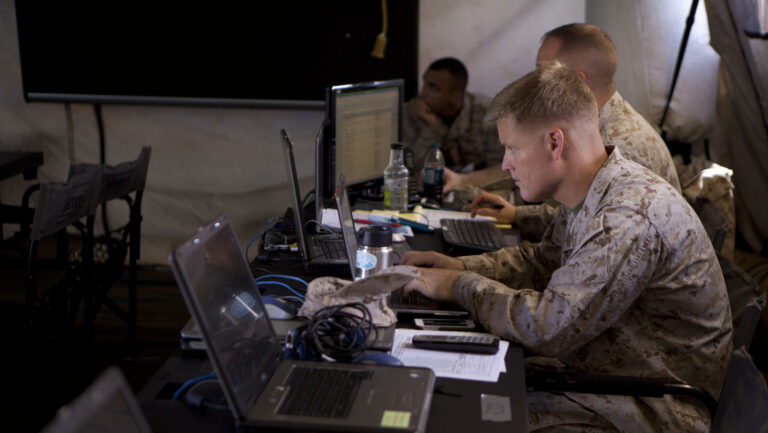
As the Pentagon moves at breakneck speed to embrace artificial intelligence, the head of US special operations has called for a critical „reality check” regarding the deployment of AI tools on the front lines. Speaking at the SOF Week conference, Adm. Frank Bradley acknowledged that while AI is undeniably making special operations forces more efficient, the transition to autonomous battlefield applications requires a cautious and calculated approach.
Hype versus hardware at the tactical edge
Adm. Bradley highlighted a significant gap between technological aspirations and current operational reality. He noted that among the various systems deployed today, very few actually utilize true AI at the tactical edge. While expressing confidence that such integration is possible, he warned that the military must be meticulous in how these capabilities are woven into the fabric of active combat. The focus, according to Bradley, should be on proven reliability rather than the mere speed of adoption.
The human anchor in the law of armed conflict
At the heart of the Admiral’s argument is the moral and legal framework that governs warfare. The use of lethal force is built upon the Law of Armed Conflict, requiring a human commander to exercise judgment. Bradley emphasized that any person deciding to employ lethal violence must have absolute confidence that the technology will operate within the bounds of humanity, distinction, and proportionality. Ultimately, the integration of AI into combat must not bypass the fundamental necessity of human trust and accountability in the decision-making process.