The United States Marine Corps is on the cusp of a radical transformation as drones begin to redefine the architecture of aerial missions. From robotic „wingmen” accompanying fighter pilots into combat to surveillance systems managed directly by troops, the new strategy promises to slash reliance on defense contractors and supercharge battlefield lethality.
The Rise of the Loyal Wingman: From Testing to Combat Readiness
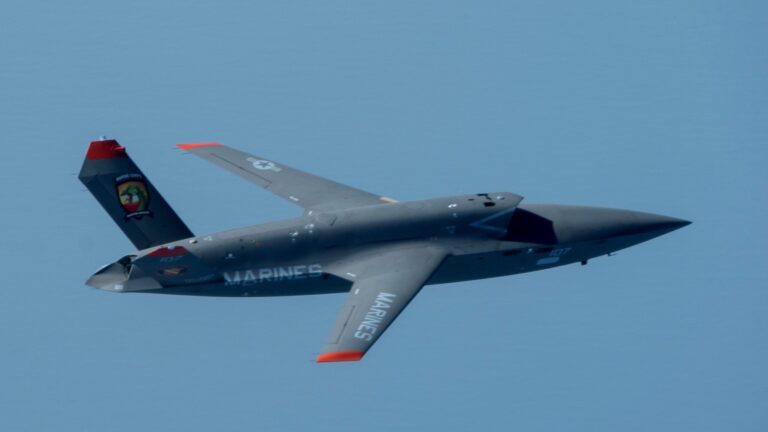
One of the most ambitious programs on the horizon is the development of drone wingmen for fighter jets. Under the initiative known as Marine Air-Ground Task Force Uncrewed Expeditionary Tactical Aircraft (MUX TACAIR), the Marines have tapped the XQ-58 Valkyrie platform to test this revolutionary concept. The objective is clear: get hardware into the hands of the force before the end of the decade.
Engineers are currently working to adapt the aircraft for conventional takeoff and landing, with the next two to three years dedicated to safety testing and mission system integration. Operational testing is slated for 2029 before the drones are deployed for combat. Military leadership likens this transition to the introduction of rotary-wing aircraft in the 1950s, describing it as a seismic moment for aviation. These drones are envisioned to carry extra missiles and advanced sensors, providing expanded combat capacity at a fraction of the cost of manned jets.
Breaking the Chains: Phasing Out Contractor-Operated Surveillance
Another major evolution concerns Intelligence, Surveillance, and Reconnaissance (ISR) missions. Currently, the service relies heavily on private contractors through „contractor-owned, contractor-operated” (COCO) arrangements. However, the future lies with Group 3 Unmanned Aerial Systems (mid-sized drones), which will allow the Marines to conduct „organic” ISR managed entirely in-house.
This pivot is driven by the need for operational flexibility and the inherent risks of utilizing civilian personnel in conflict zones. The new generation of drones will provide persistent overhead coverage and can be launched from austere environments, stripping away the bureaucracy and high costs associated with outsourced logistics. While contractor support will continue in the short term, technological leaps in the coming years will empower Marines to take total control of their own „eyes in the sky.”
Unified Command: The Quest for Universal Drone Software
To ensure the success of these diverse platforms, the Marine Corps is mandating a strict requirement: a common controller software solution. The goal is for troops on the ground to seamlessly hand off drone operations to one another using a universal interface, regardless of which company manufactured the hardware.
This strategy aims to eliminate „vendor lock” and champion open architecture. Officials emphasize that the service is moving away from bespoke, closed-loop solutions that cannot be quickly updated or manipulated. In a fast-moving combat environment, the ability to rapidly add, drop, or change software and hardware components will be the deciding factor in the conflicts of the future.