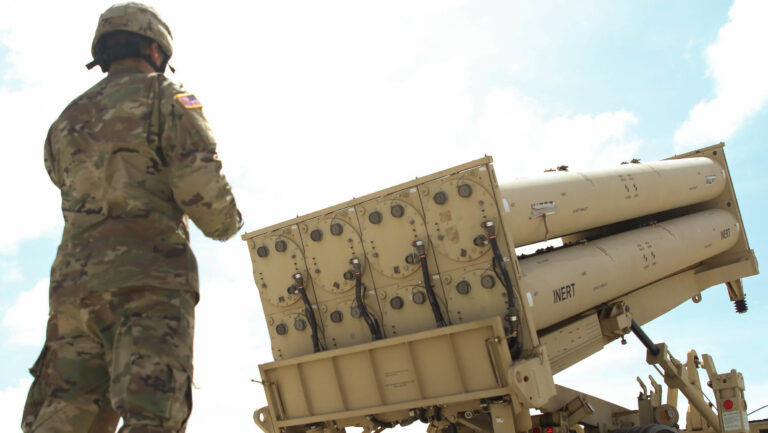
In an unprecedented move to bolster national security, the Missile Defense Agency has finalized a massive agreement with Lockheed Martin to significantly accelerate the production of missile interceptors over the next seven years.
Strengthening the arsenal of freedom: The move toward multiyear procurement and unprecedented scale
The $35 billion contract announced today puts into action a strategic framework designed to fundamentally reshape the American defense industrial base. This agreement will allow the production of THAAD interceptors to surge from the current rate of 96 missiles per year to an annual output of 400 units. Leadership at Lockheed Martin highlighted that this shift toward multiyear procurement is vital for strengthening the industrial foundation and delivering critical capabilities to the warfighter at a speed and scale never seen before in modern defense manufacturing.
Refilling the stockpiles: The strategic necessity of THAAD in the post-Iran conflict era
This massive investment comes at a pivotal time as Washington looks to replenish its munitions stockpiles following extensive operations against Iran. The drive to ramp up production is further supported by the invocation of the Defense Production Act, which assists suppliers in finding ways to overcome industrial bottlenecks. As a cornerstone of the nation’s missile defense architecture, the THAAD system remains essential for intercepting ballistic threats both inside and outside the atmosphere, providing a critical shield for U.S. and allied forces.
Industrial expansion across the nation: The rise of „Building 47” and new production hubs
Quadrupling production requires a significant expansion of physical infrastructure. Work on the new contract will be distributed across strategic sites in Texas, California, and Arkansas. A key highlight of this expansion is the recent groundbreaking of a new 87,000-square-foot facility in Troy, Alabama, notably named „Building 47.” This new plant is part of a broader surge in defense manufacturing, following similar multi-billion dollar agreements for other high-precision missile systems, ensuring the military maintains its technological edge through domestic industrial growth.