A Call for Innovation
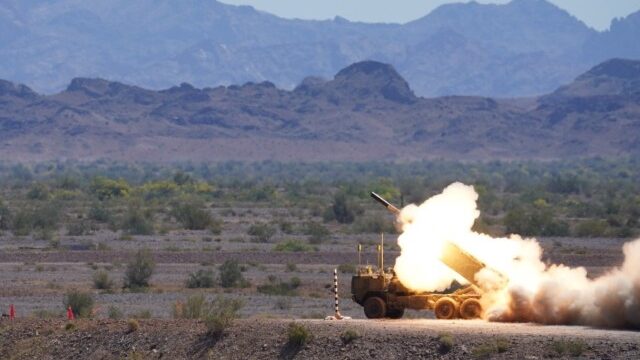
In a bid to enhance its missile launch capabilities, the US Army has initiated a search for two autonomous platforms under the initiative dubbed the Common Autonomous Multi-Domain Launcher (CAML). The Rapid Capabilities and Critical Technologies Office is spearheading this effort, seeking rapid development for both heavy and medium variants.
“CAML represents a next-generation launcher that promises to bolster operational effectiveness and crew safety while offering versatile deployment across domains,” the Army stated in their request for solutions.
The CAML Variants
For the heavy variant, CAML-H, the Army aims to install a launcher on the M1075 Palletized Loading System or a comparable 15-ton vehicle. This setup will be capable of launching the Tomahawk Land Attack Missile or the PAC-3 Missile Segment Enhancement interceptor. Additionally, CAML-H will incorporate an autonomous resupplying system that needs minimal human intervention.
In contrast, the medium variant, CAML-M, will utilize a Family of Medium Tactical Vehicle as the launch base for Multiple Launch Rocket System munitions and the new Indirect Fire Protection Capability using AIM-9X interceptors. The CAML-M will also have support from an Autonomous Resupply Vehicle capable of reloading missile pods autonomously.
Opportunity for Industry Partnership
The Army is open to engaging different industry partners for each of the CAML projects and anticipates quickly prototyping the CAML-M setup, which includes both IFPC and MLRS munition launchers along with the ARV. Prototyping of CAML-H will involve assessments of Tomahawk and PAC-3 configurations.
This initiative reflects a broader trend within the Army towards harnessing cutting-edge technology to enhance its operational capabilities. The development of autonomous launch systems aligns with ongoing internal projects such as the Autonomous Multi-domain Launcher, as well as partnerships with industry leaders like Lockheed Martin and the Raytheon-led DeepStrike team.
Strategic Vision
Brig. Gen. Rory Crooks, former leader of the Long-Range Precision Fires Cross Functional Team, highlighted the strategic importance of tapping into industry expertise. By refining requirements and validating the need for these autonomous capabilities, the Army is poised to engage in competitive rapid prototyping competitions to achieve its vision.
“We’re embarking on a path where cooperation with industry will be crucial to delivering scalable solutions for our formations,” Crooks emphasized. “The process begins with refining our requirements to ensure we meet our strategic objectives.”
This move underscores the Army’s commitment to advancing its technological capabilities through strategic industry partnerships and innovative solutions.