The Air Force has awarded a series of contracts totaling approximately $7.8 billion to bolster the Pentagon’s stockpile of air-to-air, air-to-ground, and anti-ship munitions. The move comes as the Pentagon seeks to replenish and expand its missile inventory amid ongoing conflicts and growing global tensions.
Lockheed Martin Secures $4.3 Billion for JASSM, LRASM Production
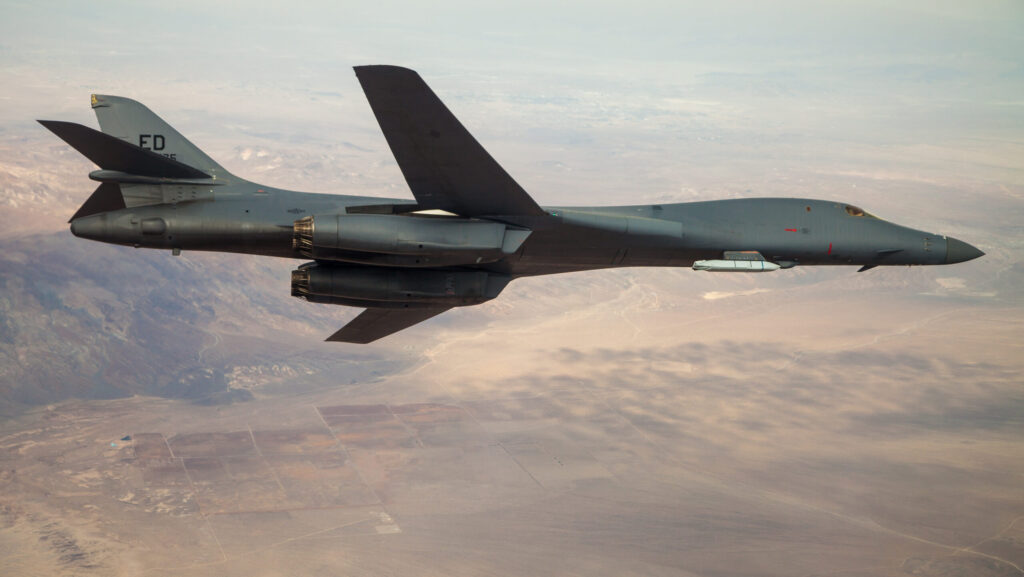
Lockheed Martin received the largest award, valued at nearly $4.3 billion, for the production of the Joint Air-to-Surface Standoff Missile (JASSM) and the Long Range Anti-Ship Missile (LRASM). The contract covers large lot procurement for JASSM production lots 22-26 and LRASM lots 9-12. The LRASM is derived from the JASSM, and both share the same production line. The contract also includes foreign military sales for Finland, Japan, the Netherlands, and Poland.
RTX’s Raytheon Awarded $3.5 Billion for AMRAAM Production
RTX subsidiary Raytheon secured a $3.5 billion contract for production lots 39 and 40 of the Advanced Medium Range Air-to-Air Missile (AMRAAM). This weapon can also be fired from ground launchers like NASAMS to defeat airborne threats. The contract includes foreign military sales for 19 countries, including Taiwan. This AMRAAM award marks the largest in the program’s history.
Munitions Stockpiles Strained by Conflicts, Aid to Ukraine
The two mega-munition buys come as the Pentagon aims to replenish and expand its missile stockpile, which has been strained by conflict in the Middle East and shipments to Ukraine. Officials have said a large munitions inventory will also be needed to deter a conflict with China.
Reconciliation Funds to Further Boost Munitions Buys
The spending plan for the OBBB (reconciliation) allocates significant funding to increase procurement of JASSM, LRASM, and AMRAAM, as well as to expand their production capacity.
Pentagon Seeks Affordable Alternatives
Despite these large-scale investments, Pentagon officials continue to explore more affordable alternatives to expensive munitions like JASSM and AMRAAM, including cheaper cruise missiles and less exquisite interceptors.