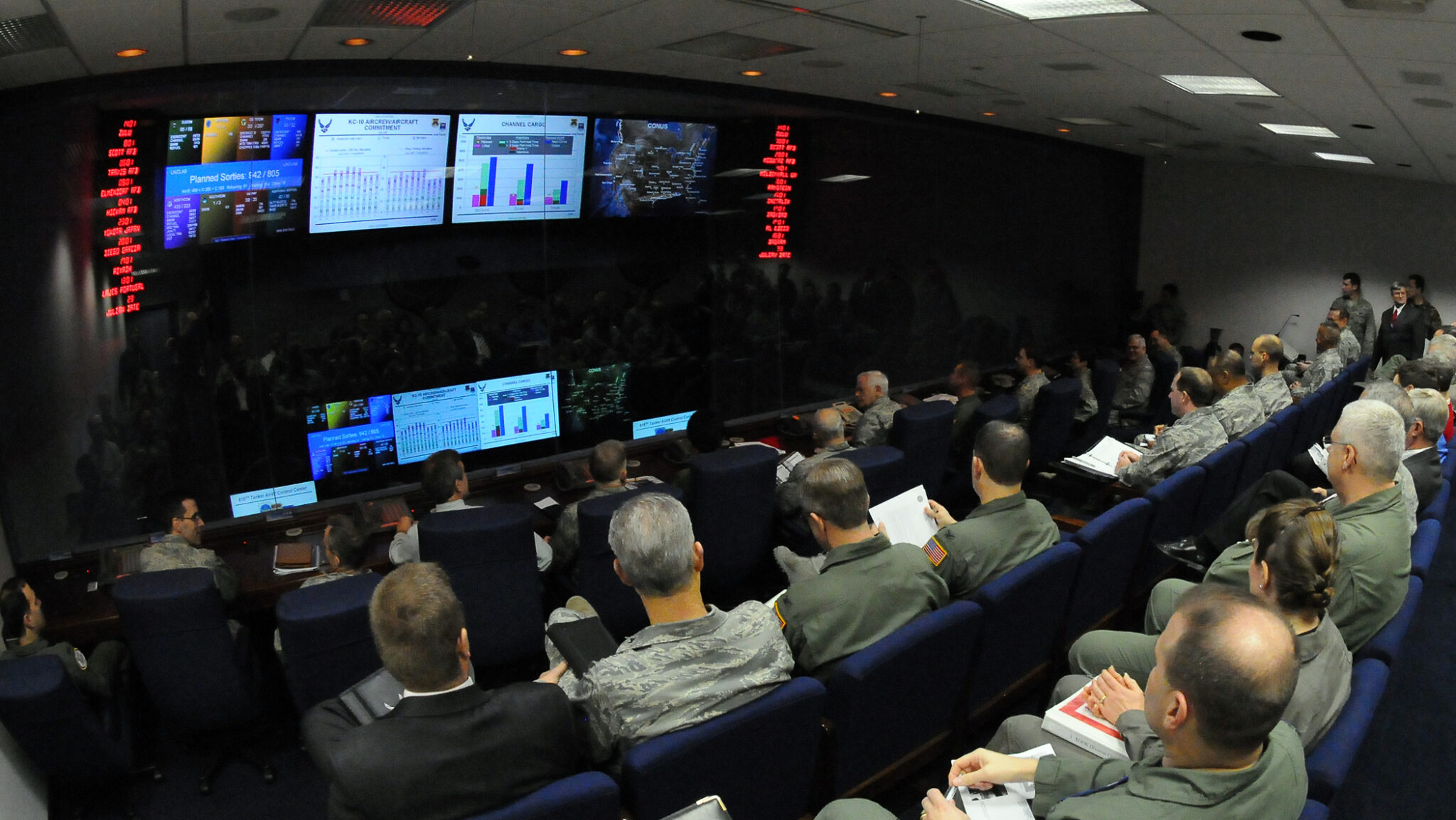
In the midst of concerns regarding “killer robots,” software developers and military officials are focusing on developing artificial intelligence (AI) tools designed to enhance a critical aspect of warfare: logistics. Effectively transporting troops and supplies globally requires intricate planning, involving numerous variables. Questions arise around the types and quantities of transport planes needed, fuel consumption, optimal refueling locations, and crew rest requirements. Planners must also consider contingencies for mechanical failures, adverse weather, cyber threats, or enemy attacks that could hinder airfield operations.
Retired Air Force General Paul Selva, who previously held leadership positions within Air Mobility Command and the Joint Chiefs of Staff, highlights the difficulties operational planners face in responding promptly to crises. “Typically, the planning process is expedited because the situation escalates before the planners can finalize their strategies,” he stated in an exclusive interview. Accurate planning can take several days, if not hours, which is inadequate for urgent scenarios.
To address these challenges, Gen. Mike Minihan, the chief of Air Mobility Command, sought Selva’s expertise two years ago. By collaborating with AI experts, they founded DEFCON AI with the aim of creating an innovative logistics planning software. Recently, after investing $7.5 million through Small Business Innovation Research contracts, DEFCON AI unveiled version 1.0 of their software, dubbed ARTIV—an AI toolkit available for government usage that optimizes logistics planning.
ARTIV significantly streamlines the airlift planning process, allowing users to compile necessary data in just five to ten minutes. The program adheres to the longstanding military principle of KISS (Keep It Simple, Stupid) by avoiding overly precise calculations and complex generative AI functionalities, instead utilizing deterministic algorithms for mathematical optimization.
The true innovation of ARTIV emerges in its ability to formulate an optimal air network before leveraging game theory and military intelligence to foresee potential disruptions posed by adversaries. The program offers users the flexibility to prioritize efficiency, speed, or resiliency based on their mission requirements.
As Selva noted, substantial material savings can be achieved regarding the number of planes and crews needed for operations, although higher resiliency settings may incur additional costs. Furthermore, DEFCON AI plans to enhance ARTIV by integrating other transport methods, such as trucks and ships, while sustaining its efficiency.
Though currently designed for Air Mobility Command planners, ARTIV’s recommendations could eventually be adapted for use within the Air Operations Center, which oversees the minute details of air missions. This initiative complements the broader digital transformation at Air Mobility Command, exemplified by “Project Nightmare,” which automates workflow and enhances crisis response preparation.
Overall, ARTIV represents a pivotal advancement in military logistics, leveraging AI to create an integrated suite of operational planning tools essential for swift, informed decision-making in times of crisis. As Maj. T.J. Britt from AMC’s Commander’s Initiative Group emphasized, ARTIV is part of a broader movement towards improved operational efficiency within command systems, ultimately enhancing military readiness and responsiveness in critical situations.