The Air Force’s new strategy for dispersing operations is intended to prepare for potential conflicts in the Indo-Pacific, but the growing arsenal of missiles and other weaponry held by adversaries such as China poses significant limitations, warned the service’s top officer on Wednesday.
“I would feel more confident if we had a more robust, active base defense, quite frankly,” Gen. David Allvin stated during a roundtable with reporters at the Pentagon. He highlighted that improving base defenses has become a joint requirement, necessitating collaboration with the Army.
Air Force officials have repeatedly underscored the importance of enhancing air defenses, particularly as some missions will be executed under more austere and geographically dispersed conditions due to the Agile Combat Employment (ACE) approach. This strategy will also require some difficult decisions regarding the placement of critical assets. “If we can’t have [air defenses] at every space, we want to be able to decide where to place them,” Allvin said, advocating for mobile solutions. “The old school principles of camouflage, concealment, and deception are still relevant; we just need to adapt them to a 21st-century context,” he added.
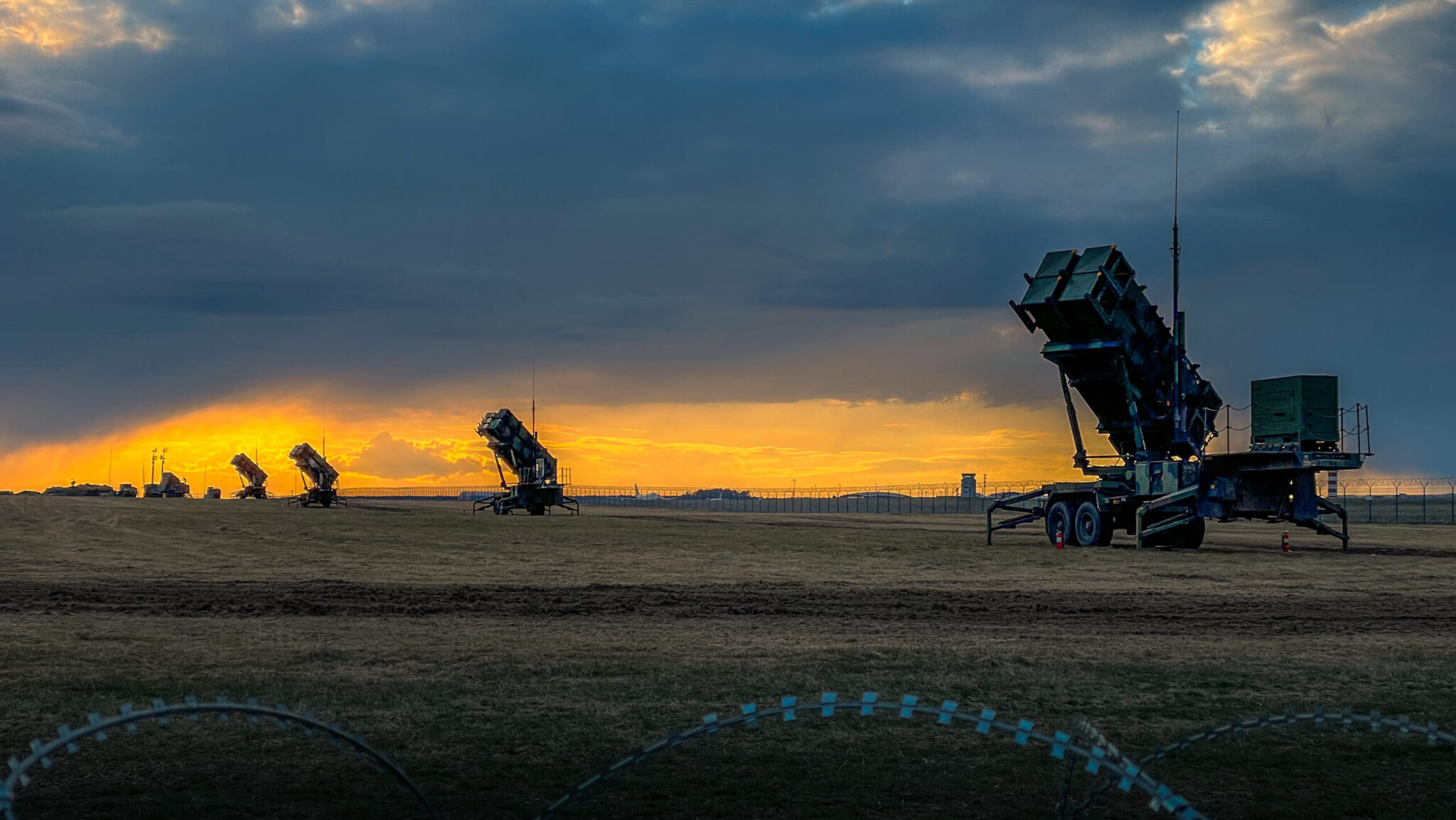
The Army has historically developed many technologies essential for base defense through high-demand systems like the Patriot missile system. Allvin indicated that there is a mutual understanding between the two services and that the Army is “pursuing some areas specifically with us to support agile combat employment.”
Learning from ongoing conflicts in the Middle East, the Pentagon is exploring new methods—such as directed energy technologies—to more economically neutralize threats like missiles and drones. Although Allvin did not specify the new capabilities currently under development, he deferred such inquiries to the Army. He noted that improving missile defense is only a part of the overall approach, as airmen will also need to rapidly detect enemy attacks and maintain communications in environments likely saturated with cyber threats and other forms of non-kinetic warfare.
In addition to these efforts, the Air Force is planning to enhance its preparations for conflicts in the Indo-Pacific by developing more large-scale exercises. During a recent address at the Hudson Institute, Allvin announced that one such planned exercise for next summer will be named Reforpac, reflecting a nod to Cold War-era exercises called Return of Forces to Germany, or Reforger. He assured reporters that the exercise will proceed even if Congress does not fulfill an unfunded priority list request, albeit with potentially reduced funding.
Allvin mentioned that recent exercises like Bamboo Eagle on the West Coast and upcoming events are allowing the Air Force to test its new deployable combat wing model, which emphasizes sending cohesive units into action rather than relying on a piecemeal assembly of assets from various locations. The general acknowledged that while the service has “a long way to go” under its “reoptimization” initiative launched earlier this year, it is making strides, including the integration of inspector general staff at major commands and the use of analytical tools to better track inventory, such as spare parts.
“I think I’m as encouraged now as I have been since I started this. On the readiness side, I believe we’re making good progress,” he concluded.