A Bold Showcase at Avalon Air Show
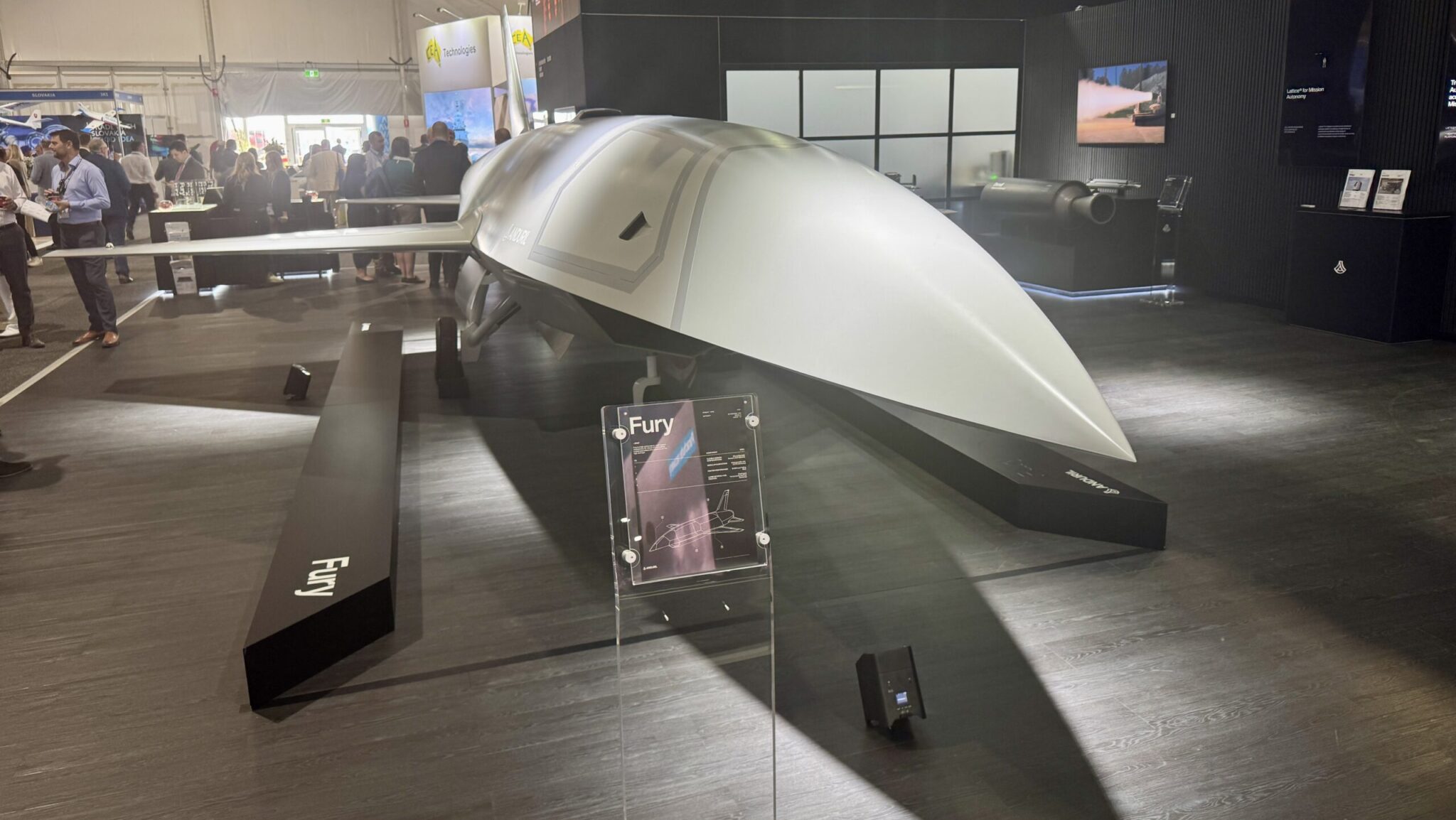
Anduril is making waves at the Avalon Air Show by presenting its Fury drone, positioning itself as a contender against Boeing’s MQ-28 Ghost Bat Collaborative Combat Aircraft (CCA). David Goodrich, CEO of Anduril Australia, emphasized the potential of the Fury drone to align with Australia’s CCA aspirations.
“It’s a capability that we believe would pique interest within the Australian CCA program,” Goodrich told Breaking Defense, noting the Australian military’s attention to the drone. “We have participated in a process initiated by the Royal Australian Air Force, and while I can’t delve into specifics, we’re awaiting feedback on our involvement, which is subject to government approvals.”
A Commitment to Local Production
In a move likely to engage the Australian government, Goodrich expressed Anduril’s willingness to manufacture the Fury drone in Australia should they secure a contract for the CCA. The company is exploring partnerships across various Indo-Pacific nations but refrained from disclosing specific collaborations, except for a recent announcement regarding a partnership with Singapore to advance mission autonomy for manned-unmanned teaming.
Fury’s Competitive Edge
The Fury drone is set to make its debut internationally at the Paris Air Show in June, with its first flight anticipated in the United States later this year. It is competing against General Atomics’ offering in the CCA arena, particularly for integration with the Next Generation Air Dominance Fighter (NGAD), now designated as the F-47 following a contract award to Boeing.
Anduril’s marketing efforts appear to be strategically aimed at the Ghost Bat, a drone that Boeing is developing specifically for the Australian military. The Australian government has allocated $600 million AUD (approximately $377 million USD) for ten Ghost Bats, along with an additional $400 million AUD (around $260 million USD) for three Block 2 upgrades.
Expert Insights on Competitive Landscape
Malcolm Davis, a regional defense expert from the Australian Strategic Policy Institute (ASPI), remarked that Fury’s introduction in Australia could intensify competition for Boeing. „It will certainly put some pressure on Boeing,” Davis noted, raising doubts about Boeing’s ability to produce the MQ-28 Ghost Bat at a competitive cost compared to Anduril’s projections for Fury.
Fury’s airframe employs significant commercial technology and utilizes Anduril’s autonomy software, which is also commercially sourced. Notably, Fury is powered by a commercial jet engine, a design choice that contributes to its cost efficiency. Former Air Force Secretary Frank Kendall estimated that each CCA aircraft would range from $25 million to $30 million in cost.
Boeing’s Response to Emerging Competitors
When questioned about the implications of Fury on the Ghost Bat program, Steve Parker, Boeing’s defense executive, acknowledged the increasing competition. He highlighted the advantage Ghost Bat holds with over 100 successful flights, setting it apart from competitors still in the research and development phase.
General Atomics, another major competitor in the U.S. Air Force’s CCA program, appears unconcerned about the presence of Anduril’s Fury. C. Mark Brinkley, a spokesperson for General Atomics, indicated that their focus is broader than targeting the Ghost Bat. “If Ghost Bat meets Australia’s needs, then that’s what they need,” Brinkley stated. He noted that General Atomics could produce over 200 CCA aircraft annually without requiring new facilities or additional workforce, subtly highlighting Anduril’s comparatively smaller operational scale.