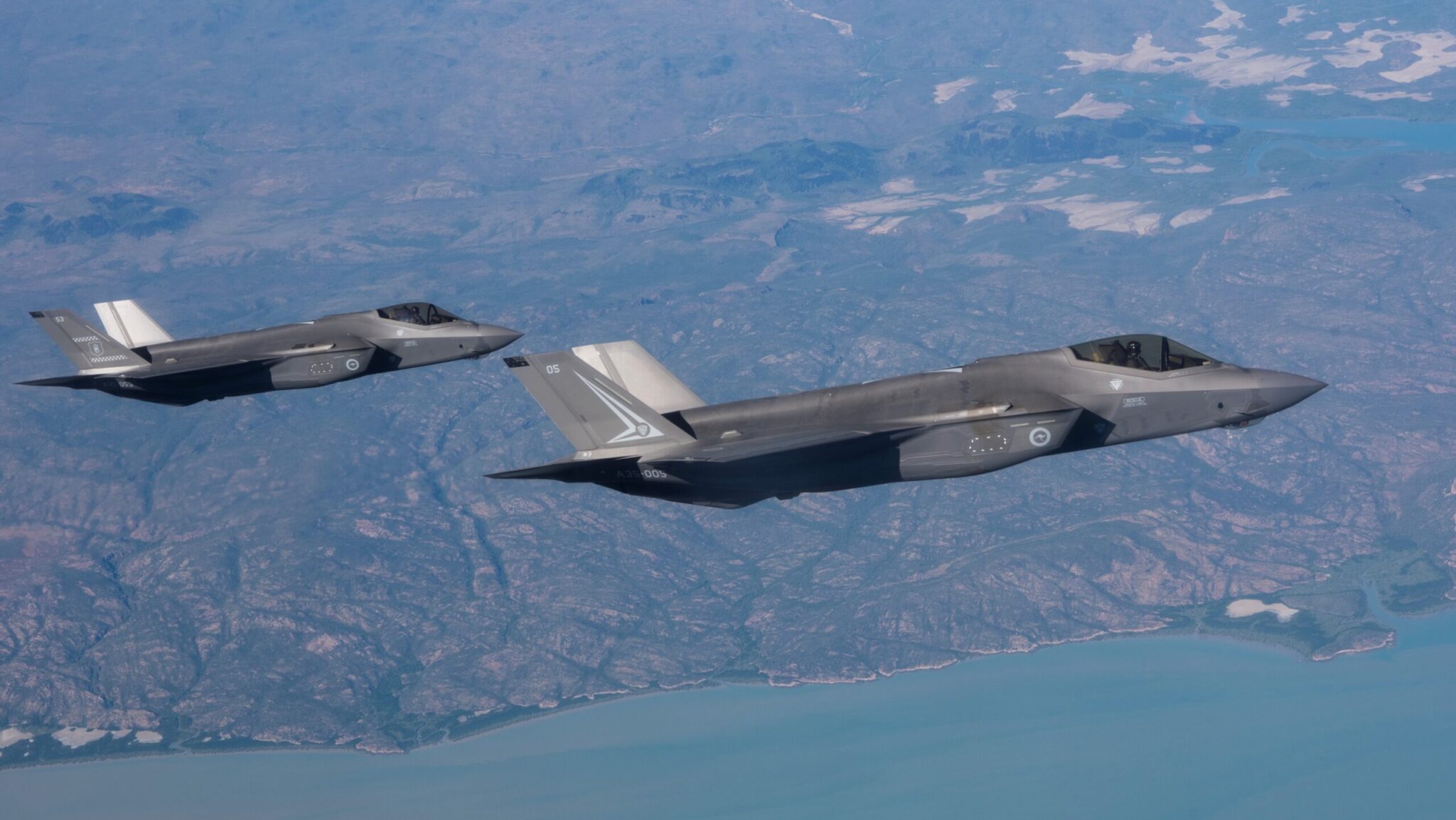
Lockheed Martin executives revealed at the Avalon Air Show that the Royal Australian Air Force (RAAF) could see the first delivery of 28 F-35 stealth fighters—previously canceled by the Australian government—as early as 2029, contingent upon the nation’s decision to proceed with the order.
Potential for Swift Delivery
J.R. McDonald, Lockheed’s vice president of business development for the F-35 program, stated in a briefing that if Australia opts to “inject Australian airplanes into the first lot available,” they would be part of Lot 21, set to be delivered in 2029. He noted, however, that achieving rapid agreement for this order would be challenging, stating it would be an „amazing feat” to move quickly from “zero to an agreement” due to the lengthy negotiation process typically involved.
McDonald emphasized the importance of delivery profiles, which would dictate how many jets Australia could acquire from each production lot, explaining that Lockheed currently maintains an annual production rate of 156 F-35 aircraft.
RAAF’s Interest in Additional Fighters
Air Vice Marshal Nick Hogan, head of RAAF capability, expressed openness to acquiring more F-35s, remarking, “More F-35s would be welcome, but we will go with the decisions of the government of the day.”
The Australian government initially planned to procure a total of 100 F-35s; however, the Labor government scrapped the order for an additional squadron of 28 jets last year to redirect funding to different priorities. In response, Australia’s opposition party has pledged to allocate $3 billion AUD to restore this squadron if successful in the upcoming federal election. Currently, Australia operates 72 F-35As, with the last of these jets delivered in December 2024.
Geopolitical Considerations and Customer Concerns
Any potential decision to reinstate the fighter squadron will unfold amid a backdrop of rapidly changing political dynamics, particularly in light of the new Trump administration, which has prompted some current F-35 users, like Canada, to reconsider their procurement strategies. Concerns linger regarding the U.S. government potentially limiting support elements, including maintenance and access to critical systems, for foreign customers, as previously warned by experts.
In a separate interview, Nick Smythe, Lockheed’s vice president for business development in sustainment, addressed how previous experiences have demonstrated the capability for countries to operate their F-35 fleets independently. He cited Finland and Switzerland as examples, noting their successful competitions with stringent sovereign capability requirements, ultimately leading to their selection of the F-35.
“What’s past is prologue here,” Smythe asserted, highlighting the proven capabilities of the F-35 for closed-border operations and stressing the importance of proper planning. He concluded that the experiences of Finland and Switzerland affirm that “yes, F-35,” alongside sufficient sovereign capabilities, are achievable.
As Australia reviews its defense strategy and political landscape, decisions regarding the F-35 squadron could significantly influence the country’s military capabilities and geopolitical standing in an increasingly complex security environment.