Chicago, IL – Boeing’s defense business reported no charges on its fixed-price contracts in the first half of 2025, marking the first time since 2019 that the aerospace giant’s defense unit hasn’t reported a loss for two consecutive quarters, according to regulatory filings.
CEO Ortberg Optimistic About Future
„We have a lot of work to get these programs through the development phase, but I do love the direction we’re headed,” Boeing CEO Kelly Ortberg told investors in an earnings call.
Turning the Tide After Record Losses
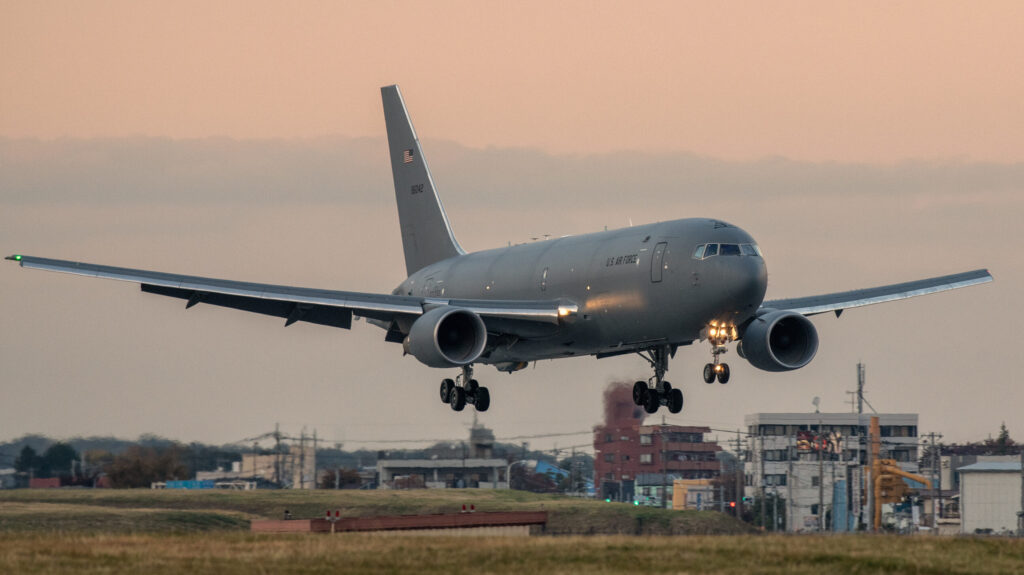
This reprieve follows a challenging 2024 where Boeing booked a record $4.9 billion in losses on fixed-price programs like the KC-46 tanker, MQ-25 refueling drone, and the Air Force One program. Under these contracts, Boeing assumes financial responsibility for expenses exceeding a certain threshold, and issues such as technical challenges, supply chain disruptions, and inflation have contributed to higher-than-expected costs.
However, this year has seen a positive shift, with Boeing’s defense unit securing the Air Force’s sixth-generation fighter program in March and a recent decision by the service to sole-source additional KC-46s.
Addressing Troubled Programs and Avoiding Past Mistakes
Ortberg acknowledged the need to „push through” the development phase for existing fixed-price contracts but highlighted progress under the leadership of Steve Parker, the new CEO of the defense business. Parker is working with military customers on challenging programs like the T-7, which is performing better after Boeing and the Air Force reached an agreement on a new approach.
„We want to get our BDS [Boeing Defense, Space and Security] business back to high single-digit margins and see nothing that’s going to keep us from doing that,” Ortberg said. „As we’re entering into these new contracts, we’re following our process to make sure that we only enter into the appropriate contracting type. So [on] these recent big wins we have, the development parts of those programs is always cost-plus. So we’re not making the errors of the past and signing up for fixed-price development, high-risk programs.”
Potential Strike Looms at St. Louis Facilities
One potential challenge is an imminent strike at Boeing’s production facilities around St. Louis, Missouri, which produce combat aircraft like the F-15EX and weapons including the Joint Direct Attack Munition. Approximately 3,200 members of the International Association of Machinists and Aerospace Workers (IAM) voted to reject Boeing’s contract offer, citing that „the proposal from Boeing Defense fell short of addressing the priorities and sacrifices of the skilled IAM Union workforce.” The union has a seven-day cooling-off period before a strike can begin.
Ortberg Downplays Potential Strike Impact
Asked about the potential strike, Ortberg downplayed the potential impacts, saying they wouldn’t reach the magnitude of last year’s machinist strike in Seattle, which lasted about two months and cost Boeing, its suppliers, and customers about $9.6 billion.
„The order of magnitude of this is much, much less than what we saw last fall. That was roughly 30,000 machinists,” he said. „So we’ll manage through this. I wouldn’t worry too much about the implications of the strike.”