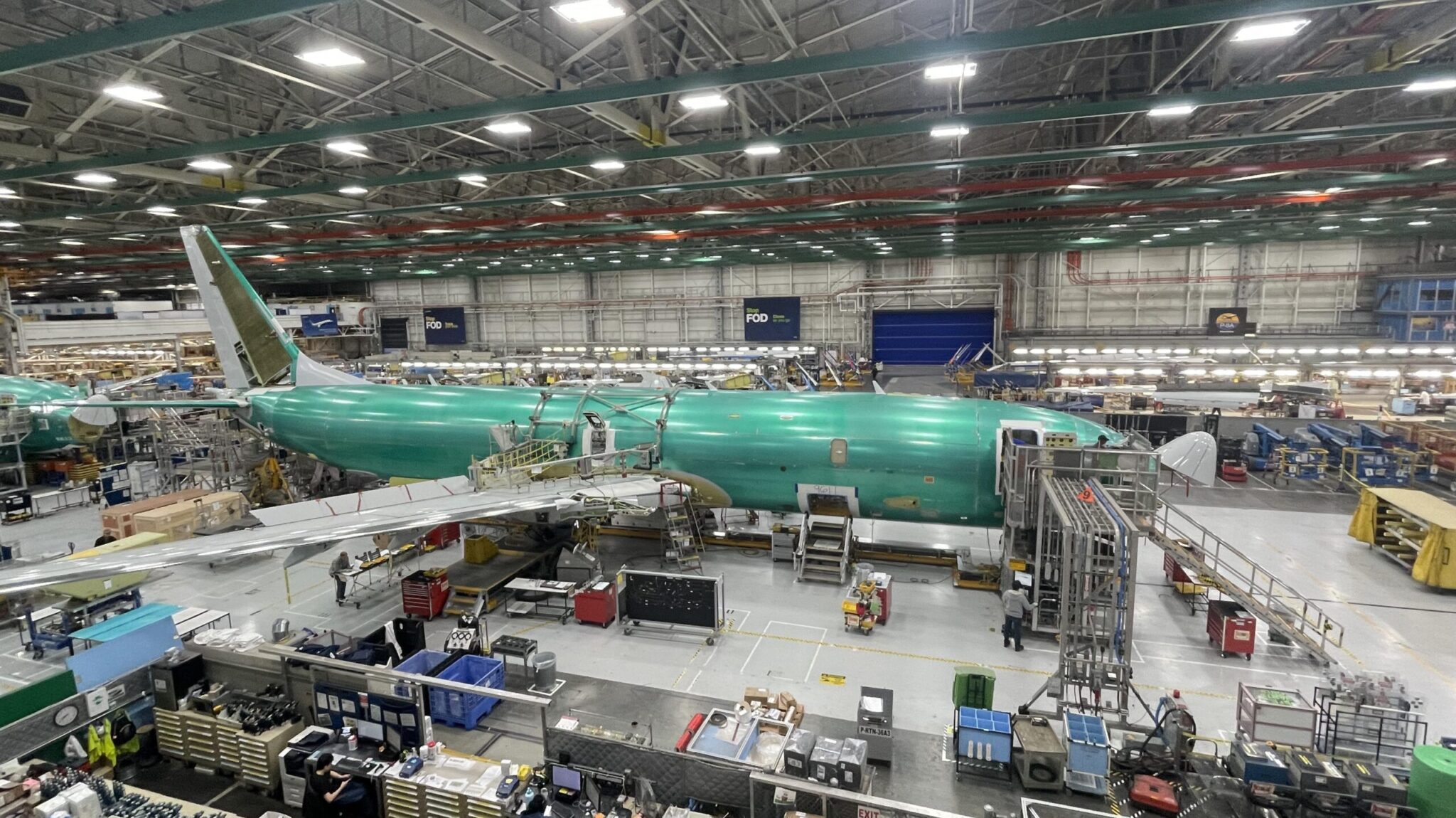
Boeing’s machinists union in the Seattle area voted on Monday evening to conclude a seven-week strike, approving a new contract with the aerospace giant. This decision allows Boeing to restart the production of its commercial derivative military aircraft, including the KC-46 tanker and P-8 Poseidon.
Members of the International Association of Machinists and Aerospace Workers (IAM), representing about 33,000 Boeing workers primarily in Washington state and Oregon, voted 59 percent in favor of ending the strike and are set to return to work on November 6.
The strike began after union members initially rejected a previous contract and voted to take action on September 13. Boeing CEO Kelly Ortberg acknowledged the difficulties over the past months and stressed the importance of collaboration moving forward. “We will only move forward by listening and working together,” he stated.
IAM 751 President Jon Holden noted that the strike helped Boeing workers “rebalance the scales,” resulting in improved wages and a better quality of life. He described the new contract as a foundation for future progress, emphasizing that union members now have a more significant voice in decision-making processes critical to ensuring quality and safety in aircraft production.
The strike had immediate financial repercussions for Boeing, halting production of its 737, 767, and 777 jetliners, which also affected military variants such as the P-8 Poseidon and KC-46 tanker. Boeing reported $6 billion in losses during the third quarter, including $2 billion attributed to defense programs, which were partially caused by the work stoppage.
As the strike began, Boeing pledged to work with suppliers and customers to maintain continuity on the P-8 and E-7 Wedgetail programs, assuring the US Air Force of its commitment to deliver a minimum of 15 KC-46 tankers during fiscal 2024.
During an October earnings call, Ortberg indicated that reaching a contract agreement was essential for moving the company forward. Despite attempts to reset relations with the union, frustration grew as the strike continued. Holden revealed that Ortberg warned that future proposals would include less favorable terms if the union rejected the latest offer.
The new contract includes a 38 percent general wage increase over four years, $12,000 in bonuses, the reinstatement of the company’s incentive plan, and increased contributions to 401(k) plans. Notably, Boeing committed to producing its next commercial aircraft in the Puget Sound region if a new program is launched during the contract term.
While the deal marks an improvement from previous proposals—a 25 percent wage increase in the original September 8 offer and a 35 percent increase in the latest October 19 proposal—it still falls short of the union’s initial demand for a 40 percent wage increase. Additionally, Boeing has declined to reinstate the legacy pension program that was phased out in 2014.
IAM 751 urged its members to accept the contract, stating that they had reached the limit of what could be achieved through bargaining and strike action. In a November 1 message to employees, Ortberg called for unity to rebuild the business and focus on delivering high-quality airplanes, emphasizing the reliance of many on Boeing’s success.