After an absence of nearly two decades, aerospace giant Boeing is consolidating control over its supply chain, finalizing the acquisition of Spirit AeroSystems for $4.7 billion. The strategic move reabsorbs a crucial supplier of aircraft structures, for both commercial jets and defense aircraft such as the KC-46 and B-21 bombers.
Green Light from the FTC: Transaction Details
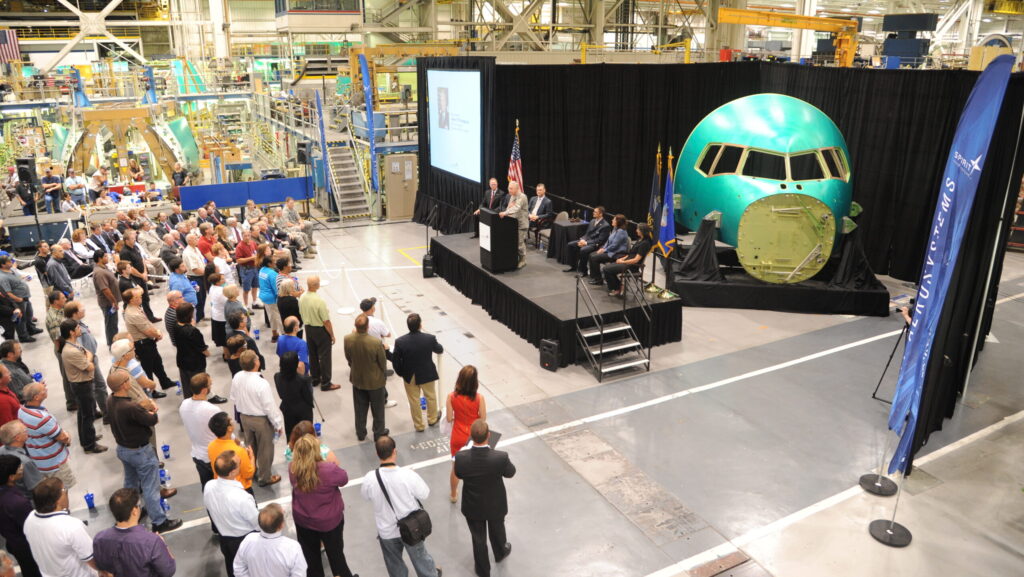
Final approval came from the Federal Trade Commission (FTC) on December 3, paving the way for Boeing to take over all Spirit operations related to production for Boeing. This includes the construction of fuselages for the ubiquitous Boeing 737 and other commercial aircraft that form the basis for military aircraft like the P-8A Poseidon.
Spirit Defense: Strategic Autonomy within the New Boeing Empire
In a move aimed at maintaining market flexibility, Spirit Defense will operate as a „non-integrated” subsidiary within Boeing’s existing defense unit. This will allow Spirit Defense to retain „independent governance and operations,” even while being aligned for financial reporting and selected functional support. This decision is crucial, enabling Spirit to continue to be an independent supplier to Boeing’s competitors in the defense aerospace industry, such as Northrop Grumman, which uses Spirit-made aerostructures for the B-21 bomber.
A Pivotal Moment for Boeing’s Future
Kelly Ortberg, Boeing CEO, emphasized the transaction’s importance: „This is a pivotal moment in Boeing’s history and future success as we begin to integrate Spirit AeroSystems’ commercial and aftermarket operations and establish Spirit Defense.” He added that the priority is „maintaining stability so we can continue delivering high quality airplanes, differentiated services, and advanced defense capabilities for our customers and the industry.”
The Story of Spirit AeroSystems: From Spinoff to Reintegration
Spirit AeroSystems was spun off from Boeing in 2005 and, over the years, has manufactured major sections of the fuselage for every Boeing jetliner. The company also made concerted efforts to diversify its portfolio beyond its former parent, growing its defense sector to include work on Northrop Grumman’s B-21 bomber and the V-280 rotorcraft produced by Bell. However, Bell decided to part ways with Spirit after the Boeing acquisition announcement.
Global Impact: Employees and Divestiture Conditions
The acquisition will add approximately 15,000 employees to Boeing’s workforce, distributed across five strategic sites: Wichita, Kansas; Dallas, Texas; Tulsa, Oklahoma; Belfast, Northern Ireland; and Prestwick, Scotland. As a condition for approving the transaction, the FTC mandated Boeing to divest all business Spirit previously had with the plane maker’s main rival, Airbus, with those entities to be absorbed by Airbus. Boeing is also required to divest Spirit’s aerostructures business in Malaysia—which supplies parts to both Boeing and Airbus—to Composites Technology Research Malaysia.
Political Reactions: Welcome Back to Wichita
Senator Jerry Moran, R-Kansas, a member of the Senate Appropriations defense subcommittee, who had previously expressed concern about the Boeing acquisition’s impact on Spirit’s defense business, welcomed the transaction in a statement today. „Boeing’s acquisition of Spirit AeroSystems will help build bridges between Seattle and Wichita and bring new opportunities to the Air Capital of the World,” he said, expressing his desire to build a lasting relationship with the community and local workforce.