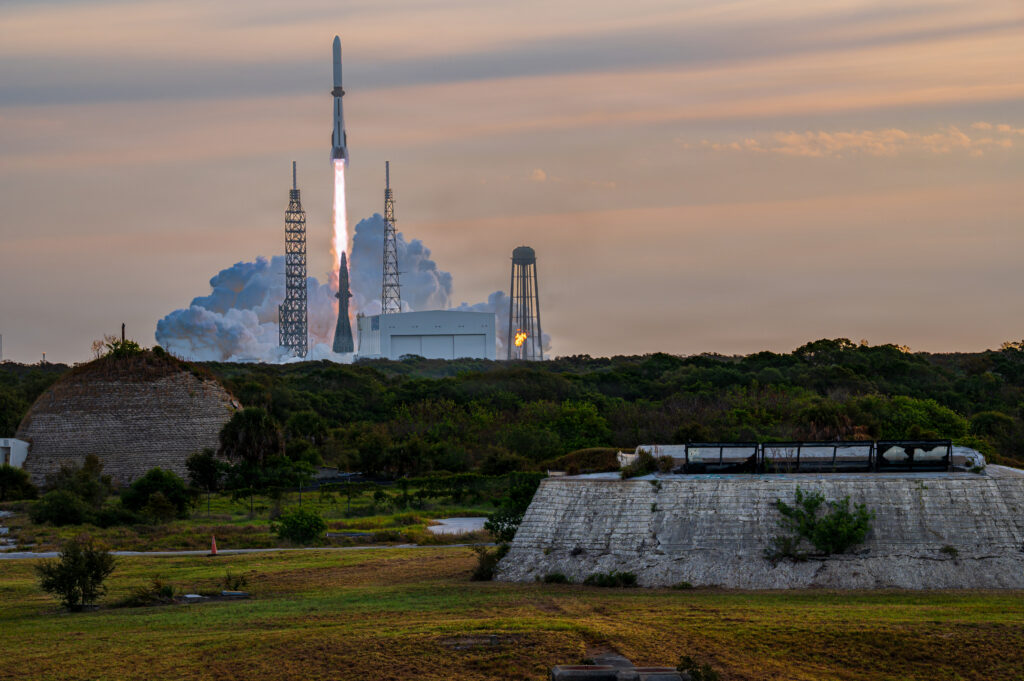
Space has transitioned from a serene sanctuary to a fiercely contested domain. In this new era, a hardware-centric approach to orbital assets is no longer a viable strategy for dominance. The United States and its global allies are pivoting toward software-defined architectures, placing a premium on agility, resilience, and rapid iteration to maintain their strategic edge in the cosmos.
Breaking the Hardware Shackles: The Shift to Digital Agility
Historically, space vehicles were defined by rigidity. Constrained by strict Size, Weight, and Power (SWaP) requirements, satellites were built with just enough compute capacity to perform specific, narrow tasks. Changing a mission requirement often meant launching a completely new asset—a process both slow and prohibitively expensive.
The game-changer has arrived in the form of high-performance onboard computing and hardware abstraction. By deploying sophisticated software environments directly into orbit, operators can now update capabilities without leaving the ground. As space evolves into a domain of kinetic and non-kinetic threats, the ability to perform real-time maneuvers and defensive pivots through software is no longer a luxury—it is a tactical necessity.
Intelligence at the Edge: Data Centers in Orbit
The transition from theory to operational reality is already underway. Recent missions have successfully deployed the first orbital micro-data centers and hybrid-cloud regions to the International Space Station. These milestones prove that a Commercial Off-The-Shelf (COTS) approach to space technology is not only feasible but mature.
By utilizing open-systems architecture, the military can integrate artificial intelligence (AI) and machine learning (ML) into evolvable platforms. This allows for a continuous delivery pipeline of mission-critical code, ensuring that sensors are constantly enhanced to counter evolving adversarial moves with unprecedented speed.
Closing the OODA Loop in Real-Time
In modern warfare, the primary driver is the speed of the mission. The proliferation of orbital assets and the staggering volume of data they generate demand low-latency processing at the source. By moving mission capabilities to the „edge,” satellites can analyze data where it is collected and act upon it instantaneously.
This localized processing significantly reduces dependency on space-to-ground data links and closes the „OODA loop” (Observe-Orient-Decide-Act) in orbit. In an environment where hypersonic threats and signal jamming are constant risks, the requirement for real-time onboard autonomy has become the new benchmark for space architecture.
The Proliferated Mesh: A Unified Allied Front
The future of space security lies in a multi-constellation, multi-orbit mesh. Recent terrestrial conflicts have demonstrated that centralized data hubs are primary targets; space assets face the same vulnerability. To counter this, a layered, distributed architecture ensures that if one node is compromised, the broader mission continues unabated.
Achieving this vision requires total integration across international systems. By adopting a unified, global software standard, the U.S. and its allies can share data and capabilities seamlessly. This secure software fabric transforms every sensor into a dynamic asset, providing the interoperability essential for joint force success and ensuring mission superiority throughout the entire orbital lifecycle of every asset.