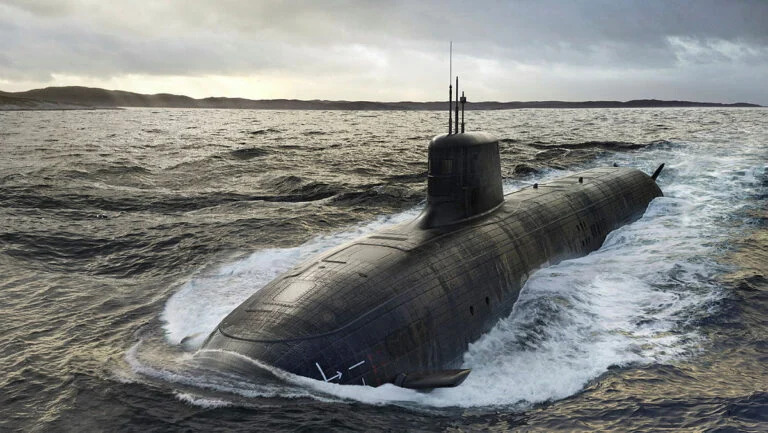
The trilateral AUKUS strategic partnership, designed to redefine the balance of power in the Indo-Pacific through the delivery of nuclear-powered submarines, is currently at a critical crossroads. A series of systemic „shortcomings and failings” now threaten to derail one of the most ambitious defense projects in recent history, casting doubt not only on national security but also on the long-term viability of the alliance between the UK, the US, and Australia.
Shipyards in Limbo: The Weak Link in Elite Production
The epicenter of concern is located at Barrow-in-Furness, where the BAE Systems shipyard—slated to build the future SSN-AUKUS vessels—is grappling with significant investment delays. Upgrading this infrastructure is considered vital; however, any further slippage could trigger a domino effect across the entire delivery schedule.
Without immediate intervention in production capacities, the program’s technological promise risks remaining a blueprint. The consequences are not merely logistical but diplomatic, directly eroding international partners’ confidence in the United Kingdom’s ability to execute complex defense mandates.
Political Drift and Financial Fog: The Search for Clear Direction
Beyond technical hurdles, the program is suffering from an apparent loss of momentum within British political leadership. Analysts warn that the government’s „faded” visibility in driving this partnership forward has allowed for a dangerous political drift. A more prominent and assertive leadership role is now required to counter the uncertainty looming over the project.
This uncertainty is further exacerbated by the delayed publication of the Defence Investment Plan (DIP), the strategic document intended to outline procurement priorities for the next decade. The withdrawal of the firm timetable for this plan leaves major questions regarding long-term funding, especially as each future submarine is estimated to cost approximately $3.4 billion.
Current Fleet at the Breaking Point: The High Cost of Credibility
The drive to maintain a constant global presence is placing immense strain on existing resources. The Royal Navy’s Astute-class submarines are being pushed to, and perhaps beyond, their operational limits to honor commitments for rotations and port visits in Australia.
The recent example of a vessel forced to cut short its Australian deployment to redeploy urgently following conflicts in the Middle East highlights a stark reality: submarine availability is at a critically low level. Unless maintenance and support infrastructure are upgraded at an accelerated pace, the ability to secure the Euro-Atlantic zone while simultaneously meeting AUKUS obligations will become an increasingly impossible mission.