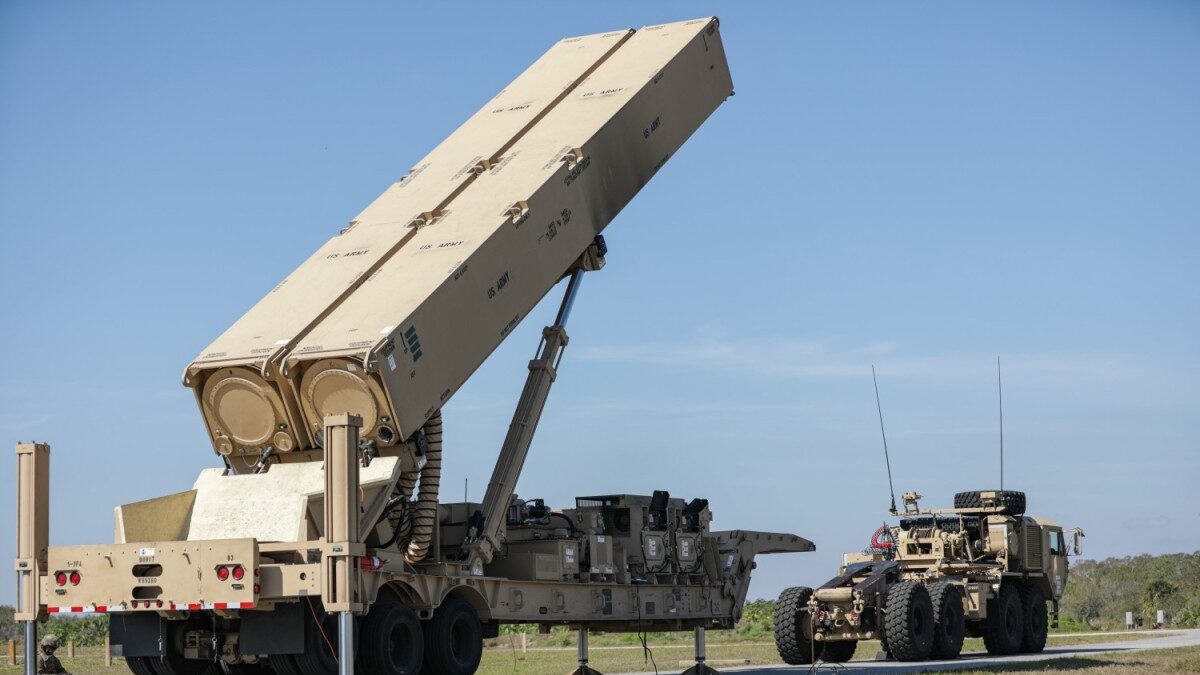
Awaiting Approval on Hypersonic Weaponry
Senior leaders within the U.S. Army are yet to endorse a clear strategy for the deployment of the delayed Dark Eagle hypersonic weapon, but a decision may be imminent, according to Lt. Gen. Robert Rasch, head of the Rapid Capabilities and Critical Technologies Office (RCCTO).
“We could continue testing indefinitely, but we organized a significant testing event to empower Army leaders to make informed decisions,” Lt. Gen. Rasch informed Breaking Defense. “With the new leadership team acclimating, I haven’t had the opportunity to present a potential path forward to secure that final decision.”
Collaboration Between Army and Navy
The Army and Navy have been collaborating on this conventional Long-Range Hypersonic Weapon, intended for launch from both land and sea. However, the program has encountered setbacks, including mechanical engineering challenges with the launcher that have hindered development.
In December, both branches reported a “successful” end-to-end flight test of the weapon from Cape Canaveral Space Force Station in Florida.
Leadership Changes Amidst Transition
Soon after, the transition from the Biden administration to the Trump administration resulted in the replacement of senior political appointees, including the Army secretary and the head of acquisitions. Currently, Daniel Driscoll holds the top civilian position within the Army while other key roles are gradually being filled.
“We are maintaining our current trajectory,” Rasch stated on the sidelines of the Association of the US Army Global Force conference. “However, decisions regarding the fielding timeline and the establishment of initial operational capability (IOC) still require thorough vetting.”
Capabilities of the Dark Eagle System
The Dark Eagle system utilizes a land-based truck to launch projectiles that are capable of exceeding speeds of 3,800 miles per hour—five times the speed of sound—and reaching targets located up to 1,725 miles away, as detailed in a Congressional Research Services report. The Navy’s counterpart program employs the same Common Hypersonic Glide Body missile, albeit with a launcher designed for maritime operations, such as on Zumwalt-class surface combatants.
Anticipation Among Soldiers
In 2023, soldiers from the 1st Multi-Domain Task Force’s long-range fires battalion, 5th Battalion, 3rd Field Artillery Regiment, stationed at Joint Base Lewis-McChord in Washington, received system components and training in preparation to become the first operational unit to deploy the new weapon that year. However, two years later, they continue to await its arrival.