A New Era of Military Readiness
Working out of makeshift green tents featuring muddy plywood floors, the U.S. Army’s 1st Multi-Domain Task Force (MDTF) vigilantly monitors its surroundings, ready to respond to potential threats. However, any necessary relocation could complicate their operations due to complex security protocols, intricate software requirements, and erratic network connectivity.
Complex Operations in Challenging Conditions
“Navigating security protocols and establishing a permanent operations center in a challenging environment presents significant challenges,” remarked Maj. John Lucero, deputy digital scientist for the 1st MDTF. “If we need to disassemble our systems, establish connectivity on the go, and continue operations seamlessly, we are significantly complicating our mission.”
In search of an efficient solution for rapid deployment, the unit collaborated with Collins Aerospace, a division of RTX, which successfully demonstrated the feasibility of mobile operations during a recent exercise.
Demonstrating Effective Mobility
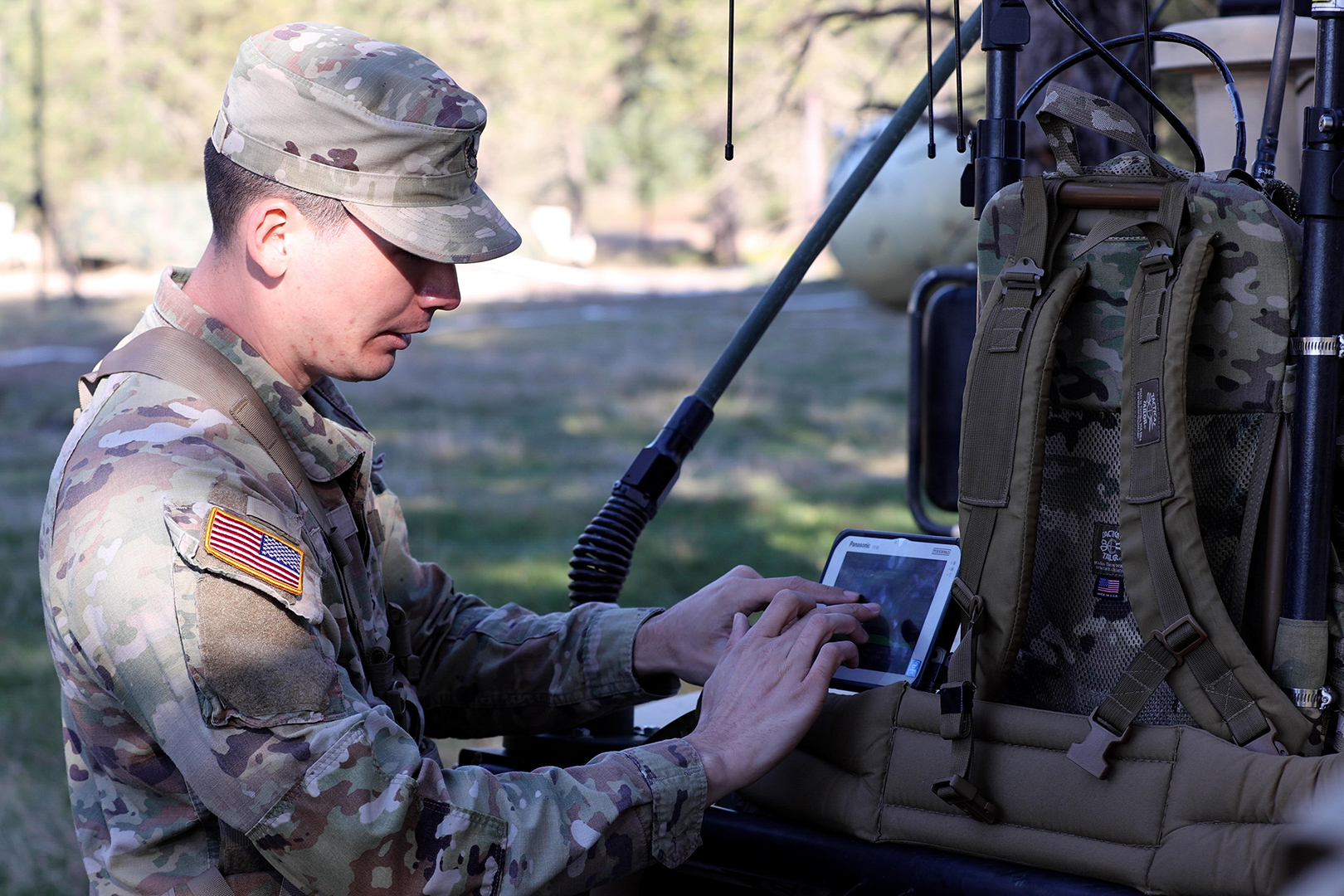
In a notable display of capability, the task force partnered with Collins to execute mission operations while in transit. They relocated equipment embedded with mission software from a stable base to a vehicle outfitted with satellite and 5G internet. This setup enabled them to identify threats, analyze data, and simulate a fires response effectively.
“Within minutes, our hardware transitioned from the tent to the vehicle and was fully operational,” stated Chadwick Ford, leader of the Collins team.
Advancing Multi-Domain Operations
This exercise is aligned with the Army’s overarching strategy to enhance multi-domain operations, a military framework aimed at facilitating rapid, resilient information flow across diverse environments to empower commanders in making informed decisions.
Collins has dubbed their innovative system „Next Generation Battle Management On The Move.” “We integrated multiple technological portfolios to illustrate how mobile command and control can be both deployable and distributed,” said Elaine Bitonti, vice president and general manager of Collins’ Connected Battlespace and Emerging Capabilities organization.
The system not only provides secure network connections but also utilizes artificial intelligence and machine learning to rapidly analyze data and detect threats.
Seamlessness in Operation Transition
Transitioning from fixed to mobile operations presents its own set of challenges. Over the course of two weeks, the Collins team collaborated closely with the task force to refine and test their system—an effort that had been underway for a year.
“Ensuring a seamless transition from fixed sites to mobile operations is critical for the operators,” Bitonti explained. “This necessitates thorough testing and iterative refinement at the operational edge to guarantee manageable combat conditions.”
Since 2021, Bitonti’s team has been committed to co-developing tailored capabilities with their customers through such exercises.
Hands-On Development and Collaboration
During the day, the team worked with the MDTF under a small roadside shelter, safeguarding them from rain and sun while refining their system’s hardware and software. They showcased a prototype to demonstrate integration with existing third-party and government applications utilized by the 1st MDTF.
By night, the team would modify the software’s code and prepare equipment for impending tests and demonstrations.
“One of the most rewarding aspects is experiencing the environment first-hand,” shared Ford. “You can theorize, but working in situ deepens your understanding of their challenges and the technology’s potential to assist them.”
Following this exercise, Ford expressed confidence in the concept’s viability and anticipated that future iterations could reduce exercise time by half while enhancing flexibility and support for distributed operations. By developing capabilities incrementally, the task force can adapt and utilize the technology as it evolves, rather than awaiting a final product.
“Soldiers engage in missions with whatever resources they have; they can’t wait for future solutions,” Ford concluded. “Through our collaboration and shared objectives, we’ve formed a strong bond with the unit, united in our commitment to support the soldiers in their operational tasks.”