Europe is stepping up its efforts for military space autonomy, with companies like the British startup SatVu and the Spanish giant GMV positioning themselves at the forefront of this revolution. As the continent invests considerable sums to reduce its dependence on the United States for defense space capabilities, new innovations are receiving a significant boost.
SatVu and Strategic Capital Infusion: NATO Credibility in Space
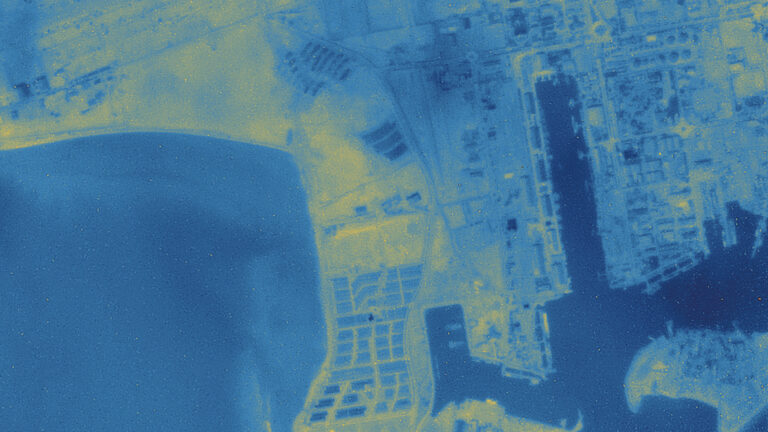
British thermal imagery startup SatVu has successfully attracted substantial funding in its latest round. The company announced on Tuesday that it secured funds for the first time from the NATO Innovation Fund, alongside contributions from the UK’s British Investment Bank and other venture capital firms. This round brought in £30 million (approximately $40 million), raising SatVu’s total equity funding to £60 million. The NATO Innovation Fund, an autonomous venture capital vehicle supported by 24 NATO allies with a budget of over €1 billion, targets investments in „deep tech.” Space is one of its key portfolios, with the fund already investing in three other startups: Isar Aerospace (Germany), Kreios Space (Spain), and Simera Sense (UK).
Even though the NATO investment does not come with direct contractual guarantees, Scott Herman, SatVu’s new Chief Technology Officer, emphasized that it lends the company immense credibility in its pursuit of interest from European defense ministries for its HotSat satellite series. „There is certainly a lot of ‘move’ within NATO and the European countries for more self-sufficiency. This NATO Investment Fund investment is basically a stamp of approval and credibility that we have something to offer in that realm,” Herman stated. SatVu is preparing to launch its HotSat-2 satellite „in just a few weeks” on a SpaceX Falcon 9 Transporter 16 mission, with HotSat-3 to follow before the end of the year. However, the company’s first satellite, HotSat-1, launched in June 2023, encountered difficulties, with its camera suffering a failure six months after launch.
The Boom in European Defense Tech Investments and NATO’s Role
A study co-sponsored by the NATO Innovation Fund and the Dutch firm Dealroom, published on February 10, revealed that European „Defense, Security and Resilience” startups attracted a record $8.7 billion in venture capital in 2025. This represents a 55% increase from 2024 and is four times the 2020 levels. „The surge was fueled by late-stage mega-rounds to support breakthrough technologies that help address critical capabilities for NATO nations — from freedom of operations and mobility, to awareness and decision making, and the security of critical technologies,” the study noted. The NATO Alliance, collectively, also aims to bolster its acquisition of space capabilities, including commercial intelligence, surveillance, and reconnaissance (ISR) imagery and analysis from commercial sources.
Spain Strengthens Its Space Shield with GMV: A Strategic Hub for NATO and the EU
In parallel, the Spanish Ministry of Defence continues to expand its space surveillance program. A new agreement has been signed with the Spanish technology conglomerate GMV for a satellite tracking antenna, which will be located at Morón Air Base near Seville, the company announced on Tuesday. The Focusear antenna will provide data to Spain’s Space Command (Mando del Espacios) for its Space Operations and Surveillance Center (COVE), situated at Torrejón Air Base near Madrid. The COVE center already utilizes GMV’s Space Situational Awareness and Control System to monitor outer space.
The GMV system, based on its Ecosstm software, offers a wide range of essential services: „orbital calculation and propagation, the generation and maintenance of a space object catalog, atmospheric reentry prediction, observation campaign planning, overflight computation, GNSS [Global Navigation Satellite System] signal degradation analysis, and space weather data processing,” according to a company press release. COVE also plays a supporting role in NATO and European Union space situational awareness activities, a fact further confirmed by the NATO Military Committee’s visit to Torrejón earlier this month.