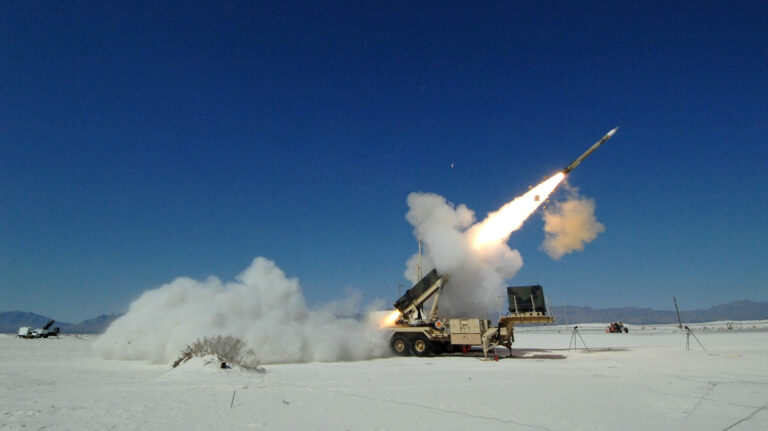
In a strategic move to fortify U.S. defense capabilities, industry titan Northrop Grumman has secured two massive framework agreements with a combined value of $3 billion. The deals focus on rocket motor production for PAC-3 interceptors and THAAD systems, marking a pivotal moment in the Pentagon’s drive to triple the output of critical munitions.
Breaking the Monopoly and the Race for Mass Production
Under this new partnership, Northrop Grumman becomes the second official supplier of solid rocket motors for the PAC-3 interceptor, a cornerstone of modern air defense. Until recently, the production of these vital components was handled exclusively by L3Harris. Northrop’s entry into this market not only mitigates the risks associated with a sole-source provider but also accelerates Washington’s ambition to reach a production capacity of 2,000 PAC-3 interceptors per year by the end of 2030.
The PAC-3 segment accounts for $2 billion of the deal, while the remaining $1 billion will be directed toward scaling motor production for THAAD (Terminal High Altitude Area Defense) missiles. This massive investment is scheduled to span seven years, providing the industry with the stability required to invest private capital into high-volume production lines.
A New Paradigm: Multiyear Contracts as Growth Engines
These agreements represent Northrop Grumman’s debut in the new multiyear contracting structure initiated by the Department of Defense. The strategy aims to transform the supply chain into a „robust and dynamic” mechanism capable of responding rapidly to global weapons demand.
Production will be distributed among the company’s elite facilities: the Allegany Ballistics Laboratory in West Virginia will handle PAC-3 motors, while the San Diego plant will take on the increased volume for THAAD systems.
America’s Military Re-Industrialization
The signing of these contracts is part of a broader Pentagon campaign, which has already finalized approximately a dozen similar agreements since the start of the year. From Tomahawk cruise missiles to innovative low-cost munitions developed by startups like Anduril, the United States is reshaping its defense industrial base.
The goal is clear: to quadruple THAAD interceptor production and triple PAC-3 volumes. By involving key players like Northrop Grumman, the defense industry is transitioning from prototypes and small batches to an era of mass production, essential for maintaining technological and strategic supremacy in an increasingly volatile global context.