The United States Space Force has launched an unprecedented financial and technological offensive, allocating a record $981 million budget to bridge critical gaps in troop readiness. Through the NITE-STAR program, the Pentagon has handpicked an „elite team” of 15 leading companies—ranging from Lockheed Martin to Firefly Aerospace—to build the infrastructure required for the next era of orbital conflict.
A Race Against Time: Simulators, America’s Great Vulnerability
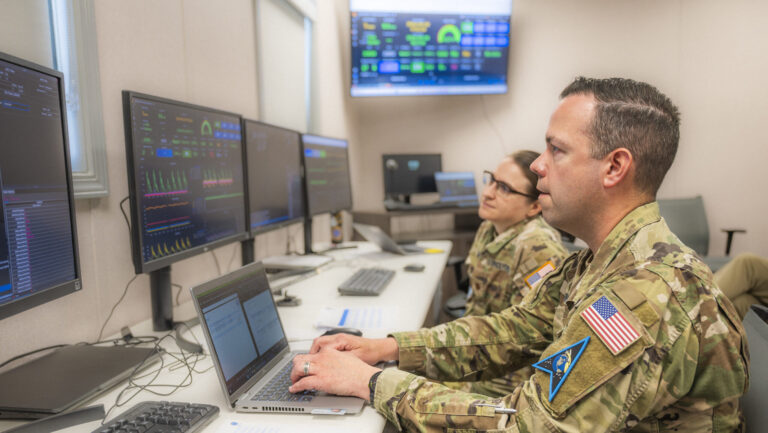
The move comes at a time of peak tension, with senior officials warning that space „Guardians” are suffering from a chronic lack of instructors, facilities, and, most crucially, cutting-edge simulators. Until now, training often relied on real mission equipment, necessitating the temporary shutdown of vital systems like tracking radars or GPS satellites—a luxury the U.S. can no longer afford when facing peer adversaries.
Lt. Gen. Greg Gagnon admitted the current readiness state is a „mixed bag.” While missile warning units enjoy robust training, critical sectors such as space domain awareness and intelligence remain „red-Xed.” Without specialized simulators, these units stay vulnerable in an environment where precision is everything.
The NITE-STAR Arsenal: From Physical Infrastructure to Electronic Warfare
The contract, managed by Space Systems Command (SSC), aims to develop the National Space Test and Training Complex (NSTTC). The objective is ambitious: creating an Operational Test and Tracking Infrastructure (OTTI) that blends ground facilities with „live” on-orbit assets.
The 15 selected vendors—including Northrop Grumman, Boeing, Rocket Lab, and L3Harris—will compete to deliver training tools capable of simulating cyberattacks, electronic jamming, and orbital warfare maneuvers. This is no longer just about theory; the Pentagon wants its personnel to experience the reality of combat before the first projectile or laser pulse is ever fired in space.
Modernization Under Pressure: The „Golden Dome” Strategy Takes Shape
This massive investment is the missing piece of a larger puzzle. Integrating forces into complex defense structures requires a reaction speed that only digitized training can provide. By shifting the focus from using mission equipment to high-fidelity simulations, the Space Force hopes to accelerate the readiness of new recruits and maintain its technological supremacy.
The stakes are clear: in a future where Earth’s orbit becomes an active battlefield, victory will be decided not just by who has the best missiles, but by who has practiced the most within the virtual reality of a billion-dollar simulator.