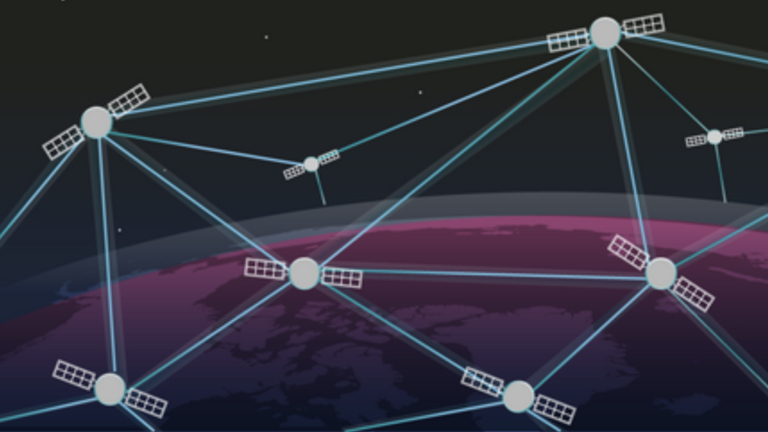
The United States Space Force is placing a high-stakes strategic bet on private innovation, awarding California-based startup K2 Space a $22.9 million contract. The mission is critical: testing new, standardized laser terminals under the Enterprise Space Terminal (EST) program, a technology destined to become the backbone of next-generation military communications.
Light-Speed Connectivity: Shattering Technological Bottlenecks
The project, set to run through 2028, focuses on integrating optical terminals into K2 Space’s large satellite buses. Until now, the Pentagon has faced significant technical challenges and supply chain bottlenecks in its efforts to deploy reliable satellite-to-satellite laser links.
The EST program was specifically designed to enforce common standards and eliminate current barriers. Terminals developed by partners such as CACI, General Atomics, and Viasat will now face the ultimate flight test using K2’s infrastructure, ensuring a secure and instantaneous data flow across the vacuum of space.
Building the Golden Dome: Total Protection Against Ballistic Threats
The stakes of this technology go far beyond simple communication. Optical laser links are the heart of the future missile warning and tracking architecture. The system is designed to detect and monitor not only classic ballistic launches but also the emerging threats posed by cruise missiles, operating across a dense network covering both Low Earth Orbit (LEO) and Medium Earth Orbit (MEO).
These satellite constellations will form the foundation of the Pentagon’s ambitious „Golden Dome” defense shield. By utilizing space-based sensing and laser cross-links, the U.S. military aims to create an impenetrable barrier capable of identifying targets with precision and speed unattainable by traditional methods.
A Billion-Dollar Disruptor: The Rise of K2 Space
The announcement of this contract comes just one day after K2 Space confirmed a massive funding round, bringing its total capital and government/commercial contract value to over $2 billion. Since launching its first satellite, Gravitas, in March this year, the company has demonstrated a remarkable ability to deliver high-power, high-payload platforms for complex missions.
Collaborations with other top-tier players, such as Anduril and Viasat, position K2 Space as an indispensable partner in the effort to modernize military space operations. With a major mission dubbed Trinity planned for next February, the startup is not just delivering hardware; it is redefining how the United States projects defensive power beyond the atmosphere.