The Ghost at the Feast: FCAS Teeters on the Brink
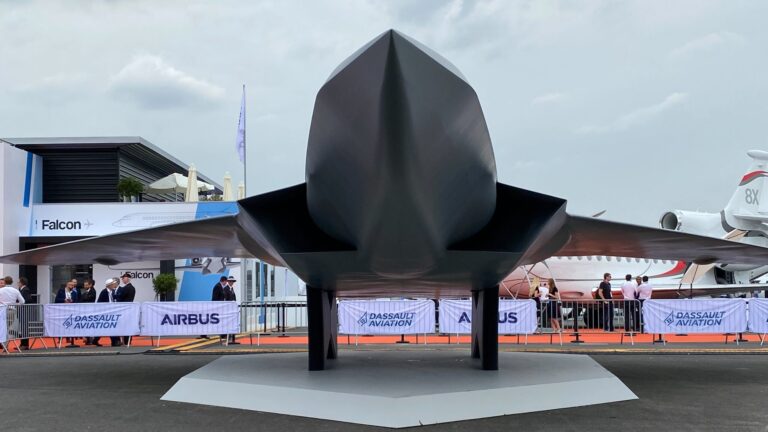
As the Berlin Air Show opens its gates to 100,000 visitors, the conversation is dominated not by what is on display, but by what is missing: the New Generation Fighter (NGF). The centerpiece of Europe’s trilateral Future Combat Air System (FCAS) is conspicuous by its absence, reflecting a program at „death’s door.” A bitter industrial feud over workshare between Airbus and Dassault has stalled progress, leaving the project in a state of paralysis while Berlin and Paris struggle to find a path forward. With Airbus now floating the idea of a „two-fighter” solution, the dream of a unified European combat wing appears to be disintegrating.
Transatlantic Turmoil and the Shadow of Troop Withdrawals
The geopolitical backdrop of the air show is equally fraught with tension. Deteriorating relations with Washington, characterized by unpredictable shifts in NATO policy and the planned withdrawal of 5,000 U.S. troops from Germany, have cast a long shadow over the event. Chancellor Friedrich Merz finds himself in a political vice, facing domestic hostility over an economic downturn while navigating the fallout of stalled peace talks with Tehran. Despite these pressures, the German leadership remains steadfast in its commitment to a strategy that leans heavily on American partnership.
The €377 Billion Bet: Germany’s Rise to Military Hegemony
Germany is moving aggressively to become Europe’s dominant conventional military power. By the end of the decade, Berlin aims to usurp both France and the UK as the continent’s largest defense spender, backed by a massive €377 billion long-term rearmament plan. This strategy is anchored in high-end U.S. technology, including F-35 fifth-generation fighters, P-8A Poseidon maritime patrol aircraft, and Tomahawk cruise missiles. While industrial cooperation with European neighbors falters, the pipeline of American military hardware into Germany remains wide open and non-negotiable.
Aerial Innovations: Heron TP and the RACER Take Center Stage
Despite the political drama, the air show remains a showcase for cutting-edge hardware. Germany’s Heron TP long-range reconnaissance drone and Leonardo’s AW249 attack helicopter are making high-profile international debuts. Meanwhile, the Airbus RACER high-speed demonstrator is set to take to the skies, showcasing a platform that could revolutionize NATO’s vertical lift capabilities. While the future of European fighter jet collaboration remains uncertain, these individual technological triumphs offer a glimpse into a new era of high-speed, autonomous warfare.