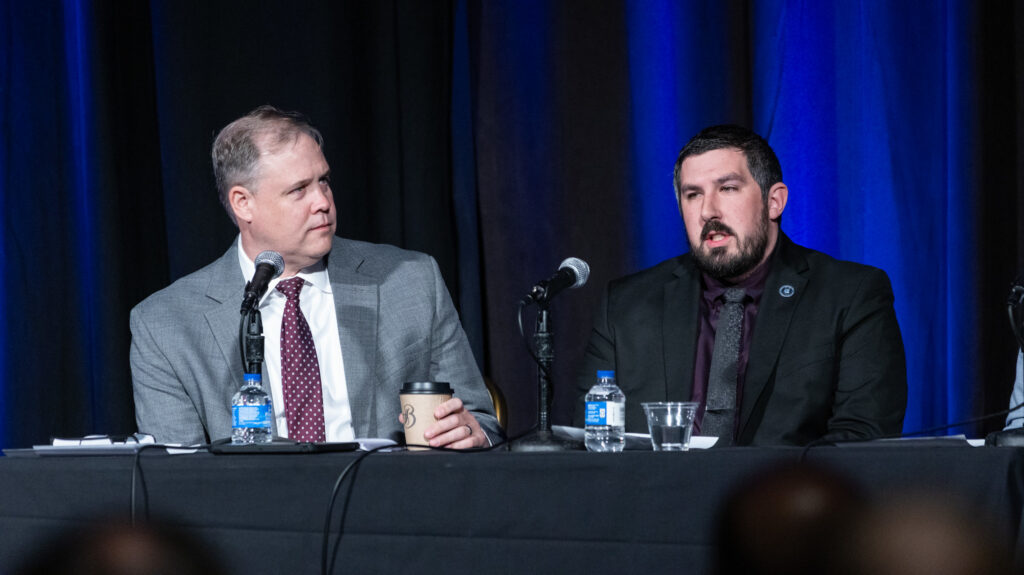
The former NASA chief pivots to the private sector at a critical juncture, betting on a new generation of „dynamic” spacecraft designed to outmaneuver global threats.
In a move that signals a major shift in the commercial space landscape, startup Quantum Space has appointed former NASA Administrator Jim Bridenstine as its new CEO. The appointment arrives as the U.S. national security apparatus accelerates its demand for highly maneuverable, long-distance spacecraft. Bridenstine, the 13th head of NASA and the visionary behind the Artemis Program, brings a unique pedigree to the role—blending the experience of a naval aviator, a former Congressman, and a leader of global space exploration.
The Ranger Project: Redefining Orbital Unpredictability
At the heart of Bridenstine’s new mandate is the Ranger spacecraft, a vehicle designed to support sustained maneuvers for dynamic space operations. In the face of increasing adversary capabilities, the new CEO is blunt: American satellites must become „unpredictable.”
The Ranger is engineered to disrupt the status quo. While categorized as a medium-sized satellite (400-700 kg), it is designed to carry a staggering 4,000 kilograms of hydrazine fuel. This massive fuel capacity enables a dual-propulsion system: chemical propulsion for high-thrust, rapid evasive maneuvers, and electric propulsion for long-term efficiency. Compared to traditional geosynchronous satellites that carry limited fuel for basic station-keeping, the Ranger offers the agility required for modern „neighborhood watch” missions and counter-space operations.
Cislunar Superiority: The Strategic High Ground
Beyond Earth’s immediate orbit, Quantum Space is setting its sights on cislunar space—the vast region between Earth and the Moon. As global powers race to establish lunar presences and explore resource extraction, Bridenstine views this region as the next critical domain for national security. „We have to get better at cislunar space to stay ahead of adversaries,” he notes, emphasizing the strategic necessity of being first and most capable in this theater.
The company’s momentum is backed by high-stakes federal partnerships. Headquartered in Maryland, Quantum Space already holds contracts with the U.S. Space Force and DARPA. It was recently tapped for the Andromeda program to replace aging situational awareness constellations and is working with DARPA on the LASSO project to scout for lunar water. With the first Ranger launch slated for early 2027, Quantum Space is transitioning from a promising startup to a key architect of the next generation of space defense.