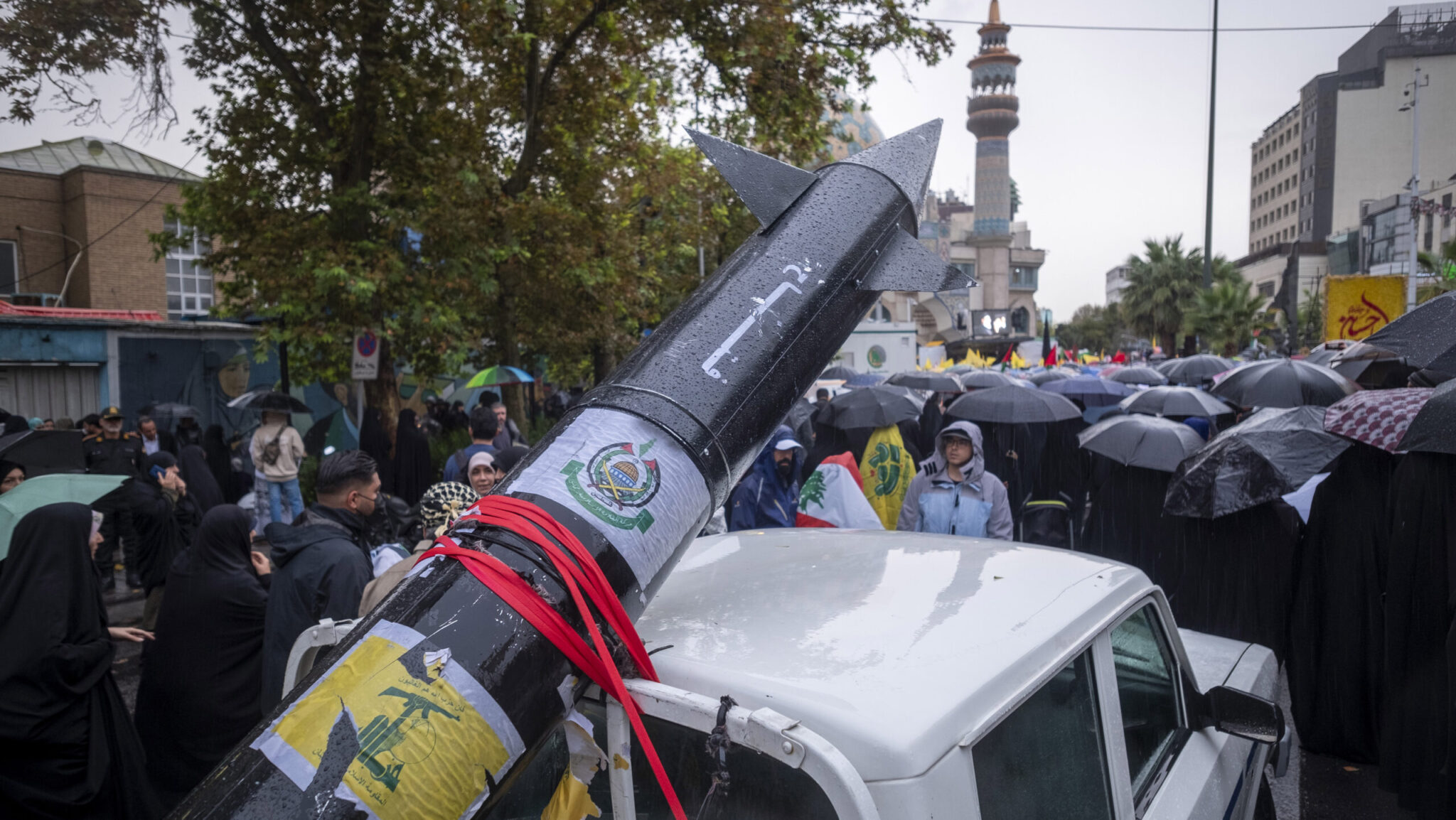
Ten days following the death of Hezbollah leader Hassan Nasrallah, a senior official attempted to reassure supporters that the group’s military capabilities remain intact amidst intense Israeli bombardments. Naim Qassem, Hezbollah’s deputy leader, asserted in a televised address that “our capabilities are fine,” as the Iran-backed militia showcased its arsenal by launching new rockets and missiles for the first time in recent weeks.
Qassem’s comments come against a backdrop of heightened conflict in Lebanon, where the Israeli military has reportedly targeted and eliminated several senior Hezbollah leaders while inflicting heavy casualties on its members. Israeli Prime Minister Benjamin Netanyahu claimed in a recent video that Hezbollah is currently “weaker than it has been for many, many years.”
Despite these assertions, Hezbollah has maintained a vigorous response, firing over 3,000 rockets and missiles at Israel in the past two weeks, according to the Israel Defense Forces (IDF). Experts have noted the introduction of several advanced projectiles, including the Qadr 1 ballistic missile, Noor cruise missiles, and Fadi 4 and Falaq 2 rockets, indicating both an escalation in hostilities and a calculated show of strength aimed at deterring Israeli aggression.
Defense analyst Sine Özkaraşahin remarked that the deployment of these sophisticated missiles signals a significant shift in Hezbollah’s operational capabilities. “The use of new, more advanced missiles reflects an escalation and serves a political message to demonstrate strength, particularly in light of Netanyahu’s increased military actions,” she explained. The analyst noted that the Qadr 1 missile, a guided ballistic missile with deep-strike capabilities, represents a notable advancement from the short-range unguided rockets that previously dominated Hezbollah’s arsenal.
Pieter Wezeman, a senior researcher at the Stockholm International Peace Research Institute, suggested that Hezbollah’s new missile use appears to be a strategic response to escalating Israeli military operations. He expressed the view that Hezbollah may be adopting a “use-over-lose” strategy, opting to fire their missiles before they can be targeted by Israeli strikes.
The IDF has been systematically targeting Hezbollah missile and rocket warehouses located in South Lebanon, the Beqaa Valley, and the southern suburbs of Beirut. Reports of secondary explosions following Israeli raids have indicated the presence of stored explosives or munitions. However, analysts like Behnam Ben Taleblu emphasized that while the Qadr missile’s deployment marks a significant milestone as Hezbollah’s first ballistic missile fired at Israel, most of their recent projectiles remain unguided or spin-stabilized rockets and artillery.
Ben Taleblu posited that Hezbollah has been incrementally widening its conflict with Israel, leveraging various artillery systems and drones to sustain pressure since the start of hostilities on October 8 last year. While the Qadr missile’s guided capabilities could potentially change the dynamics of the conflict, Israel’s recent military successes have constrained Hezbollah’s ability to fully realize this strategic shift.
Additionally, Ben Taleblu pointed out that Hezbollah isn’t the only adversary ramping up missile usage; Iran has also escalated its military activity. The employment of more solid-propellant ballistic missile systems in Iran’s recent barrages against Israel signals a noteworthy change in tactics, reflecting Tehran’s willingness to increase its military engagement following setbacks to its regional network.
Despite these developments, reports indicate that the new missiles may not have caused significant casualties, with Israel reporting just one death from a recent missile launch linked to Iran. Wezeman remarked that some projectiles appeared to have penetrated Israeli defenses, suggesting improved capabilities that could pose challenges for Israel’s missile interception systems. However, Israeli sources maintain that the Qadr-1 missile was intercepted before reaching its intended target.