Despite limited info from Pentagon, Congress advances its own defense spending plan
A Historic and Flat Defense Funding Proposal
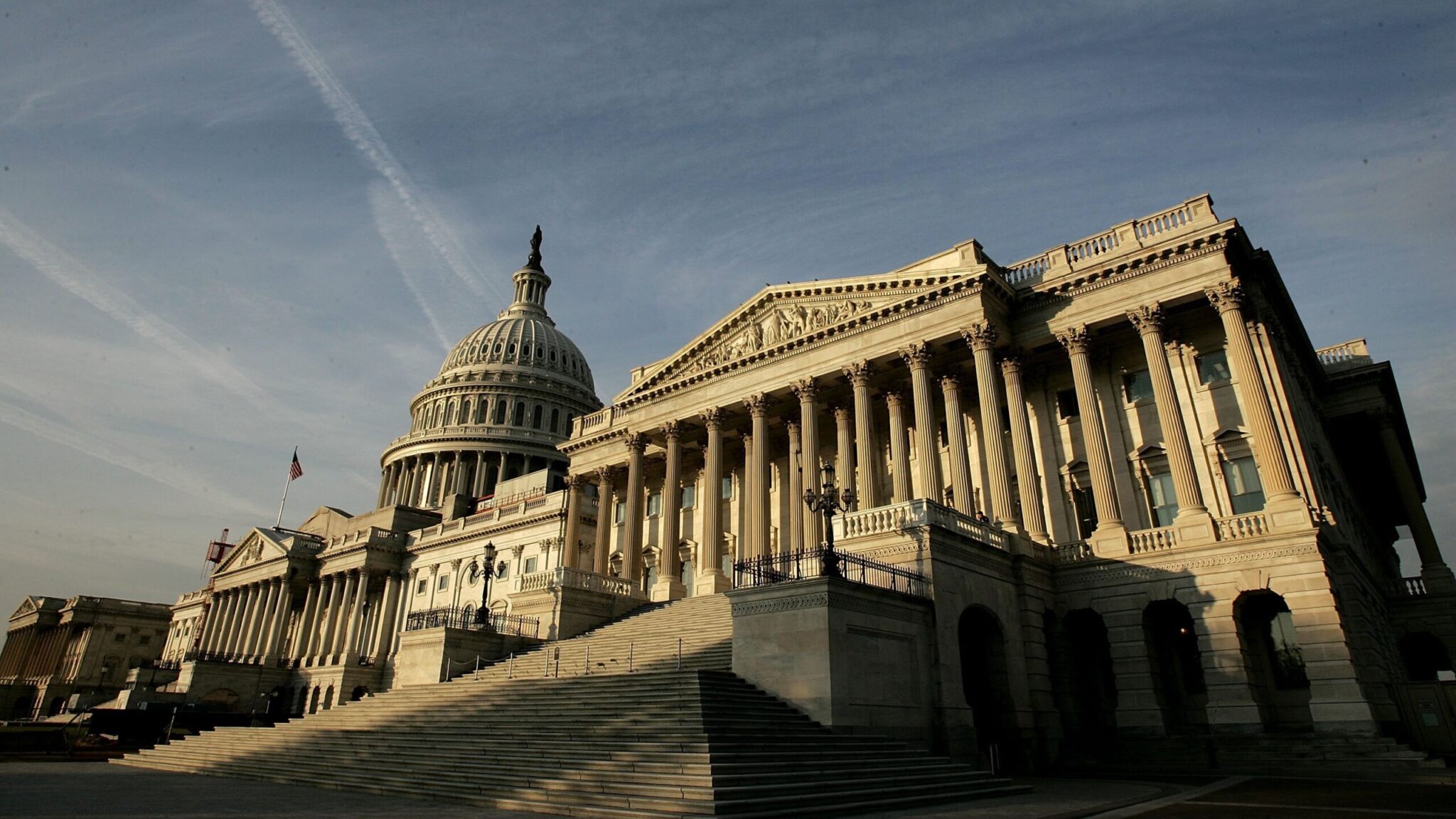
The House Appropriations Committee has introduced a draft defense bill totaling $831.5 billion for Fiscal Year 2026, standing in line with the White House’s earlier guidance and the FY25 continuing resolution. Although the full Pentagon budget request remains unreleased, this legislative move signals a significant congressional commitment to defense modernization, with potential for additional funding from the upcoming “One Big Beautiful Bill” that could push total defense spending past $1 trillion.
Strategic Investments in Missile Defense and Space
Highlighting a focus on missile defense, the bill allocates $13 billion for programs that may integrate with the Trump-era Golden Dome missile shield—potentially receiving up to $25 billion if included in the reconciliation package. Notably, funds include $8.8 billion for Missile Defense Agency initiatives and $4.1 billion for Space Force programs, building on the administration’s top priorities from previous years.
Support for Procurement and Innovation Initiatives
Lawmakers reversed some Army cuts, restoring funding to programs like the Improved Turbine Engine Program (ITEP), Joint Light Tactical Vehicles (JLTV), and Gray Eagle drones. Meanwhile, procurement of the F-35 Joint Strike Fighter remains steady at $8.5 billion for 69 aircraft, including variants for the Air Force, Navy, and Marine Corps.
To foster technological innovation, the bill proposes $1.3 billion collectively for the Defense Innovation Unit, APFIT, and the Office of Strategic Capital. Additional $2.6 billion investments target hypersonics development across all military branches, including funds dedicated to the Navy’s Conventional Prompt Strike and Army’s Long-Range Hypersonic Weapon programs.
Naval and Marine Corps Spending
The bill proposes $36.9 billion for 28 ships, including a mix of attack submarines, ballistic missile submarines, and destroyers—supporting a broader naval buildup than FY25. It allocates funds for specialized vessels like T-AO fleet oilers, landing ships, and shore connectors, along with critical investments in the maritime industrial base to increase shipbuilding capacity and workforce wages.
Air Force Modernization
In aviation, the bill earmarks $3.8 billion for the procurement of the classified B-21 Raider bomber, along with funds for additional KC-46 tankers, F-15EX fighters, and ongoing development of sixth-generation aircraft like the F-47. Investments also include upgrades to the next Air Force One aircraft and advanced command and control systems.
Army Modernization and Rotorcraft Focus
The Army’s budget includes substantial spending on rotorcraft, with $910.4 million for UH/HH-60 Black Hawks, $680.2 million for Chinook helicopters, and $360 million for remanufactured AH-64 Apache attack helicopters. Notably, the Army continues funding for the Future Long Range Assault Aircraft (FLRAA) and the Improved Turbine Engine Program.
Ground Vehicles and Small Arms
Key vehicle investments comprise $715 million for self-propelled artillery systems and $724.5 million to upgrade tanks to the M1A2 (SEP) variant. Despite wanting to halt JLTV procurement, the bill maintains funding for thousands of these vehicles, including over 800 for the Army and Marine Corps.
Space and Missile Programs
The Space Force’s allocation features $2 billion for launch services, $680 million for GPS satellites, and nearly $4 billion for missile warning and tracking systems, emphasizing space domain awareness and survivability. The budget also devotes $7 billion to classified space initiatives critical to national security.
Next Steps in Congressional Defense Funding
The House Appropriations defense subcommittee plans to review and mark up the bill in a closed session before a full committee debate. This draft underscores congressional priorities to bolster U.S. military capabilities, technological innovation, and strategic deterrence in an increasingly complex security environment.