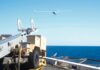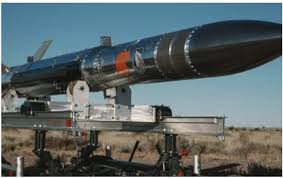
Washington, D.C. — The realm of hypersonic weapons has long been synonymous with protracted timelines, exorbitant costs, and exquisite, one-off systems. However, a groundbreaking new Air Force program, the Affordable Rapid Missile Demonstrator (ARMD), is poised to disrupt this perception. Its ambitious design aimed to achieve first flight in under a year—a goal successfully accomplished just weeks ago, showcasing an innovative and agile approach.
ARMD: Speed and Affordability Take Center Stage
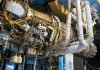
Central to this achievement is the Draper storable liquid engine, developed by Ursa Major. This technology enables non-cryogenic propellant storage and throttleable, powered flight profiles for both endo- and exo-atmospheric applications. Experts at Ursa Major, the prime contractor for the ARMD program, highlight that the initiative was designed to rapidly demonstrate affordable hypersonic capability, focusing on maturing the advanced, durable liquid-rocket engines. The entire program is structured for extreme speed, from rapid first flight to progressing swiftly into full hypersonic demonstration. Moreover, affordability has been a guiding principle, with every design decision, even at the demonstrator phase, made with an eye toward low costs, ease of production, and scalability.
The Draper Storable Liquid Engine: Key to Hypersonic Maneuverability
The significance of liquid engines in hypersonic flight, particularly storable ones, is paramount. Unlike cryogenic systems typically used for launch, the Draper engine utilizes non-toxic propellants that can be stored across a wide range of temperatures. As a closed-cycle engine, it boasts high efficiency and facilitates carrying a substantial amount of propellant. A unique differentiator for hypersonic applications is its ability to carry its own fuel and oxidizer, making it insensitive to airspeed and altitude in a way that air-breathing hypersonic solutions are. This approach grants the system the unique capability to propulsively maneuver through the entire span of certain flight profiles, a stark contrast to typical boost-glide systems which are unpowered during their glide phase.
Ursa Major’s Velocity: Agile Development Through Vertical Integration and Bold Mindset
Transitioning from contract to successful flight in less than a year is a testament to Ursa Major’s distinct approach to government defense programs. The company distinguishes itself by co-locating engineering, manufacturing, and testing, enabling all three processes to run in parallel. Strategic decisions included prioritizing flight learning over extensive ground testing, allowing for rapid iteration and gradual maturity of flight technology. A crucial role was played by the team, described as extremely driven, talented, and collaborative, with a mindset focused on rapid capability delivery. The company leveraged its expertise from the Hadley engine and its flight heritage to quickly kickstart the Draper engine program. Ursa Major’s significant vertical integration, including much of its additive manufacturing (3D printing) done in-house and maximum insourcing of design, build, and test, contributed to accelerating the process, avoiding reliance on multiple partners and subcontractors.
Navigating Challenges: From Propulsion Maker to Full Vehicle Integrator
The shift from a propulsion manufacturer to a full vehicle integrator presented its own set of challenges. ARMD marked the first time Ursa Major integrated its own vehicle, taking on the manufacturing of all but two major subcomponents. This expanded role required managing a much wider pool of subcontractors and broadening internal subject matter expertise. Furthermore, operating at the ARMD program’s pace meant navigating government test and range processes for the first time as the flight lead with a novel propulsion system. This experience proved to be a valuable learning opportunity alongside government partners, paving the way for even faster implementation in subsequent iterations.
Affordability as a Cornerstone: Smart Manufacturing and Material Choices
The emphasis on affordability was a key driver in the hypersonic demonstrator’s development. For the engine itself, Ursa Major heavily leveraged additive manufacturing (3D printing), which allows for a low part count and the introduction of unique geometries for high performance. On the vehicle side, designers opted for well-known materials and mature production processes, without being confined to the traditional aerospace and defense supply chain. This flexibility enabled exploration of supply chains from the automotive and other larger industrial bases, accelerating the process and keeping costs down.
An Independent Path: The Pioneer’s Advantage
While Ursa Major initially sought partners for the integration of its storable liquid system, established prime contractors were reluctant to assume the risk associated with a novel propulsion system. Consequently, Ursa Major decided to proceed independently, presenting the Air Force with its intention to fly the system on its own to gain flight heritage. This initiative and the desire to move quickly proved convincing enough for this initial demonstration. The success has validated the company’s capability to integrate more exquisite systems in subsequent flight demonstrations and programs.
Ursa Major in the Hypersonic Ecosystem: Complementarity and Rapid Innovation
Ursa Major positions itself as a complementary force within the hypersonic technology development ecosystem. While entering the business of all-up-round hypersonic systems, the company emphasizes the importance of a healthy defense ecosystem where large prime contractors can deliver higher-performing, exquisite systems, and Ursa Major can rapidly bring lower-cost options to complement the entire defense arsenal and ultimately increase capability for the warfighter. Its ability to move quickly is a key differentiator, enabling rapid fielding of hypersonic weapons. The company readily acknowledges the large prime contractors’ contributions to heritage, reliability, and performance to date. Ursa Major’s ultimate goal is to provide high-speed, affordable mass to the warfighter. With its upcoming HAVOC Missile System, powered by the Draper engine, Ursa Major aims to deliver a tactical, liquid-fueled hypersonic weapon, cementing its commitment to providing critical capabilities when and where they are needed most.