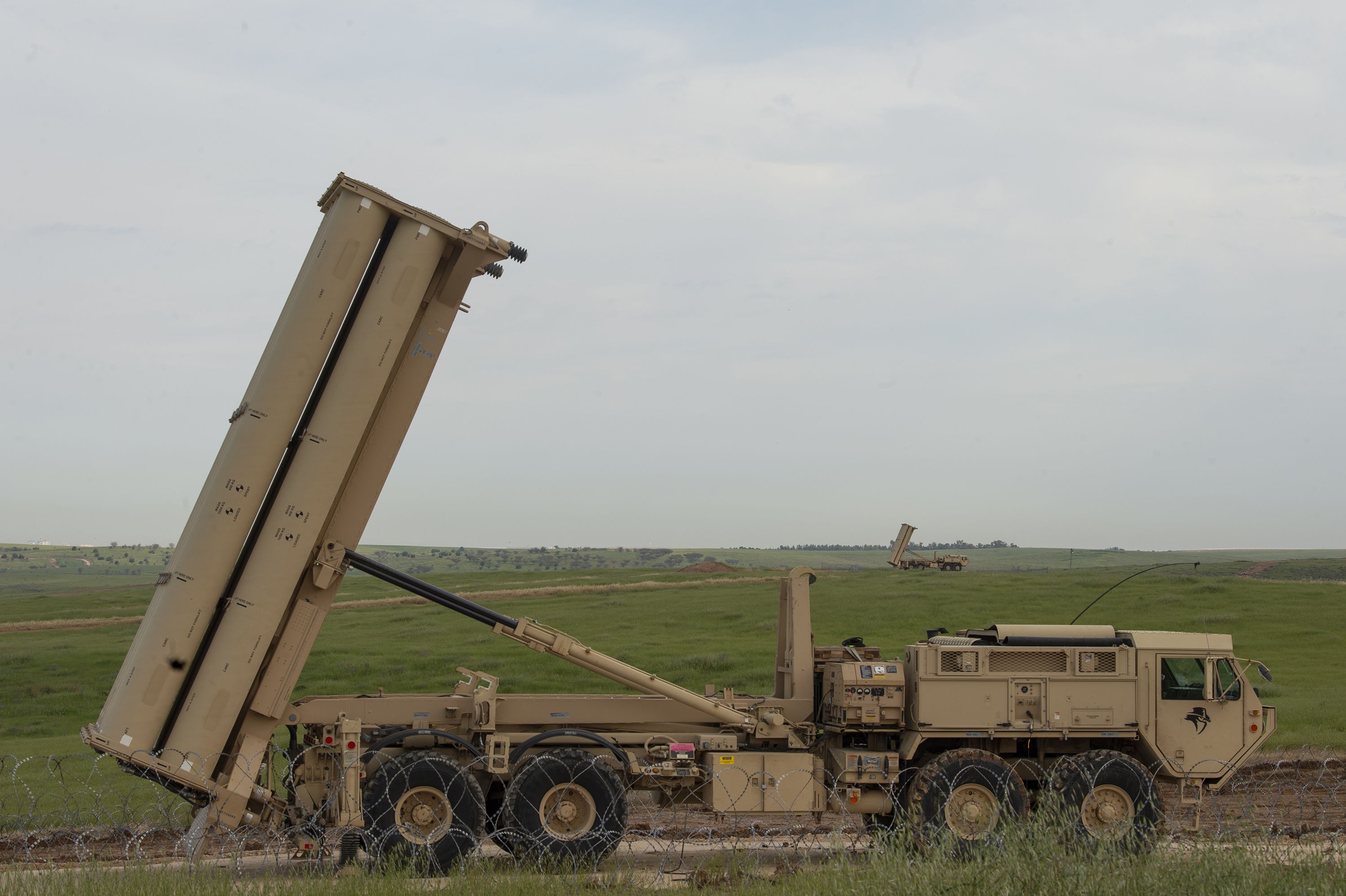
Washington, D.C. — The Pentagon is gearing up for a significant reorganization of its missile defense system management, with the official announcement that the U.S. Army will assume full control over the Terminal High Altitude Area Defense (THAAD) system. This transition, slated for fiscal year 2027, marks a pivotal moment for a program previously managed by the Missile Defense Agency (MDA), bringing with it both opportunities and unresolved questions.
Transfer of Command: THAAD Moves to the Army
Lt. Gen. Frank Lozano, the Army’s Program Acquisition Executive of Fires, confirmed at a recent conference that the current THAAD office „will be transferring over to me from MDA in [fiscal year] ’27.” He added that the two entities are working closely to finalize the transfer plan and memorandum of understanding and agreement. While the Army already operates the layered missile defense system, its development and procurement have, until now, fallen under the purview of the MDA.
A History of Debate and Concerns
Talk of transferring the THAAD program has been ongoing for several years and has, in the past, been a point of some contention. MDA leaders reportedly maintained that the program would have better oversight if it remained under their agency, fearing it might not be „prioritized” as effectively under the service and that the transfer itself could disrupt production. However, Lt. Gen. Lozano did not specify, in his public address, why the transfer would be beneficial to the Army, nor did he address MDA’s previous concerns.
THAAD in the Spotlight: A Crucial Defense
The THAAD system, manufactured by Lockheed Martin, is a mobile, truck-mounted air defense platform equipped with eight interceptor missiles. Designed to engage threats „inside or outside the atmosphere during their final, or terminal, phase of flight,” it is deemed „highly effective against ballistic missile threats.” The system has recently garnered significant attention as one of the defenses employed by the U.S. and its allies in the Middle East to counter missile and drone threats from Iran during Operation Epic Fury.
Stockpile Pressures and Strategic Reorientation
The regional conflict has brought into sharp focus concerns among experts and analysts regarding the impact of expending offensive and defensive munitions, including THAAD interceptors, on American stockpiles. This concern is amplified by the U.S.’s recent strategic shift toward a potential conflict in the Indo-Pacific theater. One expert warned that „the expenditure of long-range weapons should also give us pause,” citing that every Tomahawk used against Iran, for instance, is one less available for a conflict with China. The Pentagon has reportedly moved parts of THAAD systems stationed in South Korea to the Middle East, though officials stated this was a „precautionary” measure.
Production Capacity: Questions and Reassurances
While former President Donald Trump convened defense industry CEOs to urge them to boost production, senior U.S. officials have consistently maintained that they possess sufficient hardware for current operations. Nevertheless, the transfer of THAAD to Army control adds another layer of complexity to the equation of ensuring robust missile defense and adequate production capacity in an increasingly unpredictable global environment.